Deconstructing the Frontier: A Study in Silk, Wool, and Architectural Subversion
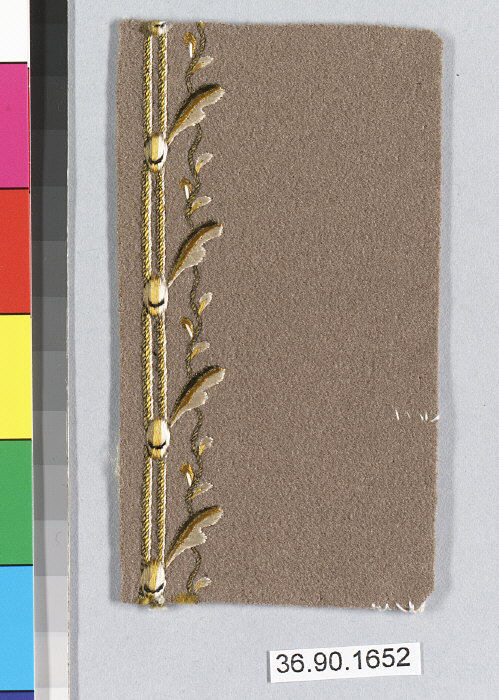
The presented embroidery sample—a confluence of Global Frontier ethos and artisanal technique on a foundational wool-silk substrate—is not a mere decorative motif. It is a tectonic blueprint, a coded manifesto for the SS26 silhouette. At Zoey Fashion Laboratory, we perceive such artifacts not as embellishment but as structural intelligence, the very genesis of form. This analysis posits this sample as the core around which a radical re-articulation of the masculine suit will orbit, moving beyond garment into the realm of wearable architecture.
The Substrate as Canvas and Constraint: Wool-Silk Dialectics
The choice of silk embroidery on wool is a deliberate, high-tension dialogue. Wool, with its inherent memory, structure, and tradition, represents the archaic body—the historical suit, the expectation of tailored conformity. Silk, in its fluidity, luminosity, and strength, embodies the liquefied data-stream of the Frontier. The embroidery does not sit upon the wool; it invades it, reorganizes its fibers, creating zones of differential tension. This interaction dictates the silhouette. Areas densely embroidered with silk will resist the wool’s natural drape, creating exoskeletal panels, while unadorned wool sections collapse or stretch, creating intentional voids and asymmetrical tensions. The material dialectic itself becomes the pattern-cutting software.
From Motif to Morphology: The Embroidery as Structural Cartography
Close examination of the sample’s stitch density, direction, and thread layering reveals a non-repeating, algorithmic pattern. This is not florid ornamentation; it is topographical mapping. We interpret the densest clusters as nodal points—future anchors for articulated armature, perhaps lightweight carbon-fiber rods suspended within the suit’s lining, creating a prosthetic extension of the scapula or clavicle. The radiating, finer stitches act as tension lines, guiding the direction of strategic slicing and laser-perforated ventilation. The embroidery pattern, therefore, directly generates the suit’s deconstructed panels, transforming a flat, decorative element into a three-dimensional construction guide for a multi-layered, fragmented shell.
Silhouette Generation for SS26: The Exo-Skeletal Cocoon
Applying this cartography to the masculine form yields the SS26 signature: the Exo-Skeletal Cocoon. This silhouette operates on the principle of controlled disintegration and externalized structure.
The Torso will no longer be a simple chest-and-waist proposition. The embroidery map will dictate the placement of rigid, embroidered silk "islands" across the back and one shoulder, connected by tensile wool "straps." This creates a harness-like effect, decentralizing the suit’s focal point from the chest to the dorsal plane. The classic two-button closure is obsolete; fastenings will occur at unexpected junctures where embroidery nodes meet, using magnetic or pneumatic closures hidden within the textile strata.
The Sleeve undergoes a complete ontological shift. It detaches from the traditional armhole, becoming a floating appendage connected only at the nodal shoulder point and perhaps at the wrist. The space between sleeve and torso—a negative space highlighted by the embroidery’s flow—becomes a critical design element, revealing a layered under-base of technical mesh or reactive polymer.
The Trousers follow the same topographic logic. Embroidery lines running vertically but off-kilter will create seams that twist around the leg, not follow it. This introduces a kinetic spiral silhouette in motion, while integrated panels of tensioned wool-silk composite can create temporary, garment-induced postural adjustments—a slight forward lean, an asymmetrical stance—echoing the adaptive posture of a Frontier explorer.
Contextualization: The Standalone Study as Systemic Overhaul
As a standalone avant-garde study, this sample’s power lies in its conceptual purity. It refuses the context of a full garment to force a deeper, more disruptive reading. It demonstrates that in the Zoey Laboratory methodology, surface is structure, and detail is blueprint. For SS26, this means a collection where each look originates from a similar micro-study—a pocket, a seam finish, a buttonhole—expanded to architectural scale. The Global Frontier is not a literal place but a mindset of relentless re-inquiry; this embroidery is its flag, planted in the terrain of classic menswear. It signals a move from suits that contain the body to suits that form a dialogue with it, creating a hybrid silhouette that is part-biological, part-engineered, and wholly futuristic.
In conclusion, this silk-on-wool sample is the genetic code for a new species of attire. It provides the foundational logic to dismantle the suit’s historic armature and reassemble it according to the laws of asymmetric tension, prosthetic enhancement, and topographic fashion. The resulting SS26 silhouette—the Exo-Skeletal Cocoon—is a direct manifestation of this code: a formidable, intelligent, and profoundly deconstructed architecture for a future-facing masculine identity.