Deconstructing the Ornamental Frontier: A Passementerie Manifesto
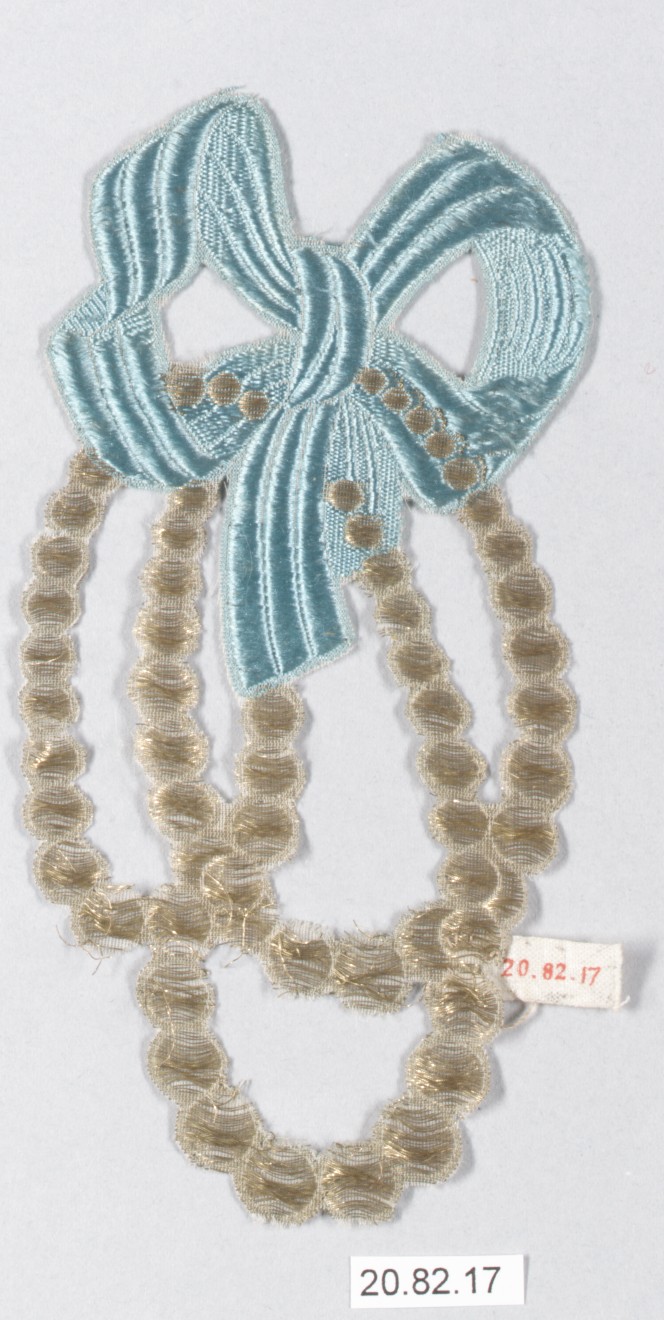
Within the canon of textile arts, passementerie—the intricate craft of creating ornamental trimmings, tassels, and braids—has long been relegated to the periphery, a decorative footnote to grander sartorial narratives. For Zoey Fashion Laboratory’s SS26 inquiry, we reclaim this marginalized craft as the central protagonist in a rigorous study of structural futurism. This analysis posits passementerie not as embellishment, but as exoskeletal architecture, a hybrid language of silk and metal thread that constructs, deforms, and ultimately redefines the corporeal silhouette from the Global Frontier—a conceptual space unbound by geography, defined instead by material innovation and cognitive shift.
From Fringe to Framework: The Structural Transmutation
The foundational thesis of this collection is a radical inversion: the fringe becomes the form. Traditional silk cord and bullion, interwoven with high-tensile, anodized metal thread, are liberated from their ancillary role. Through proprietary bonding techniques and robotic filament deposition, these elements are engineered into load-bearing latticeworks. Imagine a bodice not cut from cloth, but grown from a single, continuous passementerie knot that expands into a thoracic cage. Silhouettes are born from the negative space within these complex weaves, creating garments that are simultaneously armor and aperture. The hand of the *passementier* is not erased but augmented, its traditional knots and loops algorithmically iterated and scaled to macro-structural dimensions, resulting in forms that are organic in reference yet rigorously synthetic in execution.
Silhouettes of the Global Frontier: Asymmetric Tension and Kinetic Volume
The SS26 silhouette lexicon, derived from this material premise, rejects static, monolithic forms. Instead, it embraces asymmetric tension and kinetic volume. A gown may appear as a cascade of metallic silk bullion from one angle, yet from another, resolve into a sharp, geometric shoulder cantilever. The Global Frontier is not a place of harmony, but of dynamic, often contradictory, forces. This is expressed through garments that exist in a state of controlled disequilibrium. One key silhouette, the "Helix," features a spiral of passementerie-wrapped rods emanating from the hip, creating a suspended volume that orbits the body without direct attachment, challenging the very definition of "wearing." Another, the "Monofilament Web," uses a single strand of metal-core silk, routed and tensioned across the body to create a minimalist line drawing that optically dissects the form into fragmented planes.
Material Dialectic: The Silk-Metal Synapse
The core material dialectic of silk and metal thread is a narrative of contrast and fusion. The silk—historic, supple, biomorphic—represents the deep memory of craft. The metal thread—conductive, rigid, futuristic—embodies the impulse for progression. At Zoey Fashion Laboratory, this is not a mere juxtaposition but a molecular conversation. Silk is coated with nano-metallic sheaths for chromatic instability, shifting hue with movement and ambient data. Conversely, metal threads are "failed" with silk enzymes to introduce controlled corrosion and unexpected pliability. This synthesis creates a smart textile nervous system. Passementerie elements, embedded with micro-sensors, can articulate—contracting, illuminating, or altering density in response to biometric or environmental stimuli, transforming the garment from a static sculpture into a responsive interface.
Architectural Context: The Standalone Garment as Habitat
As a standalone avant-garde study, this exploration transcends apparel to question the garment’s relationship to space and the body. Each piece is conceived as a micro-habitat, a portable architectural proposition. A cape constructed from interlinked passementerie panels can be reconfigured by the wearer into a suspended torso-form or a static display object. The garment’s value lies not in its wearability in a conventional sense, but in its conceptual scalability and its challenge to passive consumption. It is a speculative object from the Global Frontier, where identity is modular and environment is constructed. The wearer becomes both occupant and curator of a dynamic, wearable ecology.
Conclusion: The New Ornament is Structural
Zoey Fashion Laboratory’s SS26 passementerie study concludes with a definitive statement: in avant-garde couture, ornament and structure are obsolete as binary concepts. The decorative, when subjected to rigorous material science and architectural intent, becomes constitutive. The Global Frontier is mapped not with coordinates, but with the tension between a silk thread and a metal one. This collection is a blueprint for a future where craft is computational, where the body is a site for temporary, negotiable architectures, and where the most profound aesthetic statements are woven from the very threads once considered merely fringe. The future of silhouette is not drawn; it is braided, knotted, and tensioned into being.