The Architecture of Absence: Deconstructing the Strip in Punto in Aria for SS26
In the lexicon of avant-garde couture, the strip has long been a signifier of limitation—a constraint, a boundary, a mere fragment of a greater whole. Yet for Zoey Fashion Laboratory’s SS26 collection, the strip is reimagined as a primary generative force, a structural element that defines space through its very absence. This analysis dissects the radical potential of the strip when rendered in needle lace and punto in aria, materials that themselves embody a paradox of fragility and architectural rigor. Originating from the Global Frontier—a conceptual territory that dissolves geographic borders in favor of hybrid, future-facing aesthetics—this study positions the strip as a tool for sculpting the human form into a living, breathing monument of negative space.
Materiality as Manifesto: Needle Lace and the Void
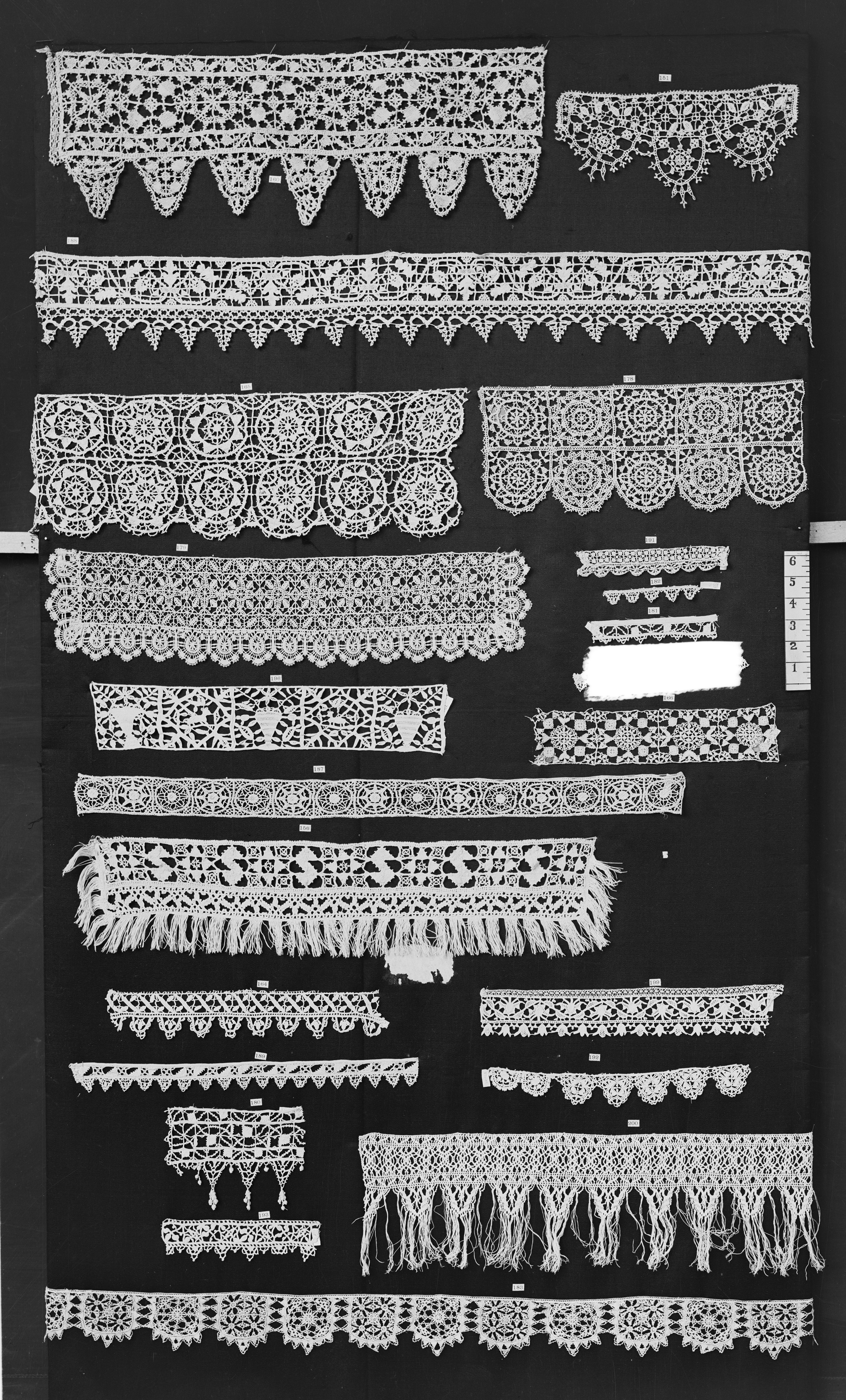
Needle lace, with its origins in Renaissance opulence, is typically associated with dense ornamentation and tactile luxury. However, in the hands of Zoey’s design philosophy, it undergoes a radical deconstruction. The strip is not a solid band but a lattice of interlocking threads, where the void between stitches becomes as significant as the thread itself. This is not lace as embellishment; it is lace as structural engineering. Each strip functions as a tensile beam, capable of supporting volume while maintaining transparency. The punto in aria technique—literally “stitches in the air”—elevates this concept to a metaphysical plane. Here, the strip is suspended, weightless, and yet it defines the silhouette through pure tension. The garment does not cover the body; it frames the body’s absence, creating a dialogue between what is worn and what is left exposed.
This material choice is a deliberate counterpoint to the industrial rigidity of traditional couture. Where conventional fabrics rely on seams and darts to create form, punto in aria strips rely on intrinsic tension and gravitational pull. The result is a silhouette that appears to be in perpetual motion, a frozen moment of structural collapse and rebirth. For SS26, this translates into garments that are modular and adaptive: strips can be reconfigured, detached, or layered to alter the wearer’s spatial presence. The strip becomes a tool for redefining the boundaries of the body itself, transforming the human form into an abstract landscape of intersecting lines and voids.
Futuristic Silhouettes: The Strip as Spatial Armature
The SS26 collection abandons the conventional garment envelope—the jacket, the dress, the coat—in favor of fragmented armatures that suggest rather than define. The strip is deployed as a scaffolding, wrapping the torso in asymmetrical bands that create optical illusions of elongation and compression. One key silhouette features a series of parallel strips that ascend from the hip to the shoulder, leaving the midriff entirely exposed. The negative space between these strips is not empty; it is charged with kinetic potential, as if the garment is perpetually in the process of being woven or unwoven.
Another silhouette explores the spiral strip, a continuous band that winds around the body from ankle to neck. This is not a simple spiral but a complex, non-Euclidean helix that alters the viewer’s perception of volume. The strip’s width varies—narrow at the extremities, widening at the torso—creating a rhythmic pulse that mirrors the body’s natural contours while simultaneously distorting them. The use of punto in aria ensures that each strip retains its own structural integrity, preventing the garment from collapsing into a mere net. Instead, it stands as a three-dimensional lattice, a wearable architecture that invites the eye to trace its infinite loops.
Perhaps most radical is the inverted strip silhouette, where strips are suspended from a central shoulder yoke, hanging vertically to the floor. This design inverts the traditional relationship between garment and gravity: the strips do not cling to the body but fall away, creating a curtain of light and shadow. The wearer moves within this cage of threads, their form glimpsed through the gaps. This is not modesty or exposure but a third state—a mediated visibility that challenges the binary of clothed and unclothed. The strip here becomes a filter, a lens through which the body is both revealed and abstracted.
Structural Innovation: The Strip as Generative System
Beyond silhouette, the strip functions as a generative system for creating new forms of garment construction. Traditional couture relies on pattern pieces that are cut and sewn. In contrast, Zoey’s approach treats the strip as a linear code, a series of instructions that can be woven, knotted, or fused to produce emergent geometries. The punto in aria technique allows for the creation of strips that are not merely linear but branched and networked, forming organic, tree-like structures that radiate from a central point. This is not a garment but a living system, one that can be manipulated by the wearer to create new configurations.
One innovation is the tension-lock strip, where each strip is anchored at both ends by a small, discreet clasp. By adjusting the tension, the wearer can alter the garment’s fit and silhouette in real-time. This transforms the act of dressing into a performative act of creation, blurring the line between designer and wearer. Another advancement is the fused strip, where multiple punto in aria strips are heat-bonded at intersection points to create rigid, shell-like panels. These panels can be detached and reassembled, allowing the garment to evolve from a diaphanous net to a solid exoskeleton. The strip, in this context, is not a fixed element but a mutable component of a larger, adaptive system.
Contextualizing the Global Frontier: Aesthetic and Cultural Implications
The Global Frontier origin of this study is not merely a geographical signifier but a conceptual framework. It rejects the Eurocentric dominance of traditional couture in favor of a decentered, hybrid aesthetic. The strip, in its raw form, is a universal element—found in African ndop cloth, Japanese sashiko, and Andean weaving. By rendering it in needle lace and punto in aria, Zoey’s work collapses these cultural references into a single, futuristic language. The result is a collection that feels both ancient and alien, grounded in craft yet reaching toward a speculative future.
The SS26 collection also engages with contemporary discourse on sustainability and material efficiency. The strip, by its very nature, uses minimal material to create maximum visual and structural impact. The punto in aria technique, which requires no backing fabric, eliminates waste entirely. Each garment is a precise, calculated arrangement of threads, with no excess. This is not fashion as consumption but fashion as engineering, where every strip serves a purpose in the overall system. The Global Frontier, then, becomes a site of radical possibility, where tradition and technology converge to produce something entirely new.
Conclusion: The Strip as a New Paradigm
In the SS26 collection, the strip transcends its conventional role as a decorative or functional element. It becomes a philosophical tool for interrogating the nature of garment, body, and space. Through the use of needle lace and punto in aria, Zoey Fashion Laboratory transforms the strip into a living architecture, one that breathes, moves, and adapts. The resulting silhouettes are not garments but environments, spaces that the wearer inhabits rather than simply wears. This is the definitive avant-garde gesture: to take the simplest element—a strip of thread—and elevate it into a monument to absence, light, and possibility. The future of couture, as this collection demonstrates, lies not in covering the body but in defining the void around it.