Deconstructing the Imperial Thread: A Zoey Fashion Lab Analysis of Ming Dynasty Calligraphy
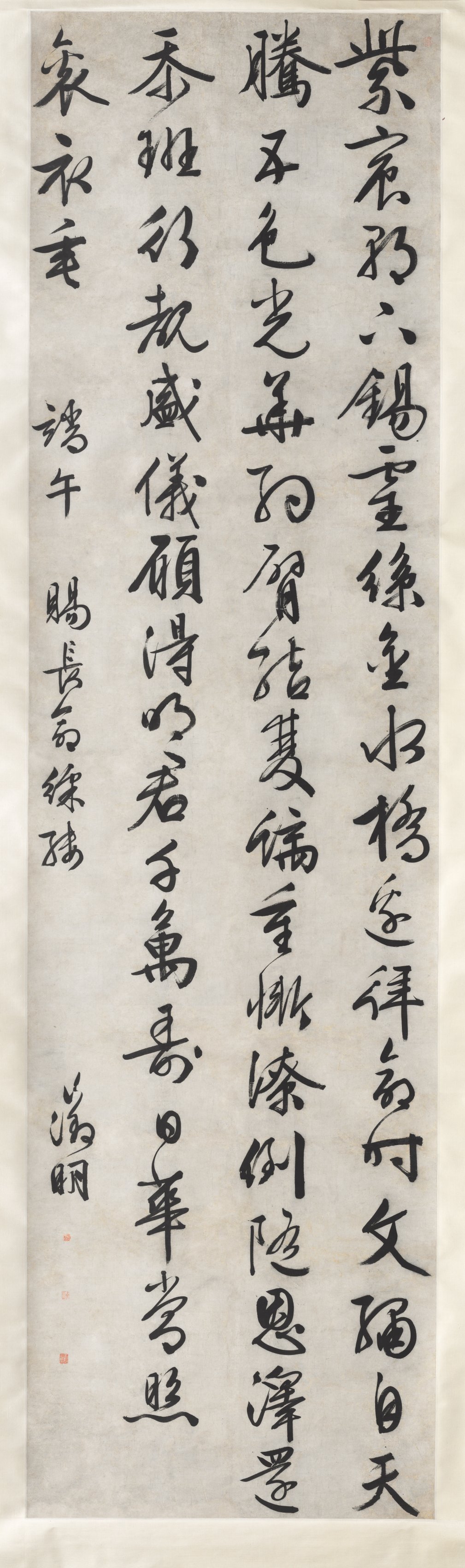
At Zoey Fashion Lab, we operate at the intersection of heritage and disruption. Our methodology, the "New DNA Strand," seeks to extract the fundamental genetic code of a historical artifact—its material, technique, and cultural resonance—and re-sequence it into a contemporary, avant-garde fashion statement. Today, we deconstruct a Poem on Imperial Gift of an Embroidered Silk, a hanging scroll from the Ming dynasty (1368-1644) executed in Running-Standard Script (xingkaishu) on paper. This is not a mere garment; it is a text, a texture, and a testament to imperial power. Our analysis will unravel its fibers and weave them into a new, radical narrative for Zoey Fashion Lab.
Material Memory: The Paper as Skin and Silk as Ghost
The primary substrate of this scroll is ink on paper. For an avant-garde fashion house, paper is a provocative material. It is fragile, absorbent, and archival. In our re-interpretation, the paper becomes a second skin—a biodegradable, sculptural textile. The Ming paper, likely made from mulberry bark, possesses a fibrous, translucent quality. We translate this into a layered, deconstructed organza that mimics the paper’s tactile memory. The ink, a carbon-based pigment, is not merely color; it is a code. We replicate its fluidity through liquid metallic embroidery that appears to bleed and pool on the fabric, creating a visual echo of the calligrapher’s brushstroke.
The poem’s title references an "Embroidered Silk," though the physical object is paper. This paradox is our entry point. The ghost of silk haunts the paper. We materialize this ghost by embedding micro-embroidered threads of raw silk into a base of recycled paper pulp fabric. The threads are not decorative; they are structural, forming the warp and weft of a new textile. This creates a tension between the ephemeral (paper) and the luxurious (silk), a core theme in our avant-garde collections. The scroll’s hanging format suggests a verticality that we translate into asymmetrical, gravity-defying silhouettes—draped panels that cascade like unfurled calligraphy, held together not by seams but by invisible magnetic closures that mimic the scroll’s roller.
Calligraphic Code: The Running-Standard Script as a Design Language
The Running-Standard Script (xingkaishu) is a hybrid style—part cursive, part formal. It embodies controlled spontaneity. For Zoey Fashion Lab, this script is not a pattern to be copied but a generative design system. Each character is a micro-architecture of strokes: the horizontal (heng), vertical (shu), and sweeping (pie). We deconstruct these strokes into laser-cut motifs on leather and neoprene. The strokes become asymmetric zippers, exposed seams, and strategic cutouts that reveal the body beneath. The "running" quality suggests movement; we translate this into kinetic panels that flutter with the wearer’s gait, using lightweight tech-fabrics that respond to air currents.
Consider the specific calligraphic gesture: the slanted, forceful dot (dian). In our design, this becomes a single, oversized rivet at the shoulder or hip, anchoring the garment. The curved, flowing hook (gou) is reimagined as a sculptural collar that wraps around the neck like an unfurled ribbon. The negative space within the characters—the white of the paper—is equally important. We interpret this as strategic voiding: sheer mesh panels, open back details, and deconstructed sleeves that reveal the architecture of the garment. The calligraphy is not printed; it is embodied.
Imperial Gift: Power, Hierarchy, and Subversion
The poem is an "Imperial Gift," a transaction of power. The emperor bestows embroidered silk, a symbol of status and labor. For our avant-garde analysis, we subvert this hierarchy. The gift becomes a site of resistance. We deconstruct the notion of luxury by using upcycled, decommissioned military fabrics (parachute silk, canvas) as the base for our "imperial" pieces. The embroidered silk is reimagined as digital embroidery on recycled polyester, mimicking the original’s opulence while critiquing its environmental cost. The gift is no longer a passive object; it is an active statement about labor, value, and ownership.
The Ming dynasty context adds layers of political and gendered meaning. Suzhou was a center of silk production, often associated with female labor. We highlight this by incorporating hand-stitched details that are deliberately imperfect—a nod to the unseen hands of artisans. The calligraphy, traditionally a male scholarly pursuit, is juxtaposed with feminine, subversive elements: raw edges, exposed linings, and asymmetrical hems. The imperial gift is thus reclaimed as a tool of empowerment, not subjugation. The garment becomes a wearable manifesto that questions who creates, who owns, and who wears power.
Avant-Garde Synthesis: The New DNA Strand in Practice
Our final collection piece is a deconstructed coat that embodies the scroll’s dualities. The exterior is a paper-like, biodegradable fabric (spun from bamboo and hemp) with laser-cut calligraphic strokes that reveal a silk-embroidered underlayer in gold and silver metallic threads. The coat’s structure is asymmetrical, with one shoulder draped like a scroll’s roller and the other cut away to expose a liquid metal ink pattern that appears to drip down the sleeve. The closure is not a button but a calligraphic clasp—a single, oversized, hand-embroidered character from the poem, functioning as a brooch. The hem is raw, frayed, and uneven, echoing the paper’s edge.
The color palette is restrained: the off-white of aged paper, the black of carbon ink, and the muted gold of faded embroidery. Accents of vermillion red—the color of imperial seals—appear as interior linings and hidden pocket details, visible only in motion. The garment is designed to be modular: the sleeves detach, the collar can be worn as a separate necklace, and the coat can be reversed to reveal the "ghost silk" layer. This modularity reflects the scroll’s dual existence as both text and object.
Conclusion: Wearable History, Radical Future
By deconstructing the Poem on Imperial Gift of an Embroidered Silk, Zoey Fashion Lab does not merely borrow from history; we re-sequence its DNA. The calligraphy becomes a design language; the paper becomes skin; the imperial gift becomes a critique of power. The result is an avant-garde garment that is at once ancient and futuristic, fragile and powerful, written and worn. This is not fashion as decoration; it is fashion as discourse. The scroll’s poem may speak of silk and empire, but our coat speaks of deconstruction, labor, and liberation. In the hands of Zoey Fashion Lab, the imperial thread is broken and rewoven into a new, radical fabric.