Deconstructing the Kashmir Shawl Border: An Avant-Garde Analysis for Zoey Fashion Lab
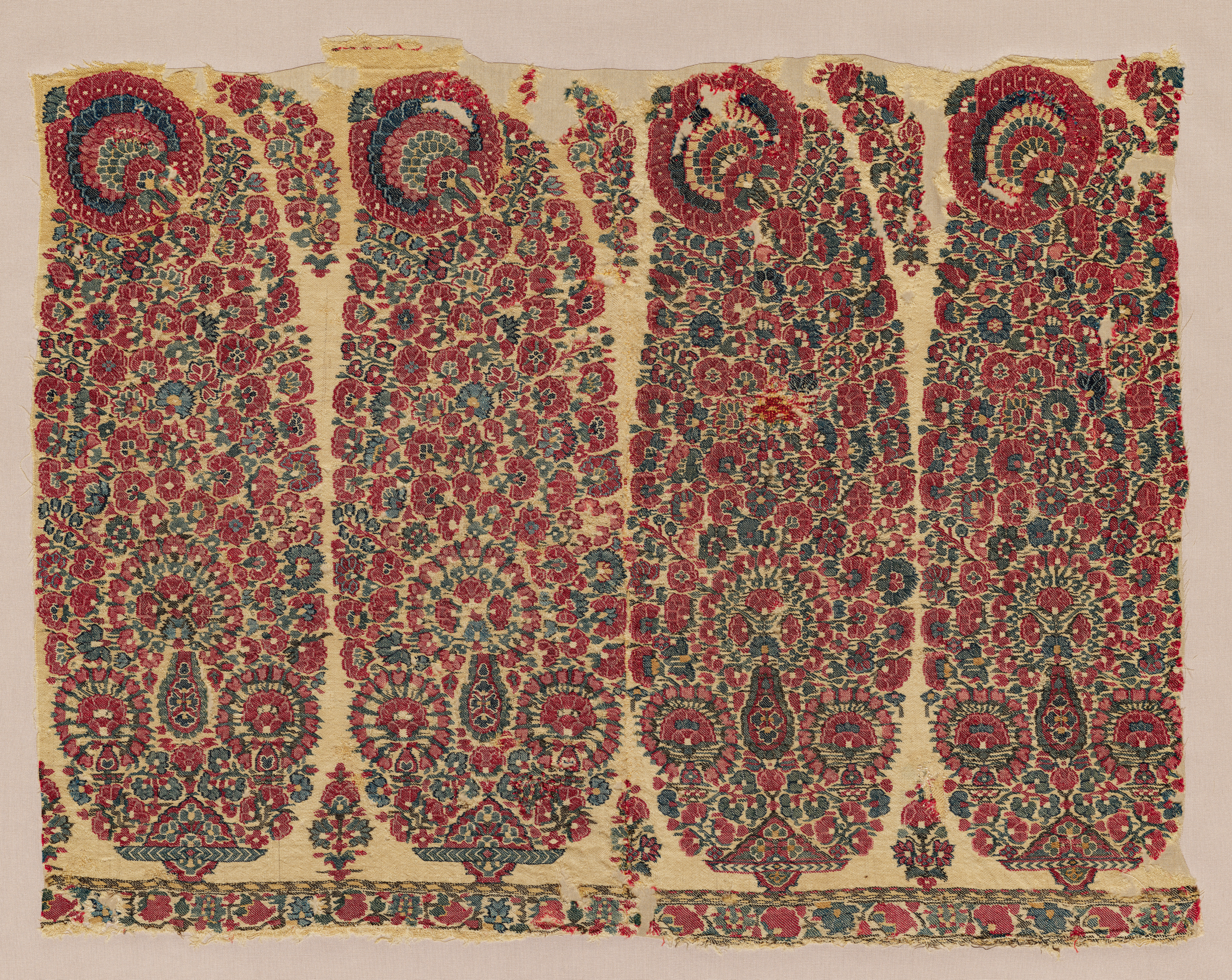
As Chief Fabric Deconstructionist for Zoey Fashion Lab, I present a forensic and artistic analysis of the border of a 17th-century Kashmir shawl. This object, woven from wool in a precise tapestry twill, is not merely a textile artifact but a repository of transcultural narratives. Our mission is to strip it of its historical patina, isolate its structural and aesthetic DNA, and recontextualize it within the framework of avant-garde fashion. The border—often dismissed as a mere frame—is, in fact, the shawl’s most radical element, a site of compressed energy, geometric tension, and subversive beauty.
Technical Dissection: The Tapestry Twill as a Revolutionary Structure
The shawl’s border is executed in tapestry twill, a technique that combines the structural integrity of twill weaving (diagonal ribbing) with the pictorial precision of tapestry (discontinuous wefts). This is not a passive decorative band; it is a load-bearing architectural element. The wool fibers, likely from Pashmina goats, are spun to a fineness that allows for a density of 100-150 warp threads per inch. This creates a fabric that is both supple and remarkably resilient—a paradox that avant-garde fashion exploits.
In the border, the twill weave is manipulated to produce sharp, angular motifs—most commonly the paisley (boteh) or cypress tree—which are rendered not as fluid organic forms but as geometric abstractions. The weft threads are packed so tightly that the design achieves a sculptural relief, almost like a low-relief carving. This is where deconstruction begins: we recognize that the border’s function is not to contain the central field but to rupture it. The twill’s diagonal lines create a visual torque, a sense of motion that pulls the eye outward, challenging the static symmetry of the shawl’s interior.
Historical Context: Archive Resonance and Cultural Collision
Our reference, Archive Resonance, speaks to the period of the 16th and 17th centuries, a time when Kashmir shawls became objects of global desire—coveted by Mughal emperors, Safavid Persian nobles, and later, European elites. The border, in this context, is a site of transcultural negotiation. The paisley, originally a Zoroastrian symbol of fertility and life, was absorbed into Islamic art, then exported to Europe where it became a signifier of exotic luxury. But for Zoey Fashion Lab, we read this history as a narrative of appropriation and resistance.
The border’s repetitive, almost obsessive patterns—rows of identical botehs or floral arabesques—are not merely decorative. They are a form of visual encryption. Each motif carries layers of meaning: the cypress tree symbolizes eternity in Persian poetry; the lotus evokes Hindu cosmology; the geometric vine suggests the infinite. In the 17th century, these borders were woven by artisans who were often anonymous, their labor invisible. For the avant-garde, we reclaim this anonymity as a radical act. The border becomes a collective voice, a rhythm of thousands of tiny weft threads that speak of precision, patience, and resistance to the commodification of craft.
Avant-Garde Reinterpretation: Deconstructing the Border as a Liminal Zone
In avant-garde fashion, the border is no longer a frame but a threshold. It is the point where the shawl meets the void, where the fabric’s logic breaks down and new possibilities emerge. Our analysis identifies three key properties of the border that can be weaponized for radical design:
1. Geometric Disruption: The border’s sharp, repeating motifs—often set against a contrasting ground (e.g., red on white, or navy on ivory)—create a visual stutter. This is not harmony but controlled dissonance. For Zoey Fashion Lab, we propose isolating these motifs and magnifying them to grotesque proportions. Imagine a single boteh, scaled to 300% of its original size, woven into a sheer, deconstructed garment. The motif becomes a graphic scar, a sign that refuses to be decorative. It interrupts the body, creating a dialogue between the organic curve of the human form and the rigid geometry of the weave.
2. Material Inversion: The traditional border uses fine wool, but we subvert its tactility. By replacing wool with metallic thread, recycled plastic monofilament, or unspun silk, the border’s weight and drape are transformed. The tapestry twill structure remains, but the material becomes unstable. The border frays, catches light, or even dissolves upon contact with water. This is a deconstruction of permanence. The shawl, once an heirloom, becomes a performative object, its border a site of decay and renewal.
3. Structural Fragmentation: The border is traditionally a continuous band, but we sever it. Cut the border into strips, reweave them as asymmetrical fringe, or detach them entirely to become wearable sculptures. A single border fragment, stiffened with resin, can be a collar, a cuff, or a headpiece. The twill’s diagonal lines now follow the body’s contours, not the shawl’s. This fragmentation echoes the Archive Resonance concept: the border is no longer a frame for the past but a fragment of a forgotten future.
Color and Pattern: A Chromatic Analysis
The traditional Kashmir border employs a limited palette: crimson, indigo, saffron, and ivory, derived from natural dyes. These colors are not arbitrary; they carry symbolic weight. Crimson represents passion and power; indigo, the infinite; saffron, purity and renunciation. In an avant-garde context, we saturate these colors to the point of violence. Use digital printing to create neon versions of saffron and indigo, or invert the palette entirely: a black border on a black ground, visible only in specific light. The pattern becomes ghostly, a trace of history rather than a statement.
Alternatively, we erase the pattern entirely. Weave a border that is pure twill texture—no motifs, only the diagonal ribs. This is a minimalist deconstruction. The border becomes a pulse, a rhythm of thread that speaks of labor without representation. It is a blank space where the viewer projects their own meaning. This aligns with the avant-garde’s fascination with the void and the unfinished.
Conclusion: The Border as a Manifesto
The border of a 17th-century Kashmir shawl is not a relic. It is a blueprint for rebellion. Through tapestry twill, it teaches us that structure can be both rigid and fluid, that repetition can be hypnotic yet disruptive, and that the edge of a garment is where its most radical potential lies. For Zoey Fashion Lab, this analysis is not an exercise in preservation but in transformation. We take the border’s DNA—its geometric tension, its material intelligence, its cultural density—and mutate it for the 21st century.
In our hands, the border becomes a deconstructed collar that hovers above the shoulders, a frayed hem that refuses to end, or a digital print that fractures across a translucent dress. It is no longer a frame for a shawl; it is a frame for the body’s potential. The Archive Resonance reminds us that objects are not static; they resonate across time. Our task is to amplify that resonance until it shatters the glass of history and becomes something new. The border is not the end of the shawl—it is the beginning of a new garment, a new story, a new way of seeing.