Deconstructing the Maximilian Close Helmet: A New DNA Strand for Zoey Fashion Lab
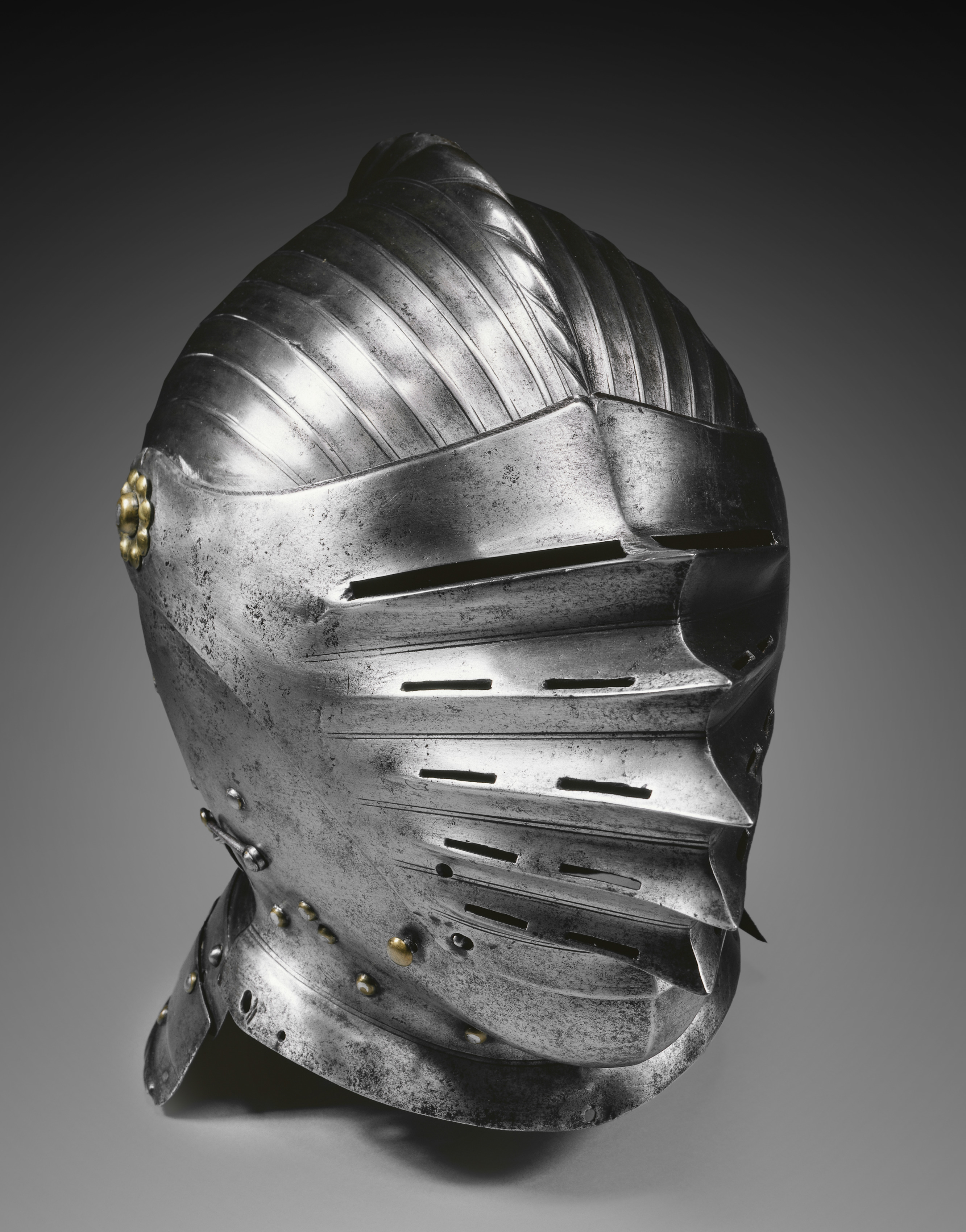
At Zoey Fashion Lab, deconstruction is not merely a technique; it is a philosophy. We do not dismantle garments to destroy them; we dissect them to discover their core genetic code. The subject of this analysis—a Close Helmet in Maximilian Style, forged in Germany from steel and brass—presents a formidable challenge and an extraordinary opportunity. This object is not a historical artifact; it is a new DNA strand waiting to be woven into the avant-garde lexicon of contemporary fashion. Our task is to isolate its structural, material, and symbolic components, then re-engineer them into a wearable, provocative statement that challenges the boundaries of form, function, and identity.
1. Structural Genetics: The Architecture of the Helmet
The Maximilian close helmet, dating from the early 16th century, is a masterpiece of ergonomic engineering. Its defining features—the articulated visor, the fluted surface, the gorget plate, and the riveted construction—are not decorative whims but functional necessities born from the crucible of jousting and warfare. For Zoey Fashion Lab, this structural vocabulary becomes a blueprint for a new kind of armor—one designed not for physical battle, but for the psychological and social arenas of the modern world.
The Fluted Surface: The parallel, vertical fluting of the Maximilian helmet is its most iconic element. In our avant-garde interpretation, this is not a static texture but a dynamic, kinetic surface. Imagine a fabric that mimics the fluting through layered, laser-cut neoprene or sculpted thermoplastic polyurethane (TPU). The fluting could be engineered to collapse and expand with movement, creating a living, breathing exoskeleton. Alternatively, we could translate the fluting into a series of vertical pleats on a silk organza or metallic mesh, creating a ghostly, ethereal echo of the original steel.
The Articulated Visor: The visor’s ability to pivot and lock is a study in controlled revelation. This concept of selective visibility is profoundly relevant to contemporary fashion. We can deconstruct this into a modular headpiece where sections of the face are alternately shielded and exposed. Consider a hood or a veil constructed from interlocking, magnetized panels of brass-coated metal and transparent acrylic. The wearer could adjust their level of exposure—a literal and metaphorical curtain of identity. This speaks to our era of digital masks and curated personas.
The Gorget Plate and Rivets: The gorget, which protects the neck and upper chest, is a zone of transition between the helmet and the body. For Zoey, this becomes a collar of power. We can deconstruct the rigid steel gorget into a flexible, articulated collar using 3D-printed stainless steel links or hand-stitched brass chainmail. The rivets, once purely functional, become ornamental punctuation. We can use oversized, polished brass rivets as closures on a leather harness, or as studs on a deconstructed denim jacket, creating a dialogue between medieval craftsmanship and industrial punk.
2. Material Alchemy: Steel Meets the Sensorial
The original helmet is a study in contrasts: cold steel against warm brass, hard metal against the softness of the human form. Our avant-garde deconstruction must re-imagine these materials not as relics, but as active agents in a new sensory experience.
Steel as Fabric: The weight and rigidity of steel are its defining characteristics. We can subvert this by fragmenting the steel into small, flexible scales. A dress constructed from thousands of hand-cut, polished steel scales, each riveted to a sheer mesh base, would capture the helmet’s reflective quality while allowing for fluid movement. The sound of the scales clinking with each step becomes an auditory component of the garment—a sonic armor.
Brass as Accent and Line: Brass, with its warm, golden hue, was used for the helmet’s decorative borders and crests. In our interpretation, brass becomes a linear, calligraphic element. We can use thin, flexible brass wire to embroider the fluting patterns onto a base fabric of black wool or charcoal cashmere. Alternatively, brass could be electroformed onto a textile, creating a metallic second skin that is both rigid and pliable. The contrast between the matte black of the fabric and the reflective brass creates a dramatic, chiaroscuro effect.
Thermal and Tactile Duality: The original helmet is a heat trap. Our deconstruction can play with this thermal property. Imagine a garment that incorporates phase-change materials or thermochromic pigments that change color in response to body heat. The fluted patterns could become visible only when the wearer is warm, revealing a hidden layer of the design. This transforms the garment from a static object into a responsive, living entity.
3. Symbolic Re-coding: From Warrior to Avant-Garde Icon
The Maximilian helmet is a symbol of chivalric valor, aristocratic status, and martial power. For the Zoey Fashion Lab, this symbolism is a palette to be re-painted. We must strip the helmet of its historical context and re-code it for a new narrative.
Deconstructing Power: The helmet’s original purpose was to protect and intimidate. In our avant-garde context, we can subvert this power by making it fragile, transparent, or incomplete. A helmet form constructed from clear, cracked acrylic, held together by brass wire, speaks to the vulnerability beneath the armor. A hood that mimics the shape of the visor but is made of delicate, hand-dyed silk organza suggests the fragility of identity in the digital age. The wearer is not a warrior but a poet of resistance.
The Helmet as a Mask: The close helmet is the ultimate mask, hiding the face and creating an anonymous, formidable presence. This resonates deeply with our contemporary obsession with avatars, filters, and online personas. We can deconstruct this into a series of wearable masks that are both protective and expressive. Consider a brass mesh visor that obscures the face but allows the eyes to be seen—a veil of intimacy. Or a sculpted, 3D-printed helmet that is open at the back, revealing the wearer’s hair and neck, creating a tension between concealment and exposure.
Gender Fluidity: The Maximilian helmet is aggressively masculine. Our deconstruction must queer this object. The fluted, curvilinear lines of the helmet can be re-interpreted on a corset or a bustier, emphasizing the female form while borrowing the language of armor. A brass and steel collar can be worn over a sheer, flowing dress, creating a dialogue between hardness and softness, protection and vulnerability. The garment becomes a third gender—neither armor nor lingerie, but a new hybrid.
4. The New DNA Strand: A Collection Blueprint
Based on this analysis, Zoey Fashion Lab proposes a capsule collection titled “Codex Ferrum” (The Iron Code). This collection will not reproduce the helmet; it will extract its genetic code and express it through a series of avant-garde garments and accessories.
- Garment 1: The Fluted Shift – A floor-length gown constructed from laser-cut neoprene, with vertical fluting that expands and contracts with movement. The fluting is highlighted with brass piping. The back is entirely open, revealing the spine.
- Garment 2: The Visor Veil – A headpiece consisting of a brass wire frame that mimics the visor’s profile, draped with a single layer of black silk organza. The veil can be lifted or lowered, controlled by a small brass mechanism at the temple.
- Garment 3: The Rivet Harness – A deconstructed leather and brass harness that wraps around the torso, using oversized rivets as the primary closure. The harness is worn over a sheer, transparent bodysuit, creating a visual of exposed vulnerability.
- Garment 4: The Sonic Scale Dress – A dress made entirely of hand-cut steel scales, each riveted to a black mesh base. The scales are arranged in vertical rows, echoing the fluting. The dress produces a soft, metallic chime with every step.
In conclusion, the Close Helmet in Maximilian Style is not a relic; it is a genetic repository. By deconstructing its structure, materials, and symbolism, Zoey Fashion Lab can forge a new DNA strand that speaks to the complexities of identity, power, and vulnerability in the 21st century. This is not fashion as decoration; it is fashion as existential armor.