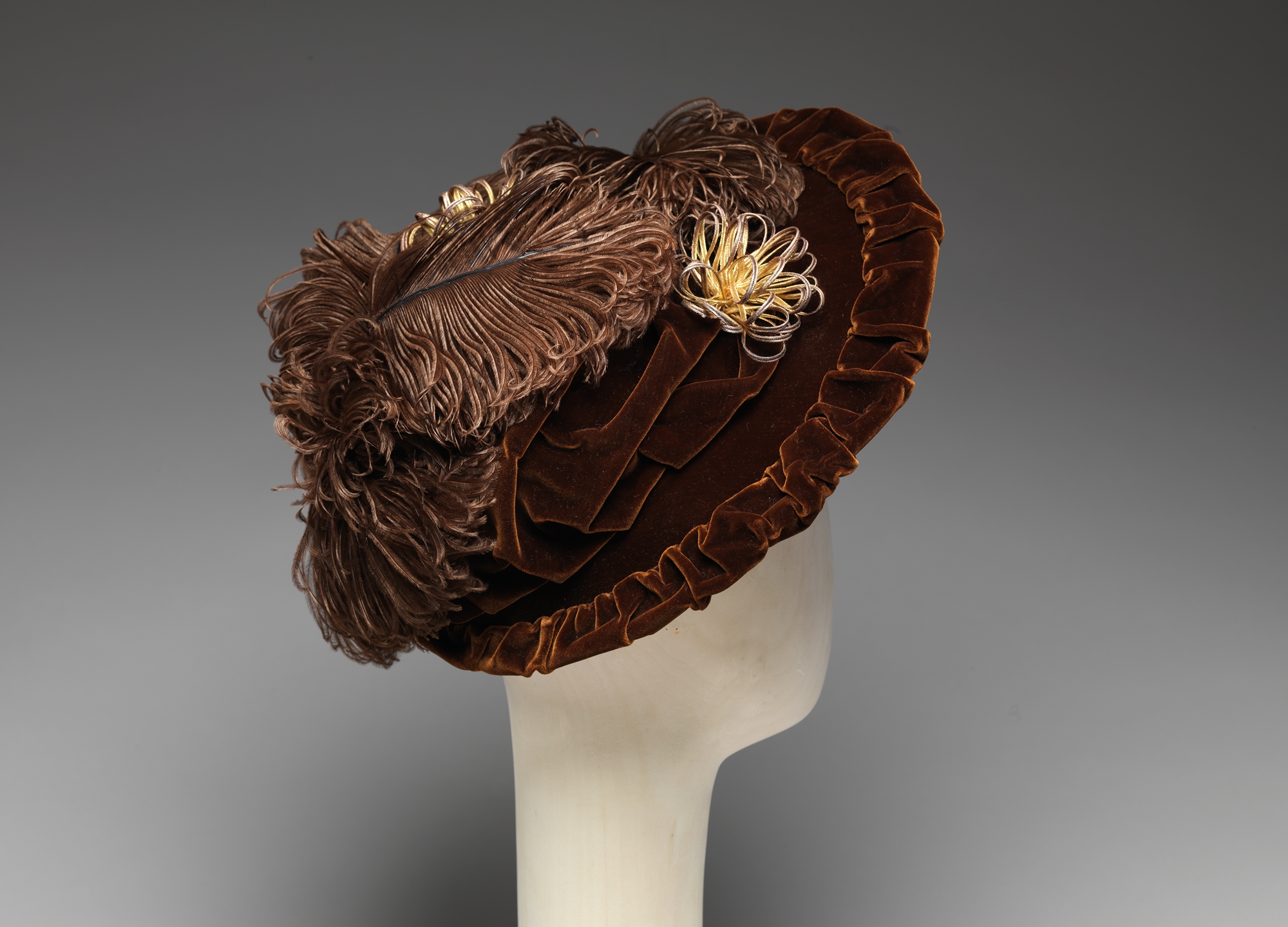
The Deconstructed Crown: A Futurist Re-Evaluation of the French Hat for SS26
The hat, in its most traditional French incarnation, is an artifact of rigid social codes—a symbol of bourgeois propriety, equestrian lineage, or the ephemeral artistry of the milliner. For Zoey Fashion Laboratory’s SS26 avant-garde study, we dismantle this historical relic. We are not designing a headpiece; we are engineering a futuristic silhouette that critiques the very concept of adornment. This analysis deconstructs the French hat through a lens of structural innovation, material negation, and architectural defiance, proposing a new taxonomy for headwear in the post-humanist wardrobe.
I. The Anti-Millinery: Rejecting the Ornamental
Traditional French millinery relies on the fetishization of materials: sinamay straw, sinuous feathers, and hand-blocked felt. Our SS26 proposition begins with a radical premise—the hat exists as a negative space, a void that defines the head’s relationship to the environment. Without a specified medium, we are liberated to explore immaterial structure. The silhouette is not built from fabric or felt but from tension, shadow, and volumetric absence. Imagine a brim that is not a solid plane but a lattice of carbon-fiber filaments, each strand vibrating at a frequency that creates a holographic boundary. The crown is a geodesic shell of translucent resin, its facets refracting light to distort the wearer’s facial topography. This is not a hat; it is a wearable architectural intervention.
The deconstructive ethos demands we sever the hat from its utilitarian roots. A French beret, for instance, is a symbol of casual rebellion. Our SS26 iteration is a magnetic field of micro-perforated titanium, shaped by the wearer’s own bioelectric currents. The crown collapses and expands with each heartbeat, a living sculpture that critiques the static nature of traditional headwear. The brim, if it exists, is a floating ring of polarized glass, suspended by invisible wires, casting a perpetual eclipse on the wearer’s face. This is the futurist silhouette: not a form, but a process of becoming.
II. Structural Innovation: The Architecture of the Void
Structural innovation in this context is not about adding volume but engineering absence. The hat’s core is a parametric lattice, generated by algorithms that respond to the wearer’s cranial geometry. This lattice is self-supporting, using tensegrity principles borrowed from Buckminster Fuller. The result is a floating exoskeleton that appears to defy gravity. The crown is a series of interlocking, hollow shells, each one a negative cast of the one before, creating a matryoshka of emptiness. The brim is a cantilevered ellipse, its edge sharpened to a sub-millimeter fineness, slicing through the air as the wearer moves.
This structure is modular and adaptive. For daytime, the hat can be compressed into a flat, disc-like form, a minimalist visor that shields the eyes from UV radiation with a photochromic membrane. For evening, it expands into a full, cathedral-like canopy, its lattice glowing with embedded OLED fibers that pulse in sync with ambient sound. The transformative mechanism is a hydraulic system of micro-actuators, powered by kinetic energy harvested from the wearer’s gait. This is wearable infrastructure, a hat that adapts to context rather than dictating it.
III. Futuristic Silhouettes: The Post-Human Crown
The SS26 silhouette is a rejection of the anthropomorphic. Traditional hats accentuate the human face; our design obscures, distorts, and recontextualizes it. The hat’s profile is a hyperbolic paraboloid, its curves referencing both the saddles of equestrian hats and the warped spacetime of general relativity. The crown is a toroidal vortex, a ring of compressed air held in place by a magnetic field. The brim is a Möbius strip, its single surface creating a continuous, unbroken line that loops through the third dimension. This is not a hat; it is a topological paradox.
The color palette is non-spectral: structural black, refractive white, and the iridescence of oil on water. The hat’s surface is a programmable metasurface, capable of shifting between matte, gloss, and mirror finishes on command. The wearer controls this via a neural interface, a subcutaneous chip that reads their emotional state. In moments of anxiety, the hat becomes opaque and soundproofing. In moments of confidence, it reflects the environment, making the wearer a chameleon of light and space. This is the ultimate deconstruction of the hat’s social function: it is no longer a signifier of class or taste, but a dynamic extension of the self.
IV. Material Negation and the Avant-Garde Imperative
The absence of a specified medium is our greatest asset. We are forced to think beyond materiality. The hat exists as a conceptual sculpture, a digital artifact that can be realized through additive manufacturing, robotic weaving, or bioprinting. The avant-garde imperative is to push the boundaries of what a hat can be, not what it is. We propose a hat as a wearable device, a sensorium that collects and processes data. Its lattice is embedded with environmental sensors that measure air quality, UV index, and sound levels. Its brim is a flexible display that projects augmented reality information onto the wearer’s peripheral vision.
This is the futurist silhouette for SS26: a hat that is intelligent, adaptive, and self-aware. It is a critique of the static, decorative hat of the past, and a proposal for a functional, interactive future. The French origins are retained in the lineage of couture craftsmanship, but the execution is radically post-industrial. The milliner is replaced by the algorithmic designer, the sewing machine by the 3D printer, and the felt block by the parametric model. This is not a hat; it is a manifesto.
V. Conclusion: The Hat as a Threshold
In this standalone avant-garde study, the hat transcends its functional and symbolic origins. It becomes a threshold between the human and the machine, the past and the future, the material and the immaterial. The French hat, once a marker of cultural heritage, is reimagined as a site of radical innovation. For SS26, Zoey Fashion Laboratory presents not a collection of hats, but a new taxonomy of headwear—one that is fluid, intelligent, and architecturally audacious. The deconstructive process is complete; what remains is a pure, unmediated expression of structural possibility. This is the avant-garde: not a style, but a method of seeing.