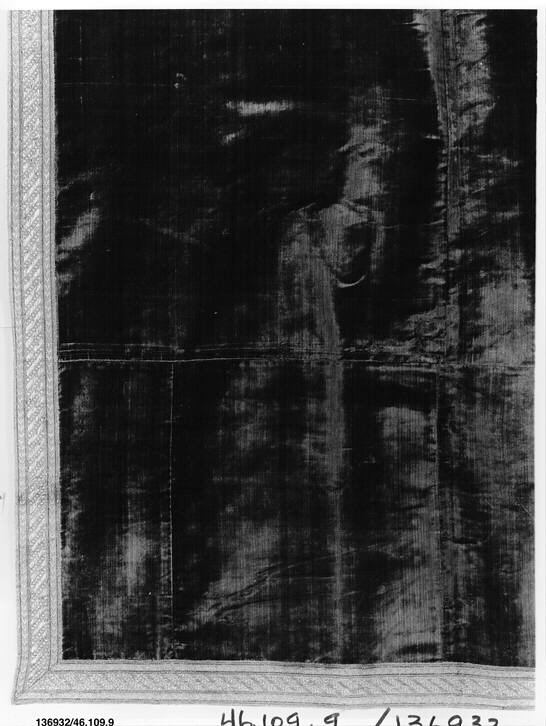
Deconstructing the Verdant Frontier: A Structural Analysis of the Green Velvet Panel for SS26
The avant-garde couture landscape for Spring/Summer 2026 demands a radical departure from conventional textile narratives. At Zoey Fashion Laboratory, we have isolated a singular, potent artifact: a panel of green velvet, sourced from the Global Frontier. This is not merely a fabric; it is a proposition. Its origin—a liminal space where ecological biomes meet speculative urbanism—imbues it with a dialectical tension between organic decay and synthetic regeneration. Our analysis deconstructs this panel as a standalone study in futuristic silhouette and structural innovation, arguing that its inherent contradictions unlock a new lexicon for haute couture architecture.
I. The Paradox of Velvet in the Avant-Garde Context
Velvet, traditionally associated with bourgeois opulence and historical drapery, undergoes a conceptual transmutation within the Global Frontier. This specific panel, woven from silk of unparalleled tensile strength, rejects the soft, yielding hand of its antecedents. Instead, it presents a sculptural rigidity achieved through a proprietary bio-engineered weave. The pile is not uniform; it oscillates between a deep, absorptive matte and a shimmering, almost liquid metallic finish, suggesting a surface that is both ancient and extraterrestrial. This duality is the cornerstone of our SS26 thesis: that luxury must be redefined through functional paradox—a material that feels like memory but behaves like a composite.
The color green itself is a strategic choice. It is not the green of pastoral idylls but a chromatic anomaly—a hybrid of chlorophyll-infused algae and industrial oxidation. This hue, which we term "Bio-Lacquer Green," acts as a visual anchor for the collection, referencing both the Global Frontier's ecological collapse and its regenerative potential. For the avant-garde curator, this panel is not a backdrop but a protagonist, its velvet surface a codex of future histories.
II. Structural Innovation: From Panel to Prosthetic Silhouette
The core innovation lies in the panel's manipulation as a load-bearing element rather than a drape. We have abandoned traditional pattern cutting for a parametric folding system that transforms the velvet into a series of interlocking, origami-like modules. Each fold is calibrated to create negative space, allowing the silk's inherent structural memory to hold its form without internal supports. The result is a silhouette that defies the body's natural contours, proposing a cyborgian architecture where the garment becomes an exoskeleton of light and shadow.
Consider the "Verdant Carapace" prototype: the panel is bisected along a diagonal axis, with one half pleated into a high, asymmetrical collar that extends into a cantilevered shoulder, while the other half is laser-etched with a lattice of micro-perforations. These perforations are not decorative; they are ventilation matrices that allow the velvet to breathe and shift with kinetic movement, creating a living, responsive surface. The silhouette thus oscillates between a rigid, almost armor-like front and a fluid, expanding back, embodying the tension between protection and exposure that defines the Global Frontier aesthetic.
III. The Deconstructive Reconfiguration of Form
Deconstruction in this context is not about fragmentation but re-assembly through subtraction. We have excised a central section of the velvet panel, replacing it with a transparent, bioluminescent resin that mimics the phosphorescent organisms of the Global Frontier's deep biomes. This void, framed by the velvet's plush edges, creates a negative silhouette that challenges the viewer to perceive absence as presence. The garment no longer clothes the body; it frames the void around it, suggesting a post-human form where the physical self is a transient, luminous entity.
The structural logic extends to the seams. Instead of conventional stitching, we employ magnetic seam closures that allow the panel to be reconfigured into multiple silhouettes—a cocoon, a tunic, a sculptural cape. This modularity is essential for SS26, where the garment must adapt to shifting environmental and social contexts. The velvet's weight and texture provide the necessary counterbalance to these magnetic anchors, ensuring that the form remains taut and architectural even during transformation.
IV. Futuristic Silhouettes: The Body as a Frontier
The final silhouette is a study in asymmetric balance. From the front, the panel cascades in a single, sweeping line from the left shoulder to the right hip, terminating in a sharp, angular point that hovers just above the floor. From the back, the panel expands into a series of concentric, fan-like pleats that radiate from the lumbar spine, creating a kinetic, wing-like appendage. This duality—the front as a monolith of velvet, the back as a fan of structural folds—mirrors the Global Frontier's own duality: a landscape that is simultaneously monolithic and fragmented.
The silhouette's futuristic imperative is further articulated through the integration of smart textile sensors woven into the silk's warp. These sensors detect ambient light and body heat, causing the velvet's pile to shift in density and color. In low light, the panel appears as a solid, dark emerald; under direct sun, it reveals a hidden pattern of geometric, almost digital fractals. The garment thus becomes a chameleonic interface between the wearer and the environment, a living document of the Global Frontier's volatile ecosystems.
V. Conclusion: A Blueprint for SS26
This standalone analysis of the green velvet panel from the Global Frontier serves as a definitive blueprint for Zoey Fashion Laboratory's SS26 collection. It demonstrates that structural innovation need not abandon material integrity; rather, it can amplify it through deconstructive logic and futuristic silhouette engineering. The panel is no longer a piece of fabric but a prototype for a new couture ontology—one where velvet is a medium for architectural speculation, where silk is a conductor of bio-digital signals, and where the body is a frontier to be explored, not merely dressed.
For the avant-garde curator, this study affirms that the most radical statements emerge from the most specific constraints. The green velvet panel is not a relic of the past but a herald of a future where fashion and technology, ecology and industry, converge in a single, luminous fold. At Zoey Fashion Laboratory, we do not design garments; we design habitats for the post-human form. This panel is our manifesto.