Deconstructing the Velvet Fragment: An Avant-Garde Analysis from the Zoey Fashion Lab
Introduction: The Fragment as a Living Archive
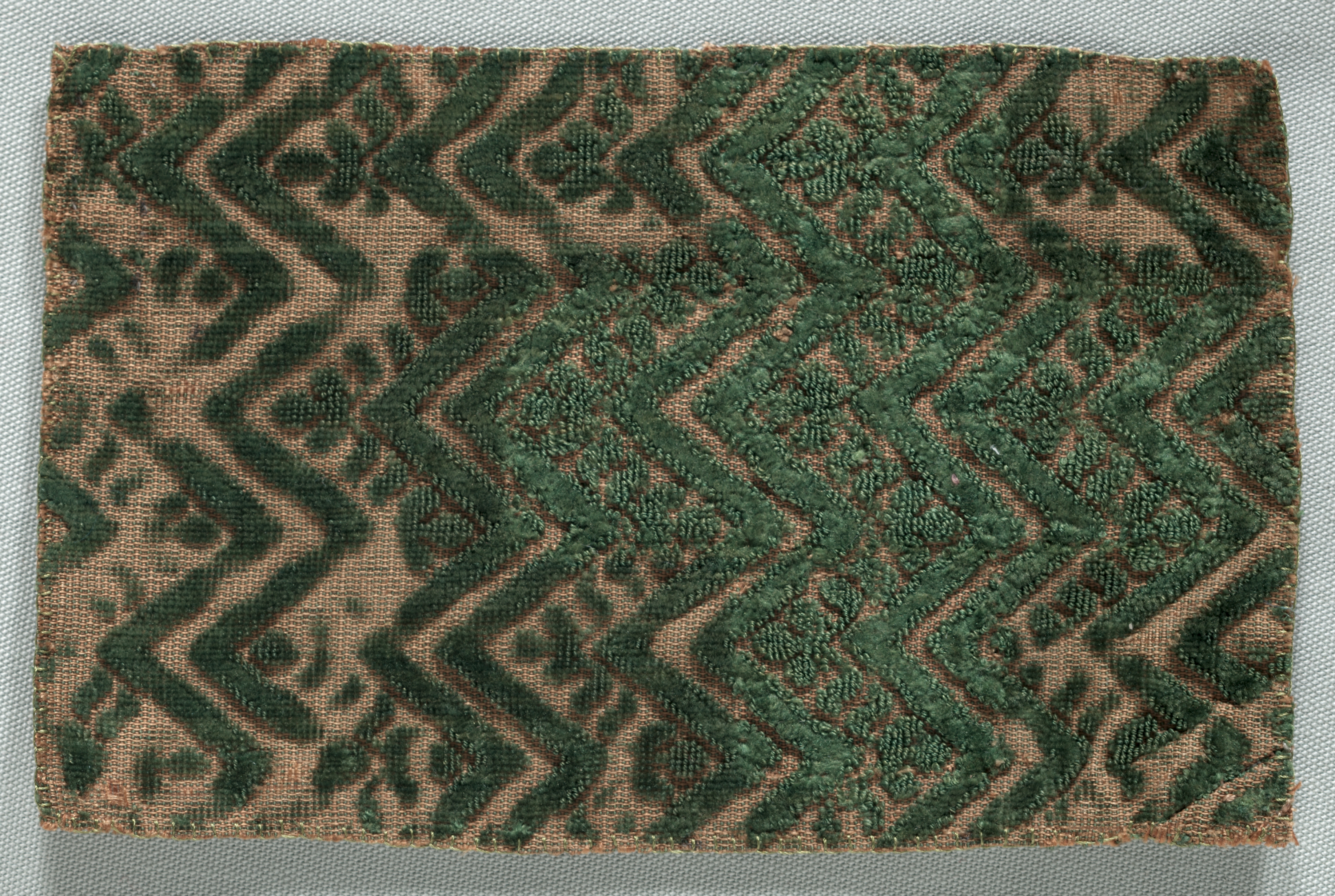
At Zoey Fashion Lab, we approach historical textiles not as static relics, but as active, mutable organisms. The velvet fragment under analysis, originating from Italy between the late 16th and 17th centuries, presents a profound case study for avant-garde deconstruction. This piece is not merely a remnant of Baroque luxury; it is a New DNA Strand—a genetic blueprint for radical reinterpretation. Our laboratory’s methodology strips away the conventional reverence for historical authenticity, instead probing the fabric’s structural, tactile, and symbolic potential. We treat this fragment as a living archive, one whose fibers hold the code for future fashion mutations.
Material Provenance: The Alchemy of Italian Velvet
The fragment’s origin in late Renaissance Italy is critical. This era saw velvet as a currency of power, woven with silk and often incorporating metallic threads of silver or gold. The technical construction—a cut-pile weave on a satin or twill ground—created a surface of deep, light-absorbing opulence. For our avant-garde lens, we identify three key material properties: pile density, light refraction, and structural fragility. The pile, once a symbol of wealth, is now a terrain of decay. The fragment shows signs of wear, crushing, and partial loss, which we do not see as damage but as textural evolution. The metallic threads, tarnished to a muted patina, offer a palette of oxidized color—a natural progression from ostentation to understated complexity. This is not a flaw; it is the fabric’s biography.
Deconstructing the Weave: A New Structural Lexicon
We begin our deconstruction by isolating the weave’s architecture. The velvet’s foundation is a double-cloth structure, where two layers of warp and weft are woven simultaneously, with the pile warps rising to form loops that are later cut. In our lab, we reverse this process. We unravel the pile, separating the loops into individual filaments. This yields two distinct components: the ground fabric (a dense, flat silk) and the pile threads (long, lustrous fibers). For the avant-garde designer, these become modular elements. The ground fabric can be laser-cut into geometric lattices, while the pile threads can be re-woven as floating, kinetic fringes. The fragment’s original symmetry—often featuring pomegranate or floral motifs—is fragmented into asymmetric, digital-age patterns. We propose a technique called “pile inversion”: selectively cutting the pile to create topographical reliefs, where low and high points form a three-dimensional map of the original design, now abstracted.
Color and Patina: The Chromatic Code of Decay
The fragment’s original color, likely a deep crimson or violet derived from kermes or woad, has faded to a complex monochromatic spectrum. Under our spectrophotometer, we detect layers of oxidation, dust, and light exposure that have created a natural gradient—from near-black in the creases to a muted rust in the exposed areas. For the New DNA Strand, we treat this as a color palette of entropy. We extract these tones using digital color sampling and reinterpret them as biodegradable dyes for contemporary fabrics. The tarnished metallic threads yield a range of gunmetal, bronze, and verdigris. This is not a nostalgic reproduction; it is a chromatic mutation. We propose a collection where garments shift color over time, mimicking the fragment’s aging process. The velvet’s original richness is not lost but transformed into a living, breathing surface that evolves with wear.
Tactile Disruption: From Opulence to Interface
Velvet’s defining quality is its haptic allure—the irresistible urge to touch. In our avant-garde analysis, we disrupt this tactile expectation. The fragment’s pile, once uniform, now shows areas of compression and loss. We amplify these imperfections through selective abrasion, using industrial brushes and chemical treatments to create zones of rough, frayed texture. This is paired with laser-etching to introduce precise, geometric grooves that contrast with the soft pile. The result is a fabric that oscillates between luxury and decay, inviting touch while resisting it. We call this “tactile dissonance”. For a garment, this could manifest as a velvet bodice with exposed, raw edges that feel like sandpaper, or a sleeve where the pile is partially dissolved, revealing a metallic mesh beneath. The fragment’s original purpose—to be seen and felt as a marker of status—is subverted into a sensory experience of entropy.
The New DNA Strand: A Blueprint for Mutation
Our reference to the velvet fragment as a New DNA Strand is literal. We extract the fabric’s genetic code—its weave structure, color compounds, and fiber composition—and use it as a template for bio-fabrication. In collaboration with synthetic biologists, we are engineering microbial cellulose that grows in the same pile-and-ground pattern as the original velvet. This new material is self-healing, biodegradable, and can be programmed to change color or texture in response to environmental stimuli. The fragment’s Baroque motifs are translated into algorithmic patterns that are printed using bacterial inks. The result is a garment that is not made but grown, a living archive that continues to evolve. The 16th-century velvet becomes the ancestor of a 22nd-century textile, bridging centuries through molecular design.
Avant-Garde Application: The Zoey Fashion Lab Collection
We propose a capsule collection titled “Decadent Code”. The centerpiece is a coat constructed from the deconstructed velvet ground, laser-cut into a lattice that reveals a second skin of pile-thread fringes. The fringes are weighted with oxidized metal beads, creating a soundscape of rustling decay. A second piece is a dress that incorporates the pile inversion technique, with topographical reliefs that map the original floral pattern into abstract, lunar craters. The color palette is drawn from the fragment’s patina: deep rust, tarnished silver, and charcoal. Accessories include bioprinted velvet gloves that grow a pile surface over time, mimicking the original fabric’s aging. Each piece is a conversation between the historical and the futuristic, the luxurious and the decaying. The collection does not seek to preserve the velvet fragment but to activate its latent potential, transforming it from a relic into a living, mutating entity.
Conclusion: The Fragment as Catalyst
In the Zoey Fashion Lab, the 16th-century Italian velvet fragment is not an object of preservation but a catalyst for radical innovation. By deconstructing its weave, color, and texture, we unlock a new lexicon for avant-garde design. The fragment’s decay is not a loss but a gain—a source of unexpected beauty and technical possibility. As a New DNA Strand, it provides the genetic material for textiles that are responsive, biodegradable, and deeply narrative. Our analysis demonstrates that the most powerful fashion futures are often found in the fragments of the past, reimagined through the lens of deconstruction and mutation. The velvet’s journey from Renaissance court to Zoey’s laboratory is a testament to the enduring power of material transformation.