Deconstructing the Divine: The Cellier Altarpiece as Architectural Blueprint
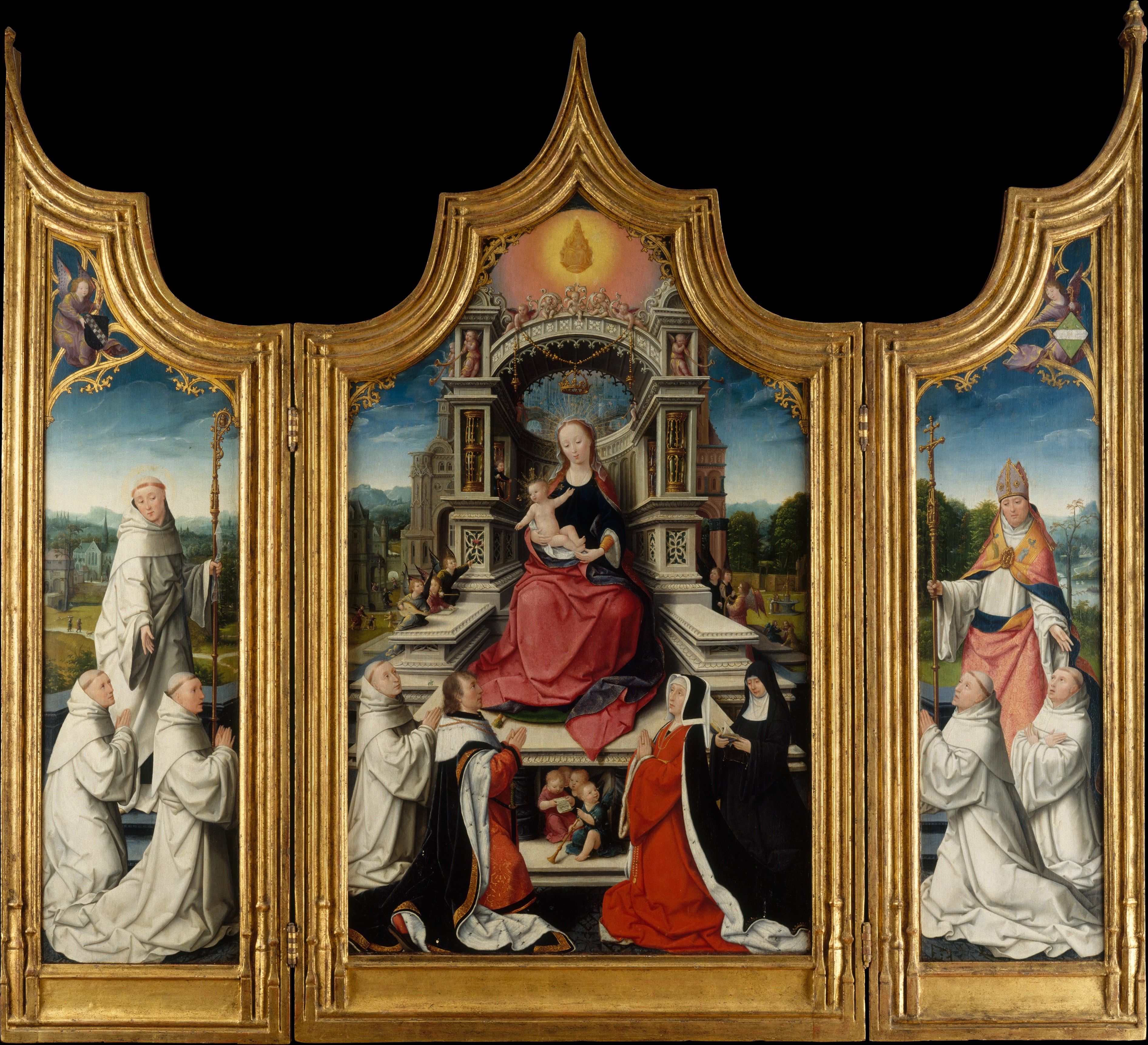
The Cellier Altarpiece, a profound artifact from the Global Frontier, presents not merely a religious tableau but a radical treatise on compartmentalized narrative and articulated form. For Zoey Fashion Laboratory’s SS26 inquiry, this oil-on-wood triptych ceases to be a static relic; it is re-contextualized as a primary architectural schematic. Our analysis moves beyond superficial iconography to engage with its core structural dogma: the segmentation of a unified whole into interdependent, hinged panels, each housing a self-contained yet contributory universe. This is the foundational logic for a collection that interrogates the very anatomy of the garment, proposing a future where wearable architecture is modular, dynamic, and spiritually resonant.
Structural Innovation: The Hinge as a Neurological Synapse
The genius of the triptych form lies in its deliberate fragmentation and the consequential power of the hinge. In SS26, the hinge transcends its mechanical function to become the collection’s central nervous system—a neurological synapse facilitating sartorial dialogue. We envision garments not as monolithic constructs, but as kinetic assemblies of paneled components. A bodice may articulate from the waist via aerospace-grade polymer hinges, allowing the wearer to modulate silhouette and exposure, transforming a severe columnar dress into an open-frame jacket. Inspired by the altarpiece’s wings that open to reveal a hidden core, coats will feature gilded, rigid panels that swing away from the body on silent pivots, revealing sheer, bio-luminescent under-layers that narrate a secondary, more intimate story. This design philosophy champions a garment that exists in multiple states: closed, it presents a public, architectural facade; opened, it reveals a private, cellular truth.
Futuristic Silhouettes: From Hieratic Stasis to Kinetic Volume
The figures within the Cellier Altarpiece possess a hieratic, vertical stillness—a compressed potential energy. SS26 seeks to release this energy into kinetic volumes that defy gravitational expectation. Silhouettes will oscillate between compressed, panel-hugging geometries and explosive, asymmetrical expansions. Imagine a gown whose skirt is comprised of multiple hardwood-inspired, lacquered panels, fixed along a parabolic curve that extends sharply from the hip before collapsing inward at the hem, creating a silhouette reminiscent of a gothic arch in motion. Conversely, tailored pieces will employ rigid, wood-grain-textured polymers to create exoskeletal frames that hover centimeters from the body, establishing a protected negative space—a modern reliquary for the self. These silhouettes are not designed for passive observation but for dynamic interaction with the environment, casting ever-changing shadows and altering spatial perception as the wearer moves.
Material Alchemy: The Theology of Surface and Substance
The specified medium—oil on wood—is not a limitation but a doctrinal statement on the interplay between organic substrate and transformative medium. This theology directly informs SS26’s material research. We will pioneer the use of liquid wood cellulose molded into rigid, panel-like forms, then treated with iridescent oil-slick coatings that mimic the cracked patina of centuries-old varnish. Fabrics will undergo alchemical processes: laser-etched neoprene to replicate wood grain, fused with translucent layers of silicone “oil” that encapsulate botanical matter, creating a living, stratified surface. The contrast between the hard, archival truth of the panel and the fluid, emotional bleed of the narrative paint will be mirrored in textiles that juxtapose unforgiving, sculptural materials against pliable, liquid-metal jerseys and foils. This creates a tangible dialogue between body and garment, structure and skin, history and prophecy.
Contextual Synthesis: The Standalone Avant-Garde Study as Wearable Manifesto
As a standalone study, this analysis rejects commercial trend cycles to engage in pure, deconstructive formalism. The resulting SS26 collection will function as a wearable manifesto for a new corporeal reality. Each piece is a self-contained argument on modularity, articulation, and sacred space. The color palette derives directly from the altarpiece’s likely spectrum: sacramental golds, vermilion reds, celestial ultramarines, and the profound, grounding umber of the wooden support, all re-interpreted through futuristic, electro-luminescent finishes. The narrative is not one of retrospection but of projection—using an ancient structural language to write a grammar for the future body. The wearer becomes both the curator and the central figure, capable of opening and closing the panels of their own identity, architecting their presence within space.
In conclusion, Zoey Fashion Laboratory’s SS26, under the aegis of the Cellier Altarpiece, proposes a radical departure from conventional garment construction. It is an exploration where the seam is replaced by the hinge, the silhouette by the kinetic volume, and the fabric by theological material alchemy. We are not creating clothes; we are engineering articulated, portable architectures for the human form, offering a profound, avant-garde dialogue between the archival and the algorithmic, the sacred and the synthetic. This is couture as critical spatial practice, dressing as an act of revelation.