Deconstructive Analysis: The Cotton Goddess and Chavín Resonance in Avant-Garde Context
Fragment Provenance and Material Paradox
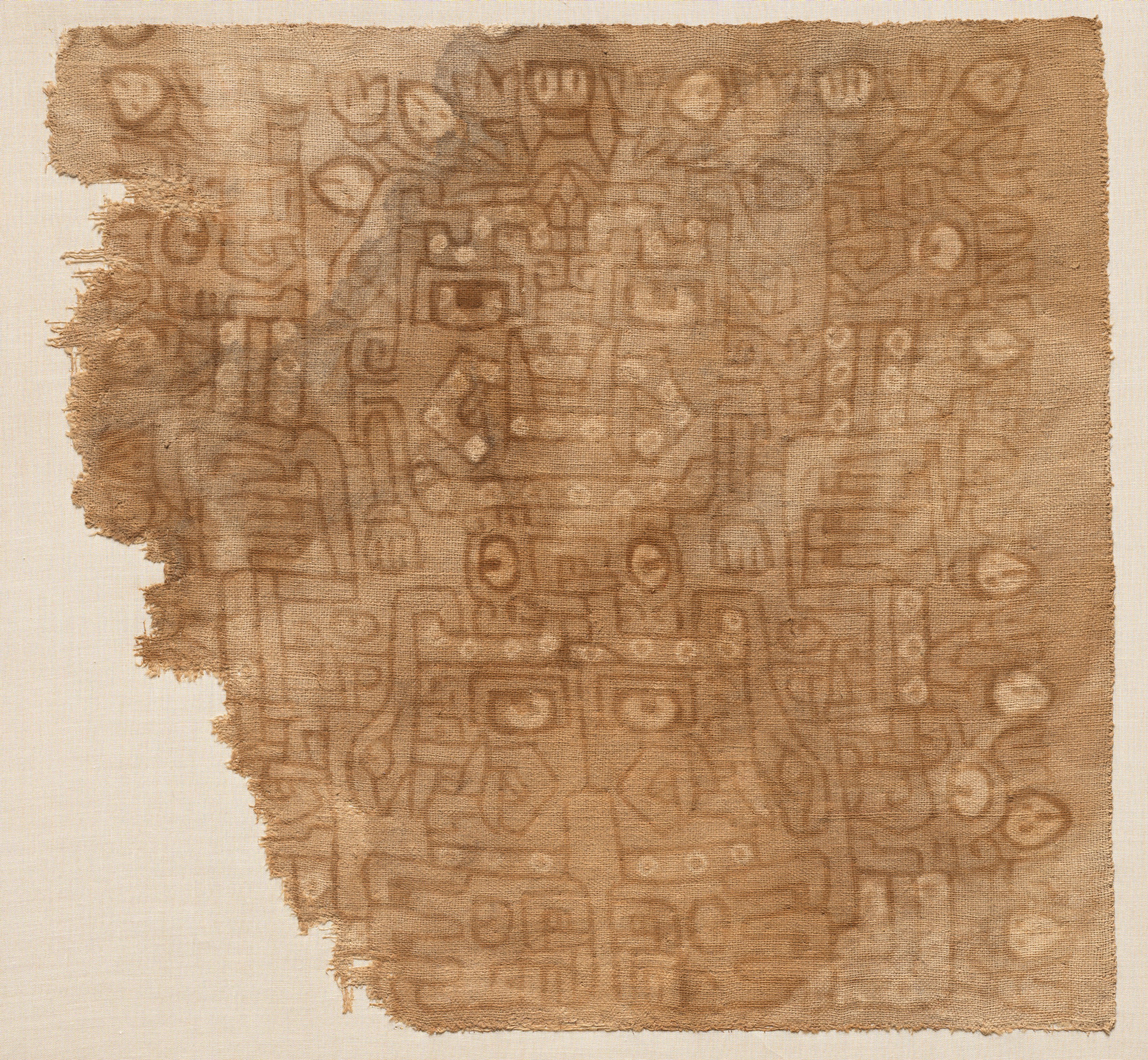
The textile fragment under analysis—attributed to the Chavín style, likely originating from the Ica Valley on the south coast of the Andes—presents a profound paradox for contemporary fashion deconstruction. Composed of cotton and mineral pigments, this artifact embodies a technological and spiritual sophistication that predates the colonial encounter by millennia. The reference to "Archive Resonance" situates this object within a broader discourse of cultural collision, specifically the sixteenth and seventeenth centuries when Andean textile traditions encountered European aesthetic systems. Yet the fragment’s Chavín iconography—featuring a Cotton Goddess figure—represents a pre-Hispanic visual language that the Zoey Fashion Lab must reinterpret through an avant-garde lens. This is not a simple revival but a deconstructive reanimation of the goddess’s material and symbolic DNA.
Technical Specifics: Cotton as Conduit
The choice of cotton is not incidental. In the Chavín horizon (circa 900–200 BCE), cotton was a sacred fiber, cultivated for both utilitarian and ritual purposes. The fragment’s weave—likely a warp-faced plain weave with supplementary weft patterning—demonstrates a mastery of tension and density that allowed for the precise application of pigments. These pigments, derived from minerals such as cinnabar (red), azurite (blue), and iron oxides (yellow and brown), were not merely decorative but semiotic. The goddess figure, with her feline fangs, serpentine hair, and avian appendages, embodies the Chavín concept of huaca—a sacred being that mediates between natural and supernatural realms. For the avant-garde deconstructionist, this pigment-fiber symbiosis becomes a material manifesto: the cotton goddess is not a static image but a transmutable energy that can be fragmented, stretched, and recontextualized.
Chavín Iconography: The Goddess as Avant-Garde Archetype
The Cotton Goddess in this fragment is a composite entity. Her eyes are large, circular, and often depicted with downward-turning pupils—a hallmark of Chavín optics of ecstasy. This gaze, possibly induced by ritual hallucinogens, suggests a state of transcendence that resonates with the avant-garde’s obsession with altered perception. Her headdress, likely featuring cayman or jaguar motifs, reinforces the theme of liminality—the boundary between human and animal, sacred and profane. In the context of Zoey Fashion Lab, this goddess becomes a template for deconstruction: her body can be unwoven into discrete motifs—the feline eye, the serpentine coil, the avian wing—and reassembled as pattern fragments on contemporary garments. The archive resonance of the sixteenth to seventeenth centuries, when Andean textiles were looted and reinterpreted by colonial powers, adds a layer of critical irony. The avant-garde response is not to restore the goddess to her original wholeness but to expose the violence of that fragmentation through deliberate, aesthetic rupture.
Deconstructive Methodology: From Archive to Atelier
Zoey Fashion Lab’s avant-garde approach to this textile fragment must begin with material analysis. The cotton fibers, now aged and fragile, carry microscopic evidence of indigenous cultivation and colonial contamination. The pigments, once vibrant, have faded into earth tones that speak of time’s entropy. The deconstructionist’s task is to amplify this entropy rather than conceal it. This can be achieved through techniques such as unpicking the weave to expose individual threads, staining the fabric with contemporary pigments that react with the original minerals, and layering the fragment with transparent synthetics that create a palimpsest effect. The Cotton Goddess’s image can be digitally scanned and vectorized into a series of discontinuous lines, then laser-cut onto recycled cotton or embroidered with metallic thread that references both pre-Columbian goldwork and modern industrial waste.
Cultural Resonance: The Archive as Living Material
The "Archive Resonance" referenced in the fragment’s description—the collision of sixteenth- and seventeenth-century aesthetics—must be foregrounded in the deconstruction. The Cotton Goddess, originally a symbol of fertility and cosmic order, becomes a site of contestation when viewed through the lens of colonial extraction. The avant-garde response is not to romanticize the pre-Columbian past but to expose the ongoing violence of cultural appropriation. Zoey Fashion Lab can achieve this by juxtaposing the goddess with colonial-era motifs—such as the Moorish arch or European floral scroll—in a way that creates dissonance. The fabric itself can be cut and reassembled into a quilted patchwork that references the arpillera tradition of political protest. The Cotton Goddess’s eyes, once ecstatic, can be blindfolded or covered with mirror shards that reflect the viewer’s own gaze, forcing a critical self-awareness of the act of looking.
Avant-Garde Synthesis: The Goddess Reborn as Fragment
In the final design, the Cotton Goddess is not restored but reimagined as a fragmented icon. Her form is deconstructed into a series of modular panels that can be reconfigured by the wearer. The cotton base is treated with natural dyes that mimic the original pigments but are allowed to bleed and blur, creating a watercolor effect that suggests impermanence. The goddess’s head is detached and repositioned at the shoulder, while her serpentine hair becomes a trailing fringe that sweeps the floor. The feline fangs are embroidered with silver thread that catches the light, but the thread is left loose, dangling like a broken chain. This is not a costume but a critical statement—a wearable archive that resonates with the violence of history while asserting the agency of deconstruction. The Cotton Goddess, in this avant-garde incarnation, becomes a living fragment that speaks to the perpetual collision of cultures, materials, and meanings.
Conclusion: The Fragment as Future
For Zoey Fashion Lab, this textile fragment is not a relic but a blueprint for the future. The cotton goddess, deconstructed and reconfigured, offers a methodology for critical fashion that engages with cultural heritage without falling into nostalgia or appropriation. By amplifying the fragment’s material and symbolic fractures, the Lab creates a new visual language that is both rooted in history and radically contemporary. The archive resonance of the sixteenth and seventeenth centuries is not a burden but a catalyst for avant-garde innovation. The Cotton Goddess, once a sacred being, now stands as a deconstructed icon—a testament to the enduring power of textile as a medium for cultural critique and aesthetic rebellion. This is the mission of Zoey Fashion Lab: to deconstruct the past so that we may weave the future.