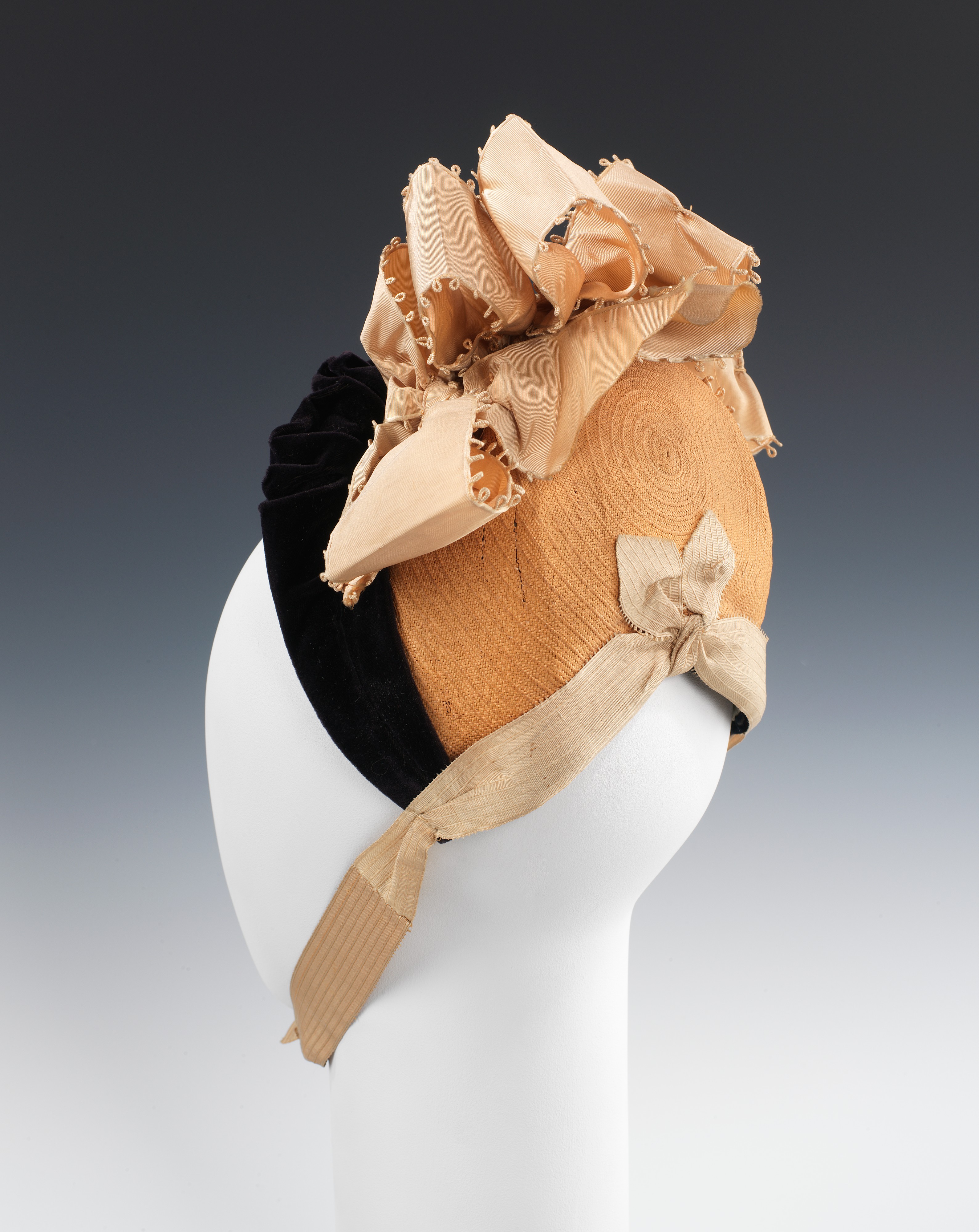
Deconstructing the Bonnet: A Futurist Silhouette for SS26
The bonnet, a garment historically tethered to pastoral nostalgia and domestic modesty, undergoes a radical transmutation in the SS26 avant-garde collection of Zoey Fashion Laboratory. This is not a revival; it is a structural insurrection. By stripping the bonnet of its sentimental lexicon—the ruffled brim, the tied ribbon, the soft cotton—and re-engineering it through the lens of architectural futurism, we arrive at a piece that defies temporal categorization. It exists in a liminal space, suspended between the agrarian past and a post-human tomorrow. The American origin of this bonnet, specifically its lineage from sunbonnets worn by 19th-century settlers, provides a potent foundation for subversion. Here, we deconstruct not just the object, but the very concept of protection from the elements, recasting it as a form of aggressive, self-contained armor for the urban landscape of 2026.
Material Alchemy: Straw and Silk in Tension
The chosen materials—American straw and raw silk—are not mere textiles but agents of a dialectical narrative. The straw, typically associated with rustic functionality, is treated as a structural composite. It is not woven in the traditional sense but laser-cut into precise, interlocking geometric scales. These scales, reminiscent of reptilian armor or photovoltaic tiles, are then bonded onto a transparent, micro-perforated silk base. The resulting surface is a paradox: rigid yet fluid, organic yet synthetic. The straw provides a matte, textural density that absorbs light, while the silk beneath catches and refracts it, creating a subtle moiré effect as the wearer moves. This is not a bonnet to shield against the sun; it is a kinetic sculpture designed to manipulate ambient light.
The interaction between these materials creates a new typology of volume. Where a classic bonnet would collapse into soft folds, this piece maintains a rigid, aerodynamic shell. The straw scales are arranged in a radial pattern, emanating from a central point at the crown and sweeping outward toward the brim. This directional flow mimics the vortex of a jet engine or the spiraling form of a nautilus shell, suggesting a force field rather than a mere head covering. The silk, meanwhile, is used not for drape but as a tension membrane, stretched taut between the straw scales to create a series of negative spaces. These voids allow for ventilation and visual lightness, preventing the piece from becoming a monolithic block.
Structural Innovation: The Asymmetric Brim and the Inverted Crown
The defining innovation of this avant-garde bonnet is its asymmetric, cantilevered brim. Rejecting the symmetrical, circular form of historical bonnets, the brim here extends dramatically on one side—a full 45 centimeters—while retracting to a mere 5 centimeters on the opposite side. This radical imbalance creates a silhouette that is both precarious and poised. The extended brim is not flat but gently concave, curving upward at the edge to form a parabolic scoop. This scoop can be adjusted via a hidden, magnetized hinge system, allowing the wearer to alter the bonnet’s profile from a low, protective visor to a high, exclamatory arc. This is not passive wear; it is wearable architecture that demands active engagement.
Further structural subversion occurs at the crown. The traditional bonnet crown is a soft, rounded dome; here, it is inverted and faceted. Constructed from a series of folded, heat-set silk panels, the crown forms a polyhedral structure similar to a geodesic dome. However, this dome is inverted, creating a deep, recessed cavity that sits above the wearer’s head. This negative space is not empty; it houses a microclimate control system—a whisper-thin, battery-powered fan that circulates air across the scalp. The fan is concealed within the silk folds, its blades crafted from the same laser-cut straw. This integration of functional technology into the garment’s core structure elevates the bonnet from accessory to cyborgian extension of the body, a response to the thermal demands of a warming planet.
Silhouette as Statement: The Post-Human Profile
When worn, the bonnet fundamentally alters the human silhouette. The asymmetric brim creates a diagonal line of force that cuts across the face, redirecting the viewer’s gaze from the eyes to the architectural form itself. The head is no longer a sphere but an elliptical plane, tilted and dynamic. From a profile view, the bonnet’s extended brim projects forward like the prow of a ship, while the inverted crown recedes, creating a sleek, almost aerodynamic profile. This is a silhouette that suggests speed, motion, and a relentless forward thrust—a perfect metaphor for the accelerated pace of the SS26 season.
This is not a bonnet for protection; it is a weapon of visual disruption. It challenges the conventional hierarchy of the face, forcing the observer to acknowledge the garment as the primary subject. The wearer becomes a moving monument, a fragment of a future landscape. The bonnet’s scale and geometry demand a new posture—a slight tilt of the head, a deliberate stride—to balance the asymmetric mass. This choreographed movement becomes part of the design, a performance of structural balance.
Contextualizing the Bonnet: From Agrarian Tool to Urban Armor
In the context of SS26, this bonnet is a direct critique of the season’s prevailing trends of soft, romantic nostalgia. While other designers may offer floral headscarves or wide-brimmed sun hats, Zoey Fashion Laboratory presents a counter-narrative: a garment that is aggressive, autonomous, and unapologetically artificial. The American origin of the bonnet is crucial here; it allows us to comment on the myth of the pastoral idyll, the romanticized frontier, and the tension between human and nature. This bonnet does not shield from nature; it weaponizes nature (straw) against itself, creating a barrier that is both of the earth and alien to it.
The standalone nature of this study—the bonnet as an isolated, autonomous object—is intentional. It is not a component of a larger outfit but a complete statement. It can be worn with a simple, monolithic column dress, or equally, with a deconstructed, tech-infused jumpsuit. Its power lies in its ability to redefine the space around the wearer, creating a zone of influence that extends far beyond the physical boundaries of the garment. This is the future of couture: not clothes that adorn the body, but structures that control and redefine the environment.
Ultimately, this avant-garde bonnet is a thesis on structural possibility. It proves that even the most historically laden garment can be dismantled and rebuilt as a vehicle for radical expression. The SS26 bonnet is not a hat; it is a habitable sculpture, a proposal for a new way of occupying space, a silent, formidable presence in the urban landscape of tomorrow.