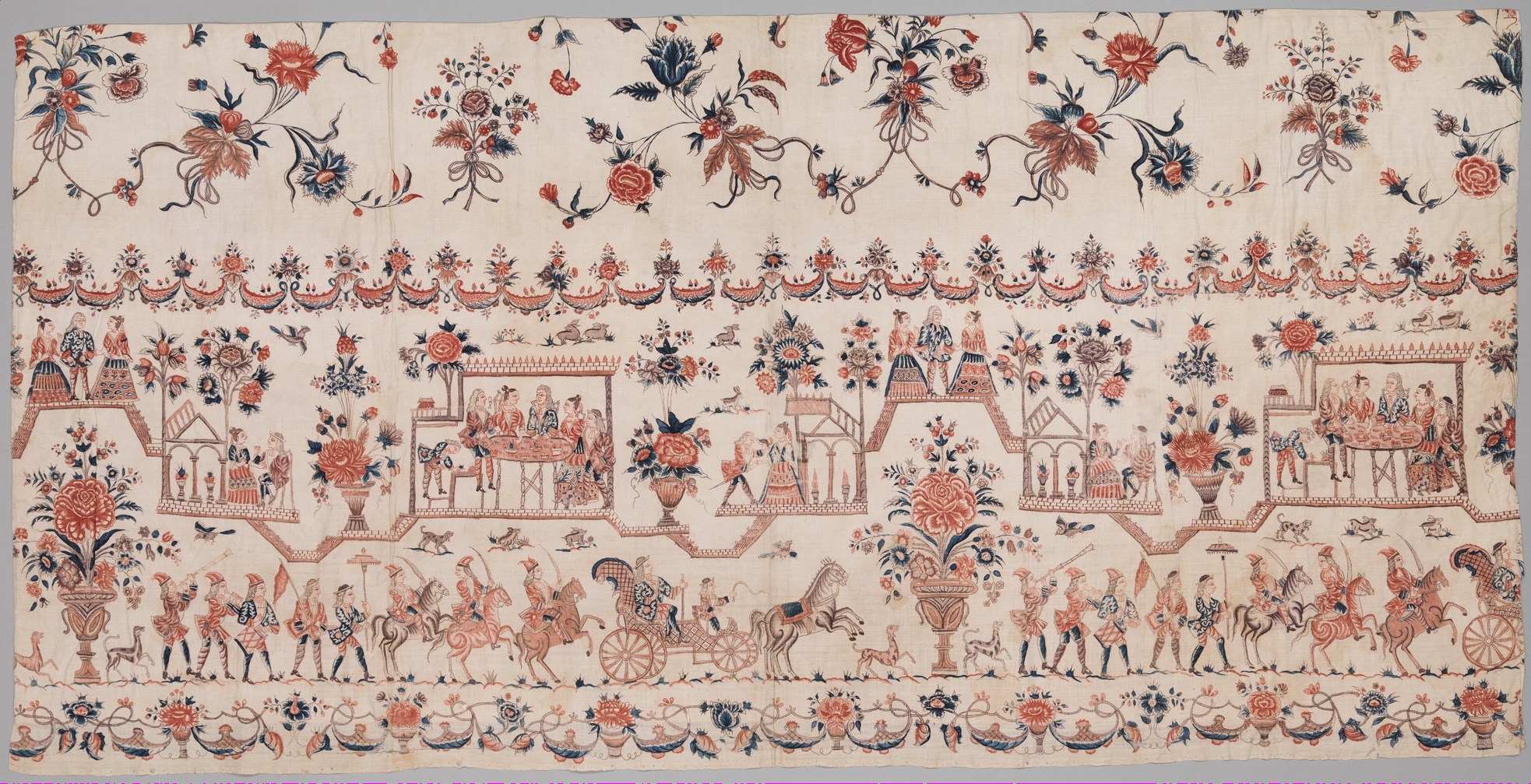
The Deconstructed Canopy: Petticoat Panel as Structural Avant-Garde for SS26
The petticoat panel, historically relegated to the hidden architecture of volume, has been exhumed from the annals of costume history and re-engineered as a standalone avant-garde artifact. In Zoey Fashion Laboratory’s Global Frontier collection for SS26, this humble cotton foundation is elevated through a rigorous process of resist painting, mordant application, and reactive dyeing, transforming it into a sculptural, futuristic silhouette that defies both gravity and tradition. This analysis deconstructs the panel’s materiality, structural innovation, and conceptual resonance within the broader context of deconstructive haute couture.
Material Alchemy: Cotton as a Canvas for Temporal Disruption
The choice of cotton—a fiber synonymous with comfort, utility, and democratized fashion—is a deliberate subversion of avant-garde expectations. Rather than employing high-tech synthetics, the Laboratory harnesses cotton’s natural absorbency and drape to create a living textile that records the process of its own creation. The painted resist, applied in asymmetrical, almost calligraphic strokes, creates zones of impermeability that resist dye penetration. This technique, borrowed from ancient resist-dye traditions but executed with algorithmic precision, yields a topographical map of negative space. The mordant, a chemical fixative, is selectively applied to bind the dye to specific cellulose fibers, producing a gradient of saturation that ranges from near-white to deep indigo. The result is a panel that reads as a fossilized artifact of a future civilization—a textile that embodies both fragility and resilience.
The dyeing process itself is a form of controlled entropy. The cotton is immersed in a vat of reactive dye, which bonds with the fibers only where the mordant has been applied. The resist areas remain pristine, creating a stark, almost architectural contrast. This painted resist and mordant methodology allows for a gradient of opacity that mimics digital pixelation, blurring the line between handcraft and machine precision. The final fabric is not just a material; it is a record of time, temperature, and chemical reaction, making each panel a unique, non-reproducible object. This aligns perfectly with the Laboratory’s ethos of singularity over mass production.
Structural Innovation: The Petticoat Panel as Exoskeletal Architecture
In traditional couture, the petticoat panel is a hidden support—a structural underpinning for skirts and dresses. In Zoey Fashion Laboratory’s interpretation, it becomes the primary exoskeleton of the garment. The panel is cut on the bias to exploit cotton’s natural stretch, then asymmetrically pleated and anchored with internal boning channels. The boning, made from recycled carbon fiber, is inserted not to constrain but to propel the fabric outward, creating cantilevered forms that mimic the wings of a futuristic insect or the fins of a spacecraft. The resist-painted sections are strategically placed at stress points, where the dye’s chemical bonding has stiffened the fibers, creating natural structural ribs.
The silhouette for SS26 is characterized by negative space and volumetric tension. The petticoat panel is worn as a standalone piece, suspended from the shoulders via a single, sculpted strap that wraps around the torso like a biomechanical harness. The panel extends asymmetrically—one side flares dramatically to the hip, while the other remains close to the body, creating a dynamic, off-balance silhouette that suggests motion arrested mid-step. The hem is raw, left intentionally unfrayed to emphasize the fabric’s woven structure, while the painted resist creates a border that mimics a digital glitch. This is not a garment for passive observation; it is a performative object that engages with the wearer’s movement, the light, and the environment.
Futuristic Silhouettes: The Global Frontier as a State of Becoming
The Global Frontier context of this piece is not a geographical location but a conceptual state—a liminal zone where traditional sartorial hierarchies dissolve. The petticoat panel, stripped of its modesty function, becomes a symbol of liberation from historical constraints. The silhouette it creates is deliberately alien: the cantilevered forms and asymmetrical draping evoke the aerodynamic forms of drones, the exoskeletons of deep-sea creatures, or the architectural renderings of Zaha Hadid. This is fashion as speculative design, where the garment is not just worn but inhabited.
The dye palette—ranging from deep, almost black indigo to pale, sun-bleached blue—references the digital twilight of a world where natural and artificial light merge. The painted resist patterns, when viewed from a distance, resemble data streams or neural networks, suggesting a garment that is both organic and cybernetic. The futuristic silhouette is not about exaggerated proportions for spectacle; it is about redefining the relationship between body and fabric. The petticoat panel no longer supports a skirt; it supports a narrative of post-human identity.
Conceptual Resonance: Deconstruction as a Methodology for SS26
This piece functions as a standalone avant-garde study, a proof of concept for a new language of garment construction. By isolating the petticoat panel from its historical context, the Laboratory forces a re-evaluation of what constitutes a “garment.” The panel is neither a top nor a bottom; it is a modular architectural unit that can be worn alone, layered over a sheer base, or connected to other panels via magnetic closures. This modularity is crucial for SS26, where the season’s theme of renewal and reconstruction demands garments that are adaptable, transformable, and resistant to obsolescence.
The deconstructive methodology is evident in every detail: the raw edges, the exposed boning channels, the asymmetrical pleating, and the chemical stains left by the mordant. These are not signs of imperfection but deliberate markers of process. The garment wears its own construction history as an aesthetic feature, inviting the viewer to consider the labor, chemistry, and design decisions that brought it into being. This aligns with the broader avant-garde tradition of revealing the skeleton of fashion, as pioneered by Rei Kawakubo and Martin Margiela, but pushes it into a new territory of material science and digital-age aesthetics.
Conclusion: The Panel as a Portal
The petticoat panel from Zoey Fashion Laboratory’s Global Frontier collection is more than a garment; it is a portal to a new paradigm of fashion. Through the alchemy of painted resist and mordant, the structural innovation of cantilevered boning, and the conceptual framework of deconstructive aesthetics, this piece embodies the futuristic silhouette of SS26. It challenges the wearer to abandon historical notions of modesty, support, and utility, and instead embrace a garment that is at once ancient in its materiality and alien in its form. In a world saturated with fast fashion and digital distractions, this standalone avant-garde study reminds us that true innovation lies in the re-enchantment of the everyday—transforming a humble petticoat panel into a beacon of what fashion can become when it dares to deconstruct itself.