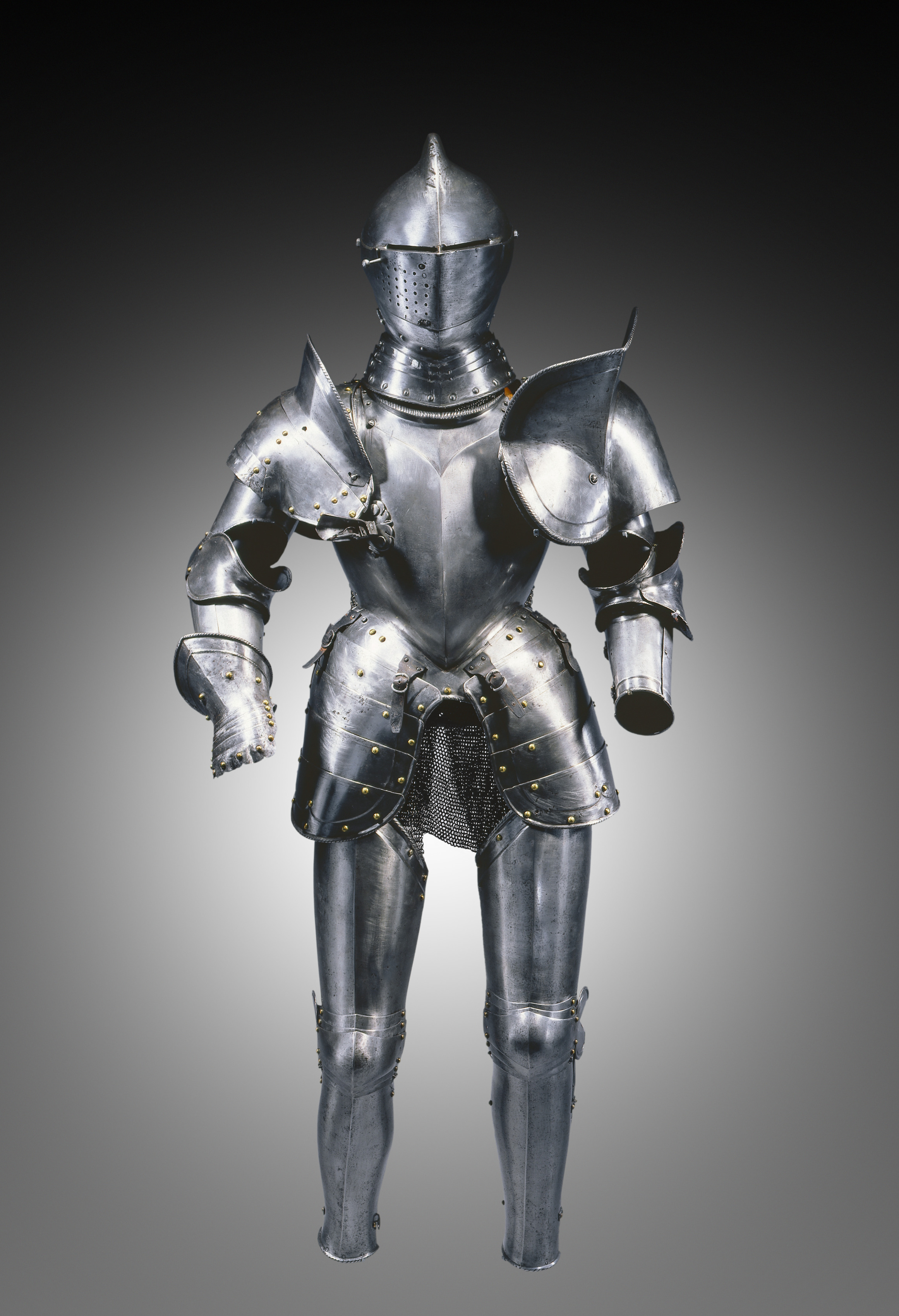
Deconstructing the Tilting Suit: A Steel Skeleton for the Avant-Garde
As Chief Fabric Deconstructionist for Zoey Fashion Lab, it is my privilege to present a comprehensive analysis of the Tilting Suit (composed), a 16th-century South German artifact that serves as the foundational "New DNA Strand" for our next avant-garde collection. This object—crafted from steel, leather, and brass—is not merely a piece of armor; it is a structural manifesto that challenges the very definition of garment, body, and movement. By dissecting its technical anatomy, historical context, and kinetic potential, we will extract the core principles that will inform a radical reimagining of contemporary fashion.
Technical Anatomy: The Steel Exoskeleton as Garment
The Tilting Suit, originally designed for jousting tournaments, is a composite structure of interlocking steel plates, anchored by leather straps and secured with brass rivets. From a deconstructionist perspective, this is not a suit of armor in the traditional sense; it is a modular exoskeleton that prioritizes impact resistance and restricted, yet highly specific, mobility. The steel components—the breastplate, helmet, pauldrons, and gauntlets—are not draped or sewn. They are assembled. This assembly process, using rivets and straps, transforms the human form into a load-bearing architecture.
Key technical observations for Zoey Fashion Lab’s interpretation include:
- Riveted Joints: The brass rivets are not decorative. They are functional stress points, allowing for articulation while maintaining structural integrity. In our avant-garde context, these rivets become a visible seam—a deliberate interruption of fabric flow that announces the garment’s construction.
- Leather Straps as Dynamic Connectors: The leather is not a lining; it is a tensile system that cinches the steel to the body. This creates a dynamic tension between rigid and flexible materials. We can reinterpret this using high-tenacity webbing or biomorphic silicone straps that mimic the leather’s role as a kinetic bridge.
- Steel’s Weight and Balance: The suit’s weight (often exceeding 30 kg) is distributed across the shoulders, hips, and spine. This is a gravity-based design that forces the wearer into a specific posture. For our lab, this translates into weighted garments that alter the wearer’s gait and silhouette—a deliberate disruption of natural movement.
Historical Context: The Tournament as a Stage for the Body
To understand the Tilting Suit’s relevance to avant-garde fashion, we must view it within its 16th-century South German context. The jousting tournament was not merely a sport; it was a theatrical display of power, identity, and technology. The suit was a second skin that transformed the knight into a heraldic symbol—a walking coat of arms. The steel was often etched, gilded, or painted, making it a canvas for narrative.
Three historical principles directly inform our deconstruction:
- Protection as Performance: The suit’s primary function—deflection of lances—was inseparable from its visual impact. The gleaming steel, the fluted surfaces, the articulated joints were all spectacle. For Zoey Fashion Lab, this means that structural integrity is aesthetic. A garment that protects the body from external forces (weather, social gaze, physical impact) can be a powerful statement.
- Ritualized Dressing: Donning a tilting suit required assistants, time, and a specific sequence. This is a ceremonial dressing—a process that elevates clothing from utility to ritual. Our collection can incorporate modular components that require ritualized assembly, turning the act of dressing into a performance.
- Gender and Power: The suit was exclusively male, reinforcing martial masculinity. However, for the avant-garde, this is a subversive template. By reimagining the suit’s silhouette—broad shoulders, narrow waist, exaggerated chest—for any gender, we can challenge historical power structures. The steel becomes a neutral armor for the modern body.
The New DNA Strand: From Armor to Avant-Garde Architecture
As the "New DNA Strand" for our collection, the Tilting Suit provides a genetic code for a new type of garment—one that is constructed, not draped. Traditional fashion relies on fabric that flows, folds, and conforms to the body. The Tilting Suit demands the opposite: the body conforms to the garment. This inversion is the core of our avant-garde approach.
Specific DNA strands to extract and mutate:
- Rigidity as a Design Language: Instead of soft textiles, we will use laser-cut steel mesh, carbon fiber plates, and 3D-printed titanium to create articulated sections. These will be connected by custom brass hardware—rivets, hinges, and buckles—that are left exposed, celebrating the construction process.
- Leather as a Structural Web: The leather straps of the original suit are reinterpreted as harness systems that crisscross the body, creating a visual and functional exoskeleton. These straps can be made from recycled tire rubber or bio-leather, emphasizing sustainability and tension.
- Weight as a Design Element: The suit’s heaviness becomes a tactile and visual anchor. We will incorporate weighted hems, layered steel beads, and integrated chainmail to create garments that have a deliberate, grounded presence. The wearer’s movement will be slow, deliberate, and powerful—a modern interpretation of the knight’s gait.
Avant-Garde Applications: The Tilting Suit in the Contemporary Atelier
For Zoey Fashion Lab, the Tilting Suit is not a historical replica; it is a living blueprint. Our avant-garde collection will manifest in three key pieces:
- The Riveted Bodice: A corset-like structure made from interlocking stainless steel plates, connected by brass rivets and leather straps. It will be worn over a sheer, deconstructed base layer, exposing the skin between the plates. This piece redefines the female/male torso as a fortified landscape.
- The Kinetic Pauldron: A shoulder piece that uses biomimetic hinges to allow full arm rotation while maintaining a rigid silhouette. The pauldron will be asymmetrical—one side heavily armored, the other bare—creating a visual dichotomy between vulnerability and protection.
- The Gauntlet Glove: A hand covering that fuses steel fingers with leather palm straps, allowing for dexterity while retaining the suit’s structural language. The gauntlet will be interactive, with brass rivets that can be adjusted to change the hand’s shape and grip.
Conclusion: The Suit as a Living System
The Tilting Suit (composed) is far more than a historical artifact; it is a provocation. It challenges us to think of clothing as architecture, armor, and performance. For Zoey Fashion Lab, this 16th-century South German object provides the genetic material for a new avant-garde language—one that values structure over drape, tension over ease, and ritual over spontaneity. By deconstructing its steel, leather, and brass, we are not merely creating garments; we are reconstructing the relationship between the body and the world. The result will be a collection that is as powerful, protective, and provocative as the tournament armor that inspired it. This is the future of fashion: a steel skeleton for the soul.