Deconstructing the Archive: An Avant-Garde Reading of Algerian Furnishing Textiles
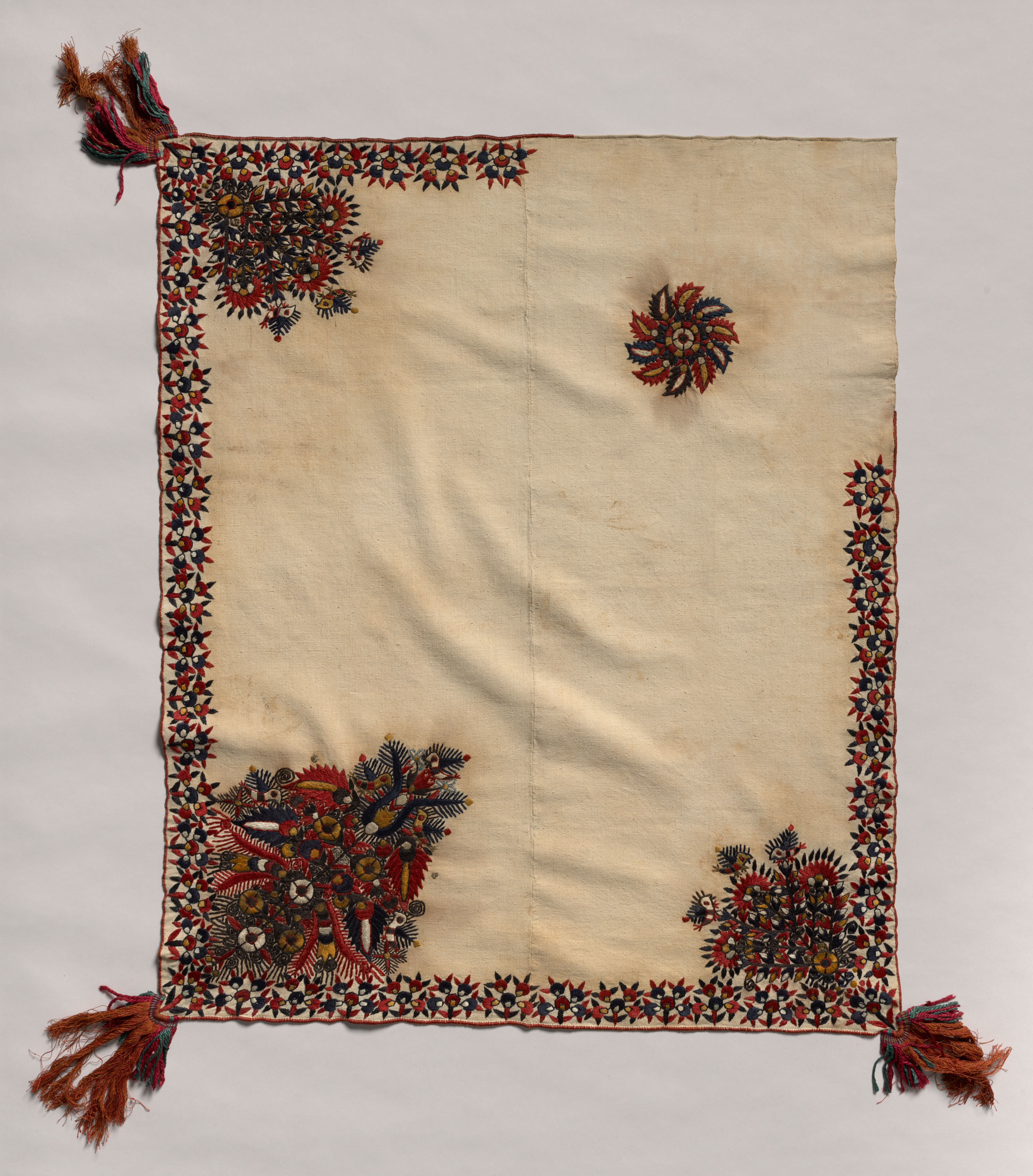
At Zoey Fashion Lab, our mission is to sever the thread of historical expectation and re-weave it into a fabric of radical possibility. In this analysis, we turn our attention to a specific furnishing textile from Algeria, a piece that embodies a profound tension between its archival roots and its potential for avant-garde expression. This is not a mere artifact; it is a site of deconstruction. The textile, composed of linen and silk, dyed with natural pigments by an Algerian embroiderer, carries the weight of a complex history. Our reference, "Archive Resonance," speaks of the 16th and 17th centuries as a period of cultural collision and aesthetic fusion. We will dismantle this object to reveal the latent avant-garde within its threads, proposing a radical re-interpretation for contemporary fashion.
I. The Material Dissonance: Linen and Silk as Oppositional Forces
The technical foundation of this textile—linen and silk—is not a harmonious blend but a deliberate material conflict. Linen, derived from the flax plant, is the voice of the earth: robust, textured, and inherently structured. It speaks of utility, of the domestic sphere, of the Algerian landscape. Silk, on the other hand, is the voice of luxury and foreign influence. Its introduction to North Africa via trade routes from the East and the Mediterranean represents an intrusion of the exotic. The embroiderer has not simply combined these fibers; they have forced a dialogue between the rugged and the refined.
For the avant-garde, this dissonance is a powerful tool. We propose a process of material stripping: selectively dissolving the silk threads with a controlled enzymatic bath, leaving only the linen skeleton. The remaining silk fragments would become ghostly traces, a memory of opulence now rendered fragile and incomplete. This creates a fabric that is simultaneously strong and vulnerable, a metaphor for the colonial and post-colonial tensions embedded in the object’s history. The dye, likely derived from indigo, madder, or pomegranate, further complicates this. Natural dyes are not uniform; they bleed, fade, and shift over time. We would amplify this by re-dyeing the deconstructed textile with a synthetic, high-visibility pigment—a neon orange or electric blue—creating a jarring chromatic rupture that speaks to the violence of cultural appropriation and the vibrancy of contemporary reclamation.
II. The Embroiderer's Gesture: From Craft to Conceptual Mark
The embroiderer’s hand is the original author of this archive. Their stitches—likely geometric patterns, stylized floral motifs, or calligraphic elements—are not merely decorative. They are a language of resistance and identity. In the context of 16th-17th century Algeria, embroidery was a coded form of expression, a way for women to inscribe their narratives onto the domestic landscape. The stitches are precise, repetitive, and deeply rooted in tradition.
Our avant-garde intervention is to de-author this gesture. We will not preserve the embroidery; we will deconstruct it. Using a laser cutter, we will selectively burn away sections of the embroidered patterns, leaving behind a negative space—a void where the thread once was. The remaining stitches will be pulled and loosened, creating intentional fraying and unraveling. This is not destruction for its own sake; it is a conceptual act that questions the sanctity of the original. The embroiderer’s labor is honored by being re-contextualized as a fragmented, abstract mark. The resulting textile becomes a palimpsest: a surface where the original pattern is visible only as a ghost, overlaid with the scars of our intervention. This aligns with the "Archive Resonance" reference, which speaks of cultural collision—our collision with the past is a violent, creative act.
III. The Dye as a Temporal Agent: Oxidation and the Unstable Surface
The dye is not a static color; it is a temporal agent. Natural dyes are inherently unstable, subject to oxidation, light damage, and chemical change. This instability is a feature, not a flaw. For the avant-garde, the unstable surface is a canvas for performance. We propose a process of controlled degradation: exposing the dyed linen and silk to alternating cycles of UV light, moisture, and heat. This will accelerate the natural aging process, creating unpredictable patterns of fading and discoloration.
This technique transforms the textile into a living document. The color shifts become a record of time, a visual diary of the piece’s journey from the 17th century to the present. We will then intervene with a resist-dye technique using a synthetic, pH-sensitive pigment. This pigment will remain transparent under neutral conditions but will turn a vivid magenta or cyan when exposed to the alkalinity of human sweat or the acidity of rain. The garment made from this textile becomes interactive: it changes color in response to the wearer’s body and environment. This is a direct challenge to the archival impulse to preserve. Instead, we embrace decay and transformation as core aesthetic values, aligning with the avant-garde’s fascination with the ephemeral and the processual.
IV. The Archive Resonance: A Dialogue Across Centuries
The "Archive Resonance" reference is our theoretical backbone. The 16th and 17th centuries were a period of intense cultural exchange—and exploitation—across the Mediterranean. Algerian textiles absorbed influences from Ottoman, Andalusian, and sub-Saharan African traditions. This piece is a fossil of that exchange. Our deconstruction is not a rejection of this history but a critical engagement with it. We are not restoring the textile to some imagined original state; we are amplifying its contradictions.
Our final garment will be a modular, deconstructed coat. The deconstructed textile panels will be suspended on a framework of recycled industrial strapping, creating a floating, architectural silhouette. The seams will be left raw, the frayed edges celebrated. The garment will be reversible: one side shows the original, faded and fragmented embroidery; the other shows the laser-burned negative space and the neon-dyed linen. This duality speaks to the dual identity of the object—both a historical artifact and a contemporary statement. The coat is not a finished product; it is a proposition. It invites the wearer to become a co-author, to add their own stains, tears, and repairs. This is the ultimate avant-garde gesture: the democratization of the archive.
V. Conclusion: The Avant-Garde as Radical Care
To deconstruct this Algerian furnishing textile is not to destroy it. It is to care for it differently. We reject the museum’s impulse to freeze the object in time. Instead, we activate its potential for change, for decay, for new meaning. The linen and silk, the embroiderer’s stitches, the unstable dye—all become materials for a radical future. Our process is a form of critical preservation, one that honors the past by refusing to let it rest. The resulting garment is a manifesto in fabric, a testament to the power of deconstruction to generate new forms of beauty, resistance, and identity. At Zoey Fashion Lab, we do not simply reimagine the archive; we unmake it to make it anew.