Deconstruction of the Rapier: An Avant-Garde Analysis for Zoey Fashion Lab
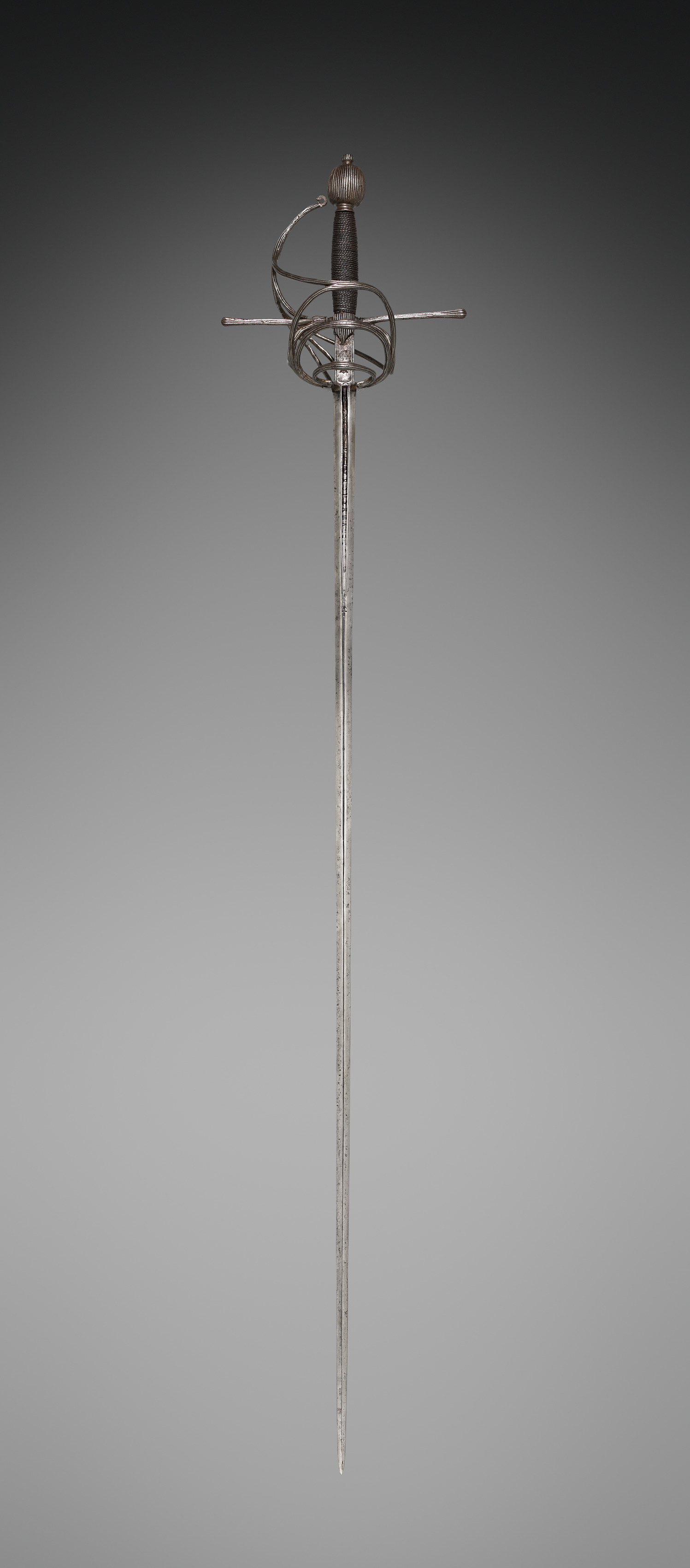
As Chief Fabric Deconstructionist at Zoey Fashion Lab, I have undertaken a comprehensive analysis of the rapier—specifically, a blade forged in Toledo, Spain, paired with a hilt crafted in Belluno, Italy, dating from the late 16th to early 17th century. This weapon, a quintessential artifact of Renaissance martial culture, is not merely a historical object but a new DNA strand for avant-garde fashion. Its technical composition—steel, ribbed guard and pommel, wood and wire—offers a rich lexicon of forms, textures, and structural principles that challenge conventional garment design. Below, I deconstruct the rapier into its core elements, propose transformative applications, and articulate how its essence can redefine contemporary fashion.
1. The Blade: Toledo Steel as Structural Line and Tension
The blade, forged in the legendary workshops of Toledo, Spain, is a study in precision and tension. Its long, slender profile—often measuring over three feet—embodies a paradox: it is both rigid and fluid, a line that cuts through space with mathematical clarity. For Zoey Fashion Lab, this translates into architectural silhouettes that prioritize elongated, linear forms. The blade’s steel, historically renowned for its flexibility and strength, suggests materials that can hold shape while allowing movement. In avant-garde fashion, this could manifest as:
- Structural seams and darts: Mimicking the blade’s taper, garments could feature sharp, angular lines that direct the eye downward, creating a sense of verticality. Think of a gown with a single, unbroken seam from shoulder to hem, reinforced with a lightweight, flexible metal alloy or resin-infused fabric.
- Armor-like panels: The blade’s surface, often polished to a mirror finish, inspires reflective or metallic textiles. A jacket with integrated steel-plate accents—perhaps laser-cut and bonded to leather—could evoke the blade’s protective yet aggressive nature.
- Dynamic tension: The blade’s ability to bend under stress without breaking suggests fabrics with inherent memory, such as shape-memory alloys or smart textiles that respond to body heat. A dress that changes its silhouette as the wearer moves would capture the rapier’s kinetic energy.
The Toledo blade’s historical significance—its use in duels and ceremonial contexts—also informs a narrative of conflict and resolution. Garments could incorporate asymmetrical cuts, raw edges, or deconstructed hems that evoke the aftermath of a duel, where precision meets chaos. This aligns with avant-garde’s penchant for storytelling through materiality.
2. The Hilt: Belluno Craftsmanship as Modularity and Grip
The hilt, originating from Belluno, Italy, in the late 16th to early 17th century, is a masterpiece of ergonomic design and decorative artistry. Its ribbed guard and pommel, crafted from steel, provide a secure grip and balance, while the wood and wire wrapping ensures comfort and control. For fashion, the hilt offers lessons in modularity, texture, and human interaction.
- Ribbed guard as structural support: The guard’s ribs, which protect the hand, suggest a framework for garment construction. A corset or bodice could incorporate ribbed boning—either exposed or concealed—that mirrors the guard’s geometry. These ribs could be made of thermoplastic or carbon fiber, offering both structure and flexibility.
- Wood and wire wrapping as tactile surfaces: The combination of wood (likely olive or walnut) and wire (iron or brass) creates a contrast between organic warmth and industrial coldness. In fashion, this translates to mixed-media textiles: a sleeve woven from metallic thread and natural fibers, or a collar that combines polished wood beads with steel chainmail. The wire’s spiral pattern also inspires coiled or twisted elements in accessories, such as belts, cuffs, or chokers.
- Pommel as counterbalance: The pommel, often weighted to balance the blade, suggests strategic weighting in garments. A coat’s hem could be weighted with metallic beads or lead-free fishing weights to create a dramatic drape, or a skirt’s train could be anchored with a hidden chain. This not only alters movement but also adds a sense of gravitas—a nod to the rapier’s role as a symbol of status.
The hilt’s Italian origin also introduces a Renaissance sensibility—an appreciation for ornamentation without sacrificing function. Zoey Fashion Lab could reinterpret this through laser-cut patterns on leather or suede, echoing the guard’s intricate ribs, or through embroidery that mimics wire wrapping. The goal is to create garments that feel both ancient and futuristic, as if time-traveling from a Belluno workshop to a 22nd-century runway.
3. Technical Synthesis: Steel, Wood, and Wire as a New DNA Strand
The rapier’s materials—steel, wood, and wire—are not merely components but a new DNA strand for fashion design. Steel represents permanence and protection; wood, growth and warmth; wire, connectivity and tension. When combined, they form a triad that can be deconstructed and recombined in endless variations.
- Steel-infused fabrics: Advances in metallurgy allow for steel fibers woven into textiles. A coat could have a steel-thread lining that provides electromagnetic shielding, while its exterior remains soft to the touch. Alternatively, steel mesh could be used as a structural underlay, visible through sheer panels.
- Wood as a living material: Wood veneers or laser-cut wood panels could be integrated into garment silhouettes, such as a skirt that fans out like a wooden fan, or a bodice with articulated wood scales. This echoes the rapier’s handle while introducing a sustainable, biodegradable element.
- Wire as a connective tissue: Wire, whether copper, brass, or steel, can be used to create exoskeletal structures that extend beyond the body. A wire cage around the shoulders could evoke the guard’s protective function, while wire-wrapped seams could add a cyberpunk aesthetic. The wire’s flexibility also allows for garments that can be reshaped by the wearer, blurring the line between fashion and sculpture.
This DNA strand is not static; it evolves. The rapier’s historical context—a weapon of honor and violence—can be subverted into armor for the modern soul. Garments might feature detachable elements (a wire cage that becomes a bag, a steel panel that transforms into a clutch) or incorporate wearable technology, such as LED wires that pulse like a beating heart. The result is a fashion that is both protective and expressive, a second skin for navigating contemporary life.
4. Avant-Garde Applications: From Duel to Runway
The avant-garde style demands that we push boundaries, and the rapier provides a perfect catalyst. Consider the following conceptual pieces for Zoey Fashion Lab’s next collection:
- The Duelist’s Silhouette: A jumpsuit with a single, razor-sharp seam down the center, reminiscent of the blade. The fabric is a steel-gray bonded jersey, with a ribbed leather collar and cuffs that echo the hilt’s guard. A weighted chain hangs from the waist, mimicking the pommel’s counterbalance.
- The Renaissance Exoskeleton: A structural cape made from interlocking steel plates, each etched with a pattern inspired by Toledo’s damascene technique. The cape is suspended from a wire frame that rests on the shoulders, allowing it to move like a second skin. The interior is lined with wood veneer, offering a tactile contrast.
- The Wire-Wrapped Gown: A floor-length dress of sheer organza, with copper wire woven into the seams to create a spiral pattern. The wire extends into a train that coils like a spring, and the bodice features a wooden corset panel shaped like a pommel. The dress is both ethereal and industrial, a fusion of Belluno’s craftsmanship and avant-garde innovation.
These pieces are not mere costumes but functional art that challenge the wearer to reconsider their relationship with clothing. They invite movement, interaction, and even confrontation—much like the rapier itself.
5. Conclusion: The Rapier as a Blueprint for Fashion’s Future
The rapier from Toledo and Belluno is more than a historical artifact; it is a blueprint for avant-garde fashion. Its blade teaches us about line and tension; its hilt, about modularity and texture; its materials, about synthesis and transformation. By deconstructing this weapon, Zoey Fashion Lab can create garments that are not only visually striking but also deeply resonant—a new DNA strand that weaves together history, technology, and art.
As Chief Fabric Deconstructionist, I recommend that our next collection explore these principles through a series of prototypes. Each piece should honor the rapier’s origins while propelling it into the future. The result will be a fashion that is both timeless and revolutionary, a testament to the power of deconstruction as a creative force.