Deconstructing the Bill: An Avant-Garde Analysis for Zoey Fashion Lab
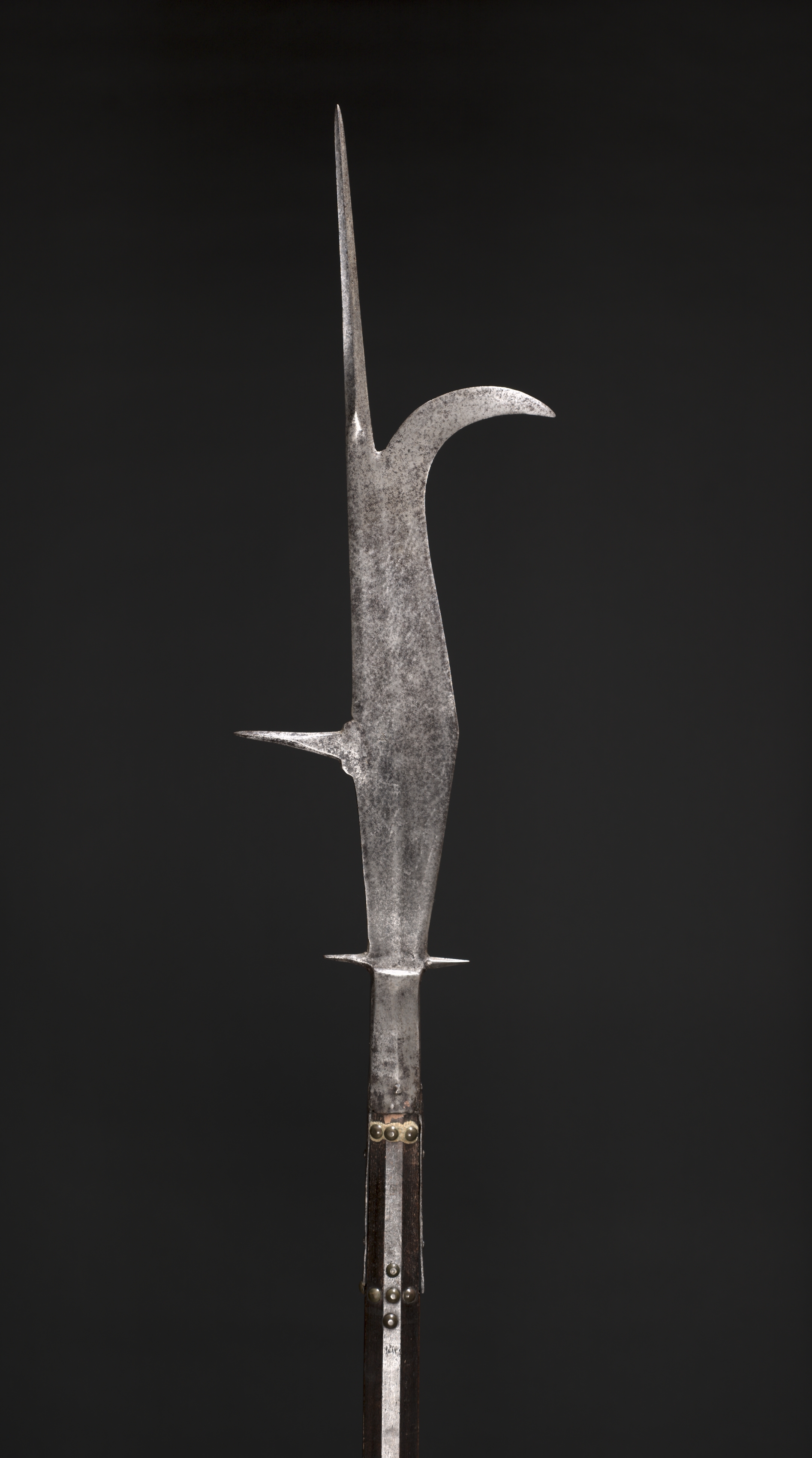
At Zoey Fashion Lab, the act of deconstruction is not merely the dismantling of a garment, but the radical re-imagining of its foundational elements. Today, we turn our analytical lens to an object of stark, historical utility: the Bill, a polearm originating from 15th-century Italy. Composed of steel and a wood haft, this weapon was designed for lethal efficiency—a tool of war, not of adornment. Yet, within its brutal form lies a profound architectural blueprint for our Avant-garde collection. We will not replicate its violence; we will translate its structural DNA into a new strand of textile and silhouette, forging a narrative of tension, balance, and subverted function.
Phase I: The Structural DNA of Force and Balance
The Bill’s physicality is a study in opposing forces. The steel head, with its hooked blade and sharp spike, represents concentrated mass and aggressive projection. The wood haft, often between six and eight feet long, is the counterbalance—a linear, yielding, and organic extension. This is not a simple union; it is a dynamic relationship between rigidity and flexibility, between the point of impact and the lever of control.
For Zoey Fashion Lab, this translates into a core design principle: asymmetrical weight distribution. We will construct garments where one shoulder or hip bears a concentrated, structured element—a sculpted shoulder pad forged from layered, heat-set steel-mesh (a modern, flexible interpretation of the blade), while the opposite side of the garment flows in a long, unbroken line of liquid-like double-faced wool, mimicking the haft’s length and fluidity. The “joint” between these two elements—the point where the steel head meets the wood—will be articulated through a visible, structural seam, perhaps using exposed rivets or a contrasting, hand-stitched cord. This seam is not a weakness; it is the locus of the garment’s narrative, the point where historical force meets modern motion.
Phase II: Material Transmutation: Steel and Wood Re-Imagined
We do not use literal steel or wood. Instead, we engage in a material transmutation that preserves the essence of the original while introducing avant-garde innovation.
Steel becomes rigid, sculptural textiles. We propose a new “DNA strand” for fabric development: a thermoplastic polyurethane (TPU) bonded to a stainless-steel micro-mesh. This hybrid material can be heat-formed into three-dimensional, angular shapes—recreating the bill’s hook and spike in a wearable, lightweight form. The surface will be treated with a dichroic finish, shifting from gunmetal grey to a subtle, iridescent blue when caught in movement, echoing the cold gleam of forged steel. For softer interpretations, we will use a jacquard-woven silk and metallic thread that creates a pixelated, distorted pattern of the bill’s silhouette, as if the weapon is dissolving into digital noise.
Wood is translated into texture and structure. The haft’s grain and linearity inform a new technique: laser-cut, layered cork bonded to a flexible knit base. This creates a surface that is both organic and architectural, with the visual rhythm of wood grain but the drape of fabric. Alternatively, we will develop a heavy, bias-cut linen that is hand-dyed with a shibori technique to create vertical, wood-like fissures and ridges. The haft’s length is echoed in exaggerated, floor-sweeping panels and elongated sleeves, while its weight is suggested through internal weighting with fine lead beads sewn into the hems, creating a deliberate, gravity-bound movement.
Phase III: Silhouette as a Weapon of Expression
The Bill’s silhouette is defined by its threat axis: a horizontal or diagonal line of attack from the blade, countered by the vertical, grounding line of the haft. Our avant-garde garments will weaponize this silhouette for expression, not violence.
The “Hooked Blade” Shoulder: A single, dramatic shoulder extension, constructed from the TPU-steel mesh, will project outward and downward in a sharp, curved hook. This is not a pad; it is a sculptural appendage that alters the wearer’s profile, creating a sense of imminent motion. The opposite side of the garment will be a simple, streamlined sheath, emphasizing the asymmetry. The hook can be detached and reconfigured, allowing the wearer to “arm” or “disarm” the silhouette.
The “Haft” Column: The lower body will be dominated by a single, continuous column of fabric—the haft. This could be a floor-length skirt or wide-legged trousers, cut on the bias to create a fluid, uninterrupted line. The fabric will feature the laser-cut cork or shibori linen, with the grain running vertically to emphasize length. A single, dramatic slit at the front or side will reveal a flash of the steel-mesh lining, a hidden “blade” within the column.
The “Joint” as a Design Feature: The connection between the upper “blade” and lower “haft” will be a focal point. A corset-like belt made of layered, laser-cut leather (mimicking the wood haft’s texture) will cinch the waist, with visible metal grommets and lacing that suggest the rivets of the original weapon. This belt is not merely functional; it is the engineering hub of the garment, the point where all structural forces converge.
Phase IV: The New DNA Strand – Kinetic Armor
Our final interpretation is not a costume; it is a new DNA strand for fashion—a blueprint for kinetic armor. The Bill was a tool of static defense and dynamic offense. Our garments will be tools of transformative presence. They will allow the wearer to shift between states: from a compressed, defensive silhouette (the haft folded, the blade retracted) to an expanded, expressive one (the blade unfurled, the haft extended).
This is achieved through modular construction and internal tension systems. Hidden drawcords and elastic channels within the steel-mesh panels allow the wearer to adjust the angle of the “blade.” The cork-and-knit panels can be zipped or buttoned into different configurations, altering the garment’s length and volume. The wood haft becomes a structural cane or walking stick—a modern, wearable accessory made from carbon fiber and wrapped in the same linen, serving as both a support and a visual anchor.
Conclusion: From Polearm to Poetic Armature
The 15th-century Italian Bill, in its brutal simplicity, has provided Zoey Fashion Lab with a profound architectural vocabulary. We have deconstructed its steel and wood, its force and balance, its threat and poise. The result is an avant-garde collection that is not about returning to the past, but about re-engineering its principles for the future. Our garments are not weapons; they are poetic armatures—structures that empower, protect, and transform the wearer. The new DNA strand we have woven is one of tension, asymmetry, and kinetic possibility. The Bill is no longer a tool of war; it is a blueprint for a new way of wearing space, weight, and intention. The laboratory is now open for the next iteration.