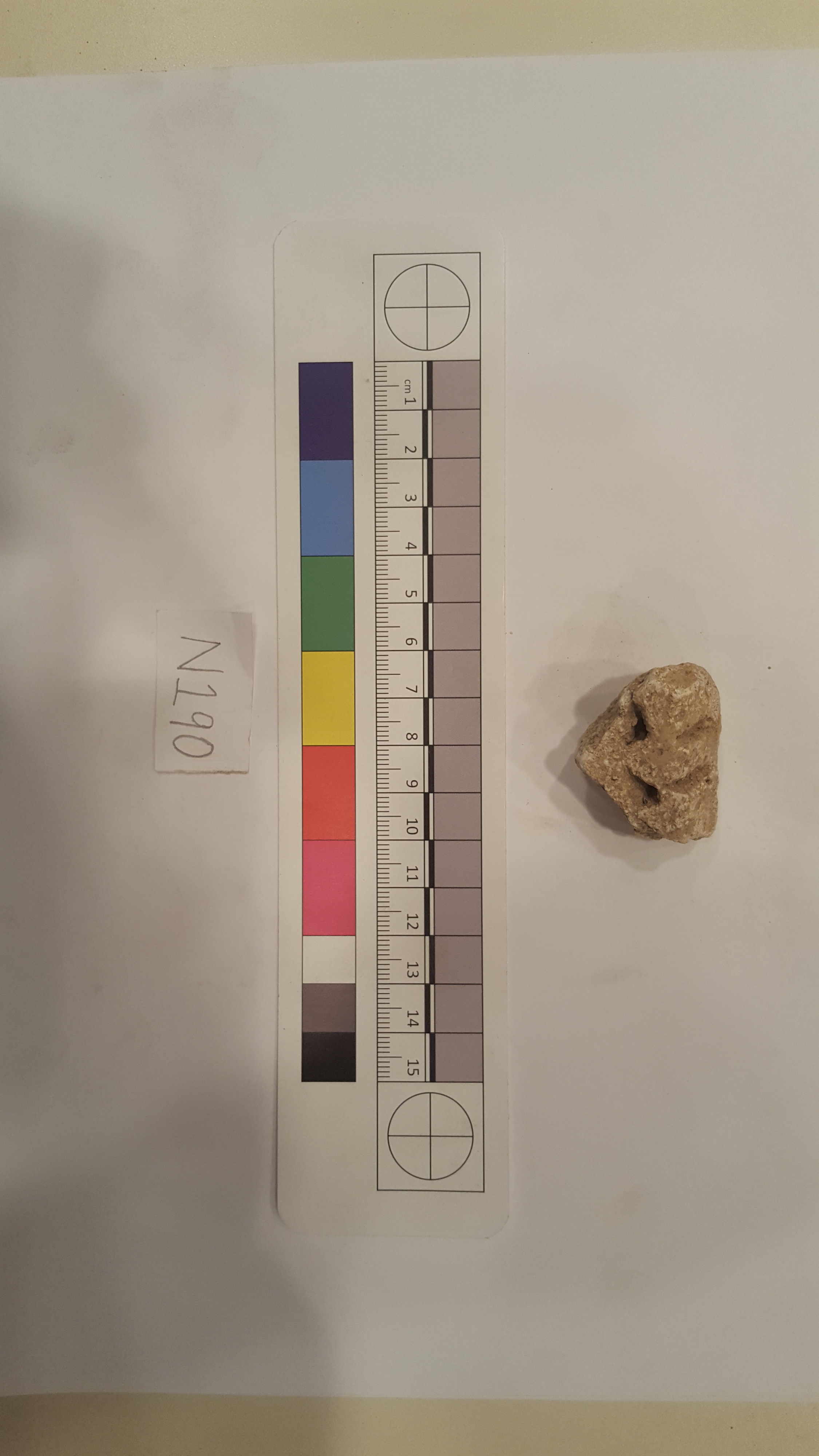
Deconstructing the Global Frontier: Stucco Fragment as Architectural Genesis for SS26
The avant-garde operates at the precipice of the unfamiliar, where materiality is not merely a substrate but a manifesto. For Zoey Fashion Laboratory’s SS26 collection, the Stucco Fragment—a carved, sedimentary relic from the Global Frontier—transcends its archaeological origins to become a foundational text for a new sartorial syntax. This is not a study in preservation but in transformation. The fragment’s porous surface, its jagged edges, and its layered geological history serve as a blueprint for a future where fashion is not worn but inhabited. We are dissecting the fragment’s structural logic to engineer silhouettes that defy gravity, challenge form, and propose a new relationship between the body and its architectural envelope.
Material Memory: The Stucco as a Structural Language
Stucco, in its vernacular form, is a humble composite—lime, sand, water, and time. Yet, in the hands of a deconstructive couturier, it becomes a metaphor for structural innovation. The carved fragment reveals a topography of deliberate incisions and accidental fissures, each line a record of pressure and release. For SS26, we translate this into a garment’s internal architecture. The fragment’s rigidity is not mimicked but reinterpreted through engineered textiles that fuse thermoplastic resins with organic cotton—creating a hybrid that can be molded, scored, and set. The resulting fabric behaves like a second skin of calcified lace: stiff where it needs to support, pliable where it must yield. This material memory—the ability to hold a form while retaining the memory of its original softness—is the cornerstone of our futuristic silhouettes.
The fragment’s carved surface also informs a new technique of negative-space draping. Where a traditional couturier might add volume, we subtract. The garment’s silhouette is defined by voids: panels are removed, seams are exposed, and the body becomes the positive space within a negative architectural frame. This is not deconstruction for its own sake; it is a deliberate strategy to create tension between the garment’s structural integrity and the wearer’s movement. The stucco fragment teaches us that beauty lies in the incomplete—the edge that stops short, the surface that invites touch but resists grasp.
Futuristic Silhouettes: From Geological Stratigraphy to Kinetic Architecture
The SS26 silhouette is a study in stratified geometry. The fragment’s layered composition—each stratum representing a different epoch of accretion—inspires a modular approach to garment construction. We propose a collection of interchangeable, architectonic components: a carved shoulder yoke that locks into a lattice of carbon-fiber ribs, a volumetric hip panel that floats away from the body on a framework of spring-steel boning. These elements are not sewn but joined through mechanical fasteners—clasps, hinges, and magnetic couplings—allowing the wearer to reconfigure the silhouette in real time. The result is a garment that is never static, its form evolving with each gesture, each shift in posture. This is kinetic architecture, where the body is the site of constant structural negotiation.
The fragment’s jagged edges are translated into sharp, asymmetrical hemlines that cut across the body’s natural axis. A single sleeve may terminate in a fractured, scalloped edge that mimics a broken stucco rim; a skirt panel may rise diagonally from the hip to the ribcage, leaving a void that exposes a sculpted underlayer. This is not about revealing skin but about revealing structure. The underlayer itself is a second garment—a “fossil” layer—cast in a translucent, resin-impregnated mesh that echoes the fragment’s porous surface. It is a ghost of the outer form, a reminder that every silhouette is a palimpsest of previous iterations.
Structural Innovation: The Carved Seam and the Suspended Volume
Traditional couture relies on the seam as a hidden joint, a secret that binds fabric together. In this collection, the seam is exposed and celebrated as a primary structural element. Inspired by the fragment’s carved grooves, we introduce the “carved seam”—a technique where the fabric is not cut and sewn but scored and folded. Using a laser-guided tool, we create deep channels in the textile, which are then heat-set to form permanent, rigid creases. These creases act as structural ribs, distributing tension and allowing the garment to stand away from the body without internal boning. The result is a silhouette that appears to have been chiseled from a single block of material, yet moves with the fluidity of a second skin.
Another breakthrough is the suspended volume. The fragment’s carved surfaces often feature undercuts—areas where material is hollowed out, creating a sense of weightlessness. We replicate this through a system of internal tension cables that lift sections of the garment away from the body. A shoulder panel may be suspended by a single, ultra-thin cable of braided steel, creating a floating canopy that hovers over the collarbone. A skirt’s train may be lifted at the hem, forming an arch that reveals the shoe and the ground below. This is not mere spectacle; it is a functional solution to the problem of volume. By suspending fabric, we reduce weight, increase airflow, and create a silhouette that is both monumental and ethereal.
The Global Frontier as a Conceptual Framework
The term “Global Frontier” is not a geographic location but a conceptual space—a liminal zone where cultures, materials, and ideologies collide. The stucco fragment, as a relic of this frontier, embodies hybridity. Its carved patterns may reference motifs from disparate traditions—a geometric frieze from Central Asia, a floral arabesque from the Mediterranean, a spiral from the Pre-Columbian Americas. For SS26, we abstract these motifs into non-representational forms. The garment’s surface becomes a canvas for digital-printed textures that mimic the fragment’s patina, its cracks, its mineral deposits. These prints are not decorative; they are structural maps, guiding the eye and the hand to the points of tension and release within the garment’s architecture.
The frontier also implies impermanence and adaptation. The fragment is a ruin, a remnant of a structure that no longer exists. In this spirit, the SS26 collection embraces planned obsolescence as a design principle. Garments are engineered to be disassembled, their components recycled into new forms. A jacket’s carved shoulder yoke can be detached and reattached to a different base; a skirt’s suspended volume can be collapsed into a flat panel for storage. This is a radical departure from the permanence of traditional couture, aligning with a future where fashion is fluid, responsive, and regenerative.
Conclusion: The Fragment as a Manifesto for the Future
The Stucco Fragment is not a source of nostalgia but a catalyst for invention. It teaches us that structure emerges from decay, that beauty resides in the incomplete, and that the most powerful silhouettes are those that challenge the body’s relationship to space. For Zoey Fashion Laboratory’s SS26, the fragment’s carved surface, its geological strata, and its jagged edges are translated into a new lexicon of couture: negative-space draping, suspended volumes, carved seams, and modular architecture. This is not fashion as adornment but fashion as habitable sculpture—a garment that is at once a ruin and a blueprint, a relic and a revolution. The Global Frontier is not a place we have left behind; it is the territory we are about to enter, armed with a fragment of the past to build the future.