Deconstructing the Velvet Fragment: A Zoey Fashion Lab Analysis
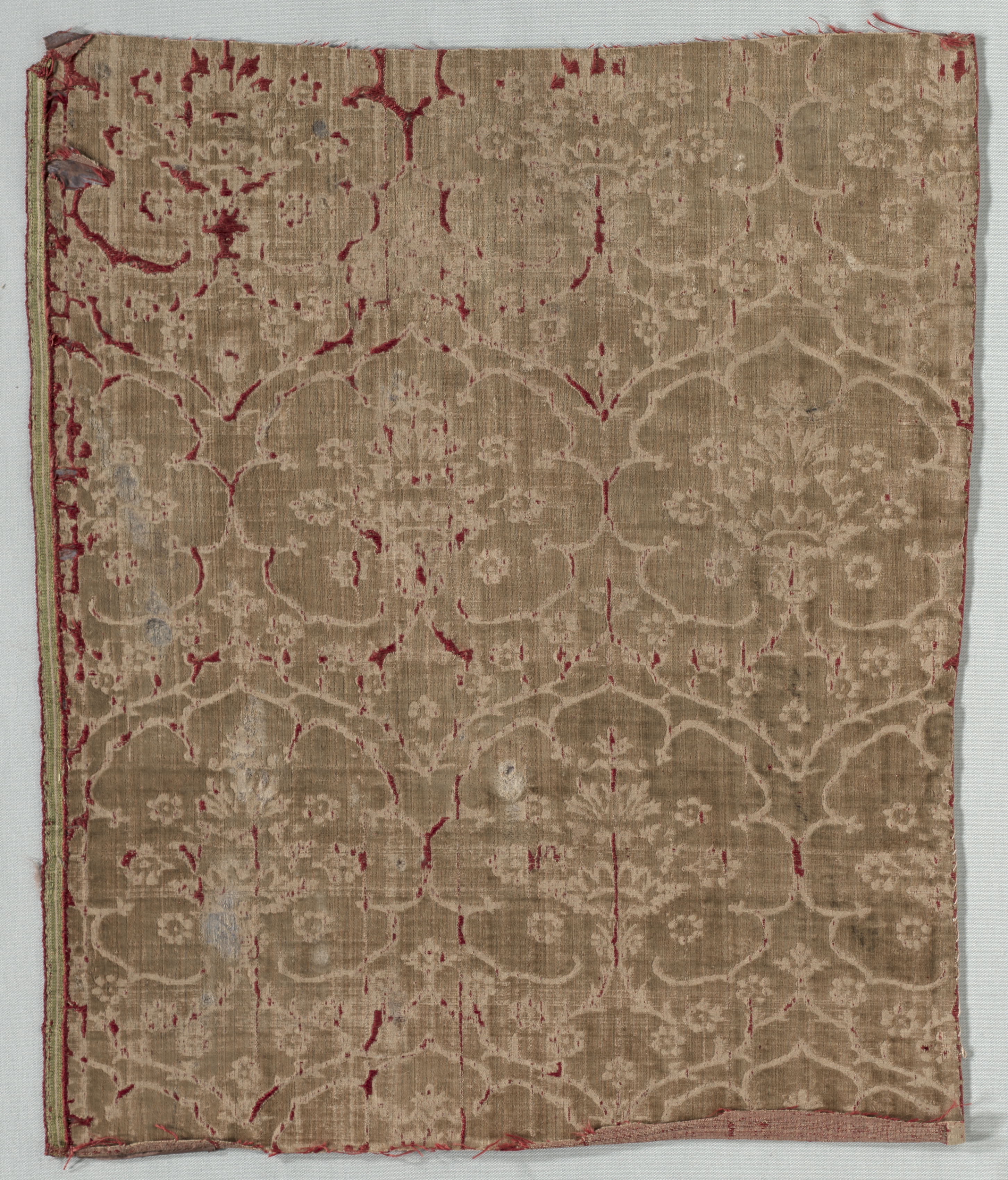
At Zoey Fashion Lab, the act of deconstruction is not merely about dismantling; it is a form of archaeological excavation into the soul of fabric. The subject of this analysis—a velvet fragment from 15th-century Italy—presents a paradox of opulence and decay. This is not a relic to be preserved under glass but a living specimen for radical reinterpretation. With a technical foundation of cut and voided velvet, and a stylistic directive of Avant-garde, we approach this fragment as a new DNA strand—a genetic code for a future garment that honors its past while violently breaking from it.
I. Material Provenance: The 15th-Century Italian Context
The origin of this fragment is critical. 15th-century Italy, particularly cities like Florence, Venice, and Milan, was the epicenter of European luxury textile production. Velvet—specifically cut velvet (velluto cesellato)—was a material of immense status, reserved for ecclesiastical vestments, ducal robes, and aristocratic finery. The technical process was painstaking: silk threads were woven over a metal rod, then cut to create a dense, lustrous pile. The “voided” technique (velluto alzato e intagliato) further refined this by leaving areas of the ground weave exposed, creating a stark contrast between the raised pile and the flat, often metallic, background. This interplay of texture and light was a symbol of Renaissance mastery over material.
For Zoey Fashion Lab, this fragment is not a symbol of wealth but a record of labor, geometry, and the human hand. The slight unevenness in the pile—the faint traces of wear—are not flaws but evidence of life. The voided areas, originally intended to showcase gold or silver threads, now reveal a patina of age, a subtle shift in color from deep crimson to a muted, almost dusty rose. This degradation is our starting point. In our Avant-garde lens, decay is not an end but a beginning—a surface to be manipulated, not restored.
II. Technical Analysis: Cut and Voided Velvet as a Structural System
We must dissect the technical DNA of this fabric. Cut velvet is defined by its pile—a third dimension of fiber that stands erect from the ground weave. The pile height, density, and direction create a dynamic surface that captures and reflects light. The voided technique introduces negative space, where the pile is absent, revealing the underlying structure. In the 15th century, this was used to create intricate patterns—often floral or geometric—that seemed to float on the fabric’s surface.
From a deconstructionist perspective, the cut and voided system is a binary: presence and absence, density and void, light and shadow. The Avant-garde designer does not seek to replicate this binary but to amplify its tension. How can we exploit the pile’s fragility? How can we invert the voided areas to become the primary focus? The fragment’s edges, where the pile has worn away, reveal the raw weave underneath—a substrate of raw silk. This edge condition is a portal. We propose to treat the entire fragment as a series of edges, systematically removing sections of pile to expose the ground, creating a new pattern of decay that is intentional, not accidental.
III. The New DNA Strand: Re-coding the Fragment
We term this fragment a “New DNA Strand” because it contains the genetic instructions for a garment that does not yet exist. The 15th-century velvet is the original code—a sequence of pile and void, color and texture. Our task is to mutate this code through Avant-garde techniques of subtraction, addition, and distortion.
Subtractive Mutation: We will laser-cut into the velvet, not to create clean edges, but to burn and fray the pile. The laser will selectively vaporize the silk, leaving charred, irregular boundaries between cut and void. This mimics the natural wear of the fragment but accelerates it into a graphic, almost digital pattern. The result is a surface that oscillates between the historical and the futuristic—a velvet that has been “edited” by a machine.
Additive Mutation: The voided areas will be infused with modern materials. Where the original fabric used metallic threads, we will embed fiber-optic filaments or micro-LEDs. These will pulse with a low, ambient light, referencing the candlelit interiors of Renaissance palaces while introducing a cold, electronic glow. The pile itself will be treated with a hydrophobic coating, creating a tension between softness and repellency—a tactile paradox.
Structural Mutation: The fragment’s weave is inherently two-dimensional. We will deconstruct its planar nature by cutting it into strips and re-weaving them with elastic threads or metal chains. This creates a three-dimensional lattice—a “voided” structure that is literally open to the air. The garment becomes a scaffold of memory, where the original velvet is suspended in a new, transparent matrix.
IV. Avant-Garde Application: The Garment as a Living Fragment
The final garment will not be a dress or a coat in the traditional sense. It will be a wearable ruin—a piece that exists in a state of perpetual deconstruction. The silhouette will be asymmetrical, with one side referencing the original fragment’s weight and drape, and the other side dissolving into a web of exposed threads and fiber optics. The cut velvet will be concentrated at the shoulders and torso, evoking the armor-like rigidity of Renaissance court attire, while the voided, laser-burned sections will cascade into a train of frayed silk and light.
The color palette will be monochromatic but dynamic: deep burgundy and black for the original velvet, with the burned areas shifting to charcoal and ash. The fiber-optic elements will introduce a subdued amber glow, reminiscent of aged varnish or candle flame. This is not a garment for a runway in the conventional sense; it is a performative artifact meant to be seen in dim, controlled light, where the interplay of texture and illumination becomes the primary narrative.
V. Conclusion: The Fragment as a Threshold
The 15th-century Italian velvet fragment is not a finished object. It is a threshold between eras, a material that has survived centuries of decay to become a canvas for new expression. At Zoey Fashion Lab, we see it as a genetic blueprint for rebellion. By deconstructing its technical DNA—its cut and voided structure—and re-coding it through Avant-garde methods, we create a garment that is both a homage and a critique. It honors the craftsmanship of the past while refusing to be trapped by it. The result is a living fragment, a piece of fashion that is always in the process of becoming, always on the edge of dissolution. This is the essence of our work: to find the future in the ruins of the past.