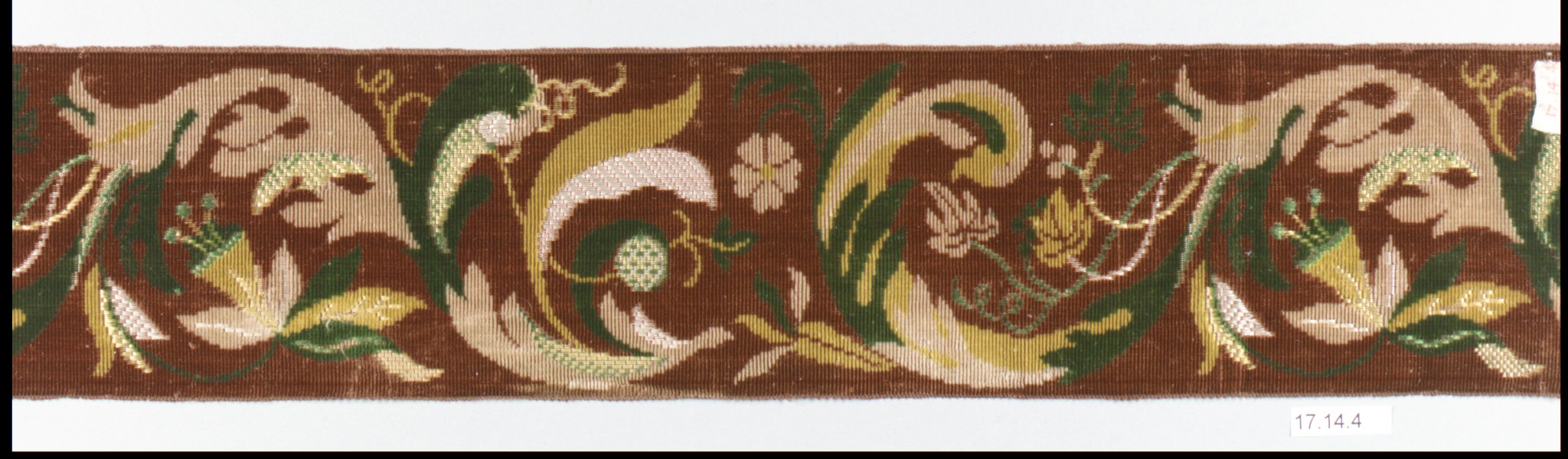
The Velvet Ribbon: A Deconstructive Manifesto for SS26
The ribbon, historically a mere embellishment—a whisper of closure, a gesture of ornament—undergoes a radical transmutation in Zoey Fashion Laboratory’s SS26 avant-garde couture study. From its Global Frontier origins, the velvet ribbon emerges not as a decorative afterthought but as a structural protagonist, a tensile architectural element that redefines the boundaries of garment engineering. This analysis dissects the ribbon’s metamorphosis from a linear accessory into a three-dimensional, kinetic fabric system, challenging conventional notions of silhouette, drape, and volume. The velvet substrate, with its plush nap and inherent fluidity, becomes the medium for a futuristic dialogue between softness and rigidity, between the organic and the synthetic.
Deconstructing the Line: Ribbon as Architectural Scaffold
The core innovation lies in the ribbon’s reconfiguration as a load-bearing structural component. Instead of stitching a ribbon flat onto a garment, Zoey’s design philosophy advocates for its suspension. Velvet ribbons, cut in varying widths from 2cm to 15cm, are strategically tensioned across the body’s topography, creating a exoskeletal framework that defines and distorts the human form. This is not mere embellishment; it is a structural lattice that replaces traditional seams, darts, and boning. The ribbon’s inherent pliability is counteracted by the introduction of internal, heat-set resin threads woven into the velvet’s pile, allowing for pre-determined curves and cantilevers. The result is a futuristic silhouette that appears both weightless and monumental, as if the garment were a frozen moment of tensile stress. The ribbons themselves become the seams, the darts, the very anatomy of the garment, echoing the Global Frontier’s philosophy of material honesty—where the construction is the ornament.
Velvet’s Paradox: Softness as Structural Force
Velvet, with its deep, lustrous surface, is traditionally associated with opulence and tactile indulgence. Yet, in this avant-garde context, its softness becomes a paradox. The nap, when oriented in multiple directions across a single ribbon, creates a moiré effect that shifts with movement, transforming the garment into a living, optical surface. The structural innovation lies in the manipulation of this nap: ribbons are arranged in opposing grain directions to generate visual tension and to guide the fabric’s natural drape into controlled, architectural folds. For SS26, Zoey introduces a technique termed “nap-locking,” where velvet ribbons are layered and heat-pressed at specific angles, creating rigid, self-supporting panels that still retain the tactile softness of the pile. This allows for the creation of exaggerated, futuristic silhouettes—asymmetric, spiraling volumes that project outward from the body, defying gravity. The ribbon, once a symbol of delicate binding, now becomes a tool for volumetric expansion, a medium for sculpting negative space around the wearer.
The Global Frontier: Zero-Waste Ribbon Topology
The Global Frontier context demands a rethinking of material economy. Zoey’s approach to the velvet ribbon is inherently zero-waste: the ribbon is not cut from a larger fabric but is woven to its final width and length, eliminating off-cuts. This topological weaving allows for complex, continuous ribbon loops that can be draped, twisted, and knotted into a single, seamless garment. The structural innovation here is the “ribbon knot”—a series of interlocking, tensioned loops that replace traditional closures like zippers and buttons. These knots are not decorative; they are functional, load-distributing nodes that allow the garment to be disassembled and reassembled into multiple configurations. For SS26, a single velvet ribbon, 50 meters long, is woven into a dress that can be worn in three distinct silhouettes: a column, a cocoon, and a spiral. This modularity is a direct response to the Global Frontier’s ethos of versatility and adaptability, a futuristic silhouette that evolves with the wearer’s context.
Futuristic Silhouettes: The Ribbon as Kinetic Sculpture
The final frontier is the ribbon’s potential for kinetic movement. Unlike rigid materials, the velvet ribbon can be engineered to respond to the wearer’s motion. Zoey’s SS26 collection introduces “magnetic ribbon laminates,” where thin, flexible magnets are embedded within the velvet’s backing. These ribbons can be arranged to attract or repel each other, creating dynamic, self-adjusting silhouettes that shift with the body’s gesture. A skirt, for example, can flare open with a step and close with a turn, the ribbons acting as a responsive exoskeleton. The velvet’s weight and nap ensure that the movement is fluid, never abrupt, producing a futuristic silhouette that is both organic and mechanical. This is the ribbon as a living, breathing architectural element—a deconstructive study that redefines the relationship between garment and wearer, between structure and motion.
Conclusion: The Ribbon’s New Order
In this avant-garde analysis, the velvet ribbon transcends its historical role as a mere trim. It becomes the primary structural language of a garment, a tool for creating futuristic silhouettes that are at once soft and rigid, static and kinetic. Zoey Fashion Laboratory’s SS26 study repositions the ribbon as a global frontier material, one that offers infinite possibilities for zero-waste construction, modular design, and responsive form. The velvet ribbon is no longer a line; it is a volume, a force, a new order in couture architecture. The future of fashion, it seems, is woven in a single, continuous strand.