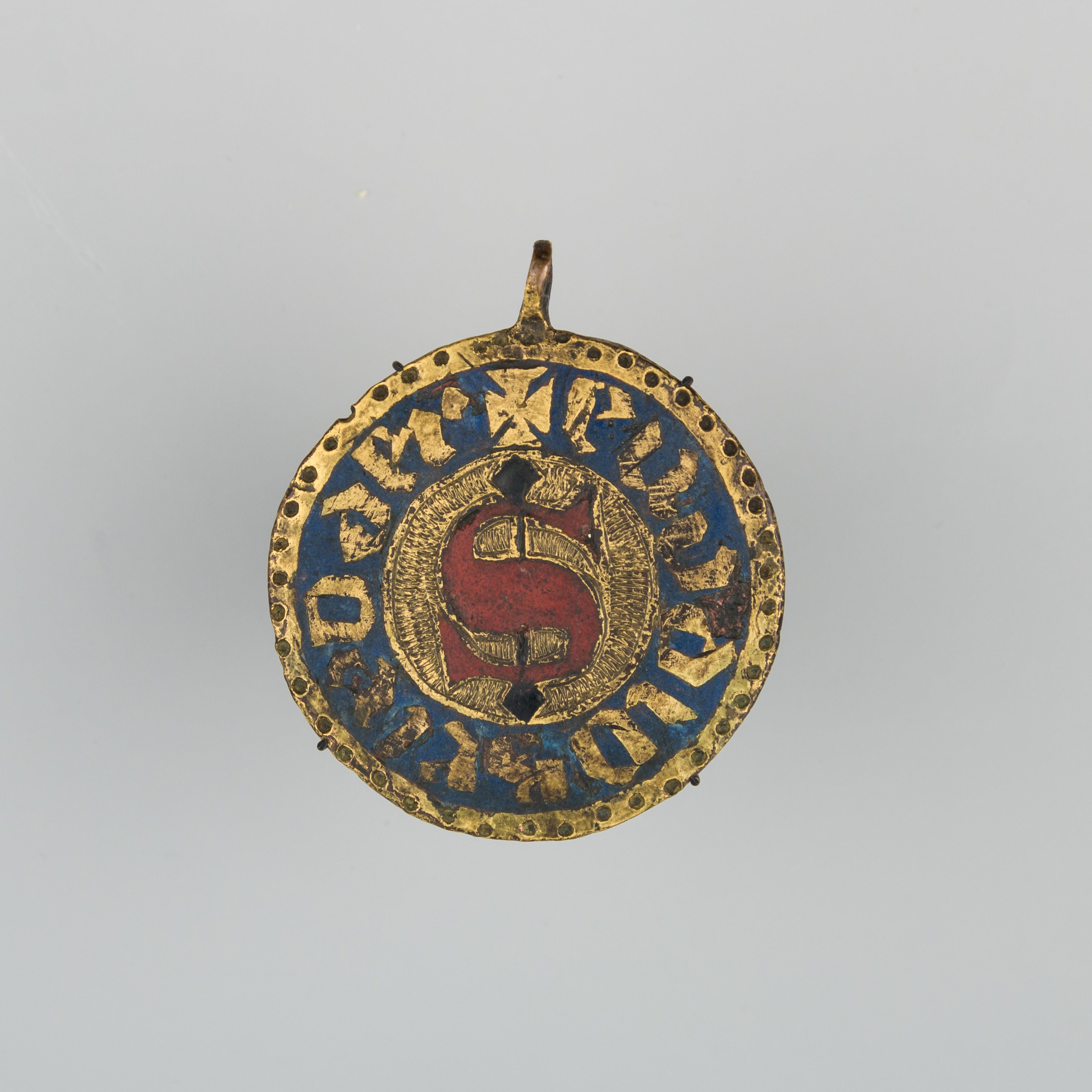
Deconstructing the Relic: The Badge-Harness Pendant as Futuristic Armature
In the relentless pursuit of the post-human silhouette, Zoey Fashion Laboratory dissects the artifact. The Spanish badge or harness pendant, rendered in copper, gold, and enamel, is not a mere ornament. It is a structural manifesto for Spring/Summer 2026—a relic of power, militarism, and ritual, re-engineered into a futuristic exoskeleton. This analysis deconstructs its material logic, its spatial architecture, and its potential to redefine the body as a site of technological adornment.
The Alchemy of Material: Copper, Gold, and Enamel as Structural Dialectics
The pendant’s triad of materials—copper, gold, and enamel—creates a tension between the archaic and the speculative. Copper, historically a conductor of energy and a symbol of earthly durability, is here recast as a functional substrate. Its warm, oxidized patina suggests age, yet its malleability allows for radical geometric distortion. Gold, in contrast, introduces a futuristic luminosity—a signal of value and precision, as if the pendant were a fragment of a galactic insignia. The enamel, with its vitreous sheen, bridges the two: it is both a protective coating and a chromatic interface, capable of reflecting light in ways that mimic digital displays.
For SS26, this material triad is not decorative but operational. The copper forms the load-bearing chassis of the garment, while gold plating acts as a conductive circuit—perhaps embedded with micro-LEDs or haptic feedback mechanisms. The enamel becomes a translucent membrane, layered over the metal to create a sense of depth and motion. This is not jewelry; it is wearable infrastructure. The pendant’s weight, historically a burden of status, is reimagined as a counterbalance that alters the wearer’s posture—a deliberate, architectural sway.
Architecting the Silhouette: The Pendant as Spatial Anchor
The conventional badge or harness pendant sits flat against the chest, a static emblem. In the Zoey Fashion Laboratory, it becomes a dynamic armature that redefines the torso’s topography. Imagine the pendant suspended from a carbon-fiber harness that wraps around the shoulders and ribs, its copper core extruded into asymmetrical struts. These struts project outward, creating a negative space between body and garment—a void that suggests the absence of traditional tailoring. The pendant is no longer attached; it is integrated, its enamel surface acting as a reflective plane that fractures the silhouette into multiple, shifting facets.
This approach aligns with the SS26 trend toward deconstructed volumes. The pendant’s geometric enamel patterns—perhaps inspired by Moorish tilework—are magnified and repeated across the harness, creating a rhythm of repetition that echoes digital grids. The gold accents become structural seams, stitching the copper into a monolithic form that defies the body’s natural curves. The result is a silhouette that is simultaneously armored and ethereal—a cyborgian exoskeleton that celebrates the tension between rigidity and fluidity.
Deconstructive Aesthetics: Ritual, Power, and the Post-Human
Historically, Spanish harness pendants were symbols of ecclesiastical or military authority, often worn as badges of honor. In the avant-garde context, this relic is deconstructed and repurposed to critique hierarchies of power. The pendant’s copper core is fractured into fragments, suspended from a harness that resembles a gilded cage. The enamel, once a sign of perfection, is deliberately cracked or veined, suggesting decay or digital glitch. This is not a celebration of heritage but a reclamation of material agency—the pendant as a tool for subversion.
The harness itself becomes a second skin, its straps tracing the body’s musculature like biomechanical tendons. The pendant, now a central node, anchors a network of thin copper wires that extend to the hips, shoulders, and spine. These wires are not merely decorative; they constrain and release the fabric, creating draped volumes that shift with movement. The wearer becomes a living sculpture, their body a stage for kinetic architecture. The pendant’s weight—once a burden—now generates momentum, pulling the fabric into unexpected folds that challenge conventional draping.
Innovation for SS26: The Pendant as Interactive Interface
The future of the badge or harness pendant lies in its interactive potential. For SS26, Zoey Fashion Laboratory proposes a smart pendant embedded with flexible sensors that respond to body heat, pulse, or ambient light. The copper core becomes a thermal conductor, altering the enamel’s color in response to temperature—a chromatic language that signals emotional or physiological states. The gold accents, plated with conductive ink, can trigger haptic vibrations along the harness, creating a tactile dialogue between wearer and garment.
This innovation extends to the silhouette’s construction. The pendant is no longer a single object but a modular system. Its copper base can be detached and repositioned along the harness, allowing the wearer to reconfigure the garment’s weight distribution—a customizable architecture that adapts to different contexts. The enamel panels are interchangeable, offering a palette of colors and patterns that reflect digital or natural landscapes. This is wearable technology that prioritizes aesthetic autonomy, not mere functionality.
Conclusion: The Pendant as Proto-Fashion
The Spanish badge or harness pendant, in its deconstructed form, is a proto-future artifact. It embodies the tension between history and speculation, materiality and digitality, structure and fluidity. For Zoey Fashion Laboratory, it is not a relic to be preserved but a catalyst for innovation. Its copper, gold, and enamel become tools for reimagining the body as a site of structural resistance and interactive expression. As SS26 approaches, this pendant stands as a definitive statement: that the most radical fashion is born from the most ancient forms, deconstructed and rebuilt for a future where the garment is the interface.