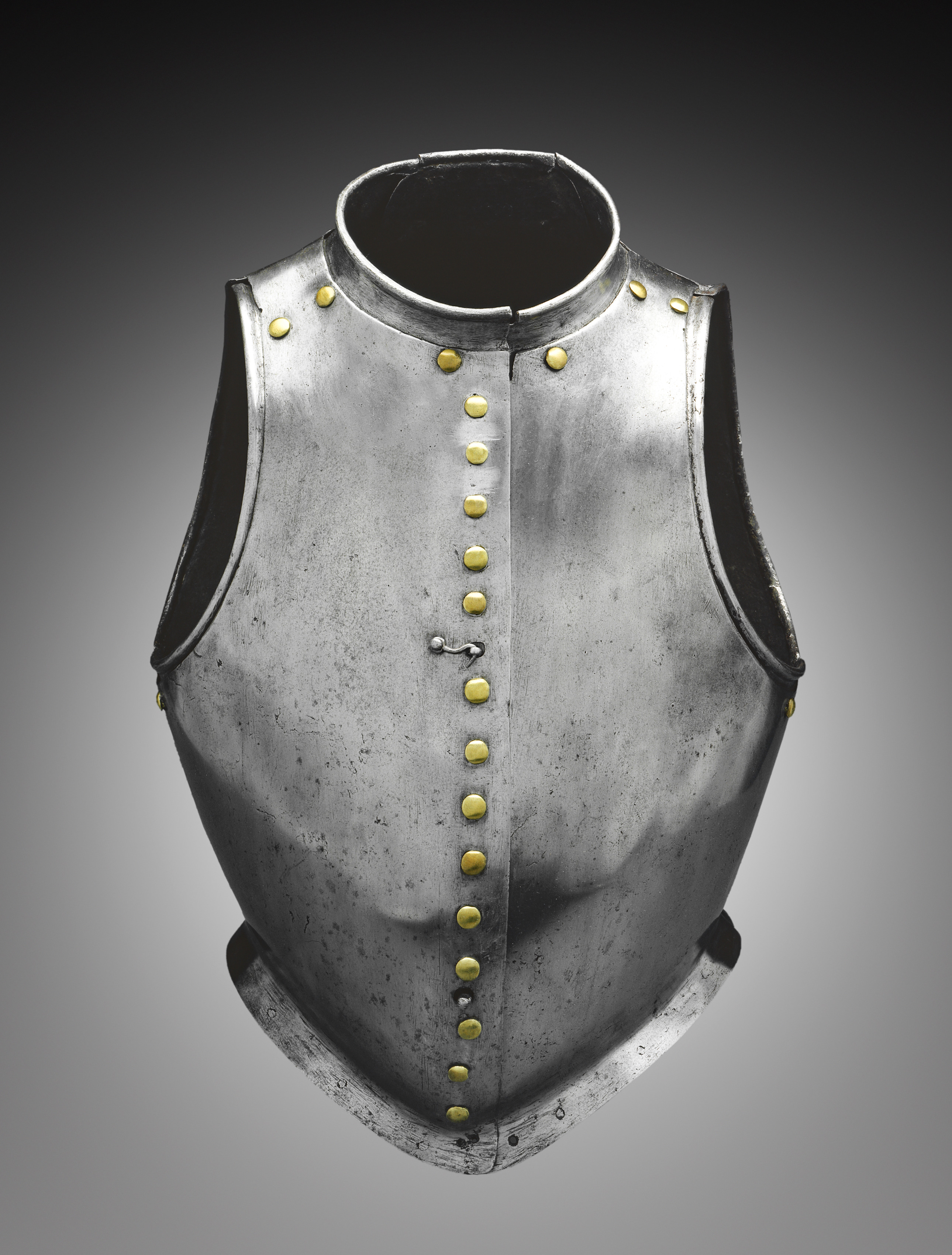
Deconstructing the "Waistcoat" Cuirass: A Technical and Stylistic Autopsy for Zoey Fashion Lab
At Zoey Fashion Lab, our mandate is to excavate historical artifacts not as relics, but as raw genetic material for avant-garde construction. The subject of this analysis—a North Italian 16th-century "Waistcoat" Cuirass—presents a paradox of form and function. This is not a piece of armor designed for the joust or the battlefield; it is a garment of social armor, a sculpted silhouette intended for the court, the street, and the assertion of power. Its specific construction, utilizing steel with brass rivets simulating buttons, offers a critical New DNA Strand for our upcoming collection. We will deconstruct its technical anatomy, its subversive stylistic language, and its potential for radical reinterpretation.
Technical Autopsy: The Steel Waistcoat
The primary technical innovation of this cuirass is its deliberate mimicry of civilian dress. Unlike the monolithic, often brutally functional breastplates of full harness armor, this piece is articulated to resemble a tailored waistcoat or doublet. The combined breast and backplates are not a single, rigid shell but are composed of multiple overlapping plates, or lames, that articulate at the waist and shoulders. This articulation is not merely for mobility; it is a structural homage to the fabric garment it imitates.
The material is steel, but its treatment is crucial. It is likely a low-carbon steel, chosen for its ability to be hammered, shaped, and polished to a high lustre. The surface is not blued or russeted for combat camouflage; it is left bright or lightly burnished to catch light, transforming the wearer into a walking, reflective sculpture. The thickness is reduced compared to field armor, prioritizing drape and visual weight over ballistic protection. The edges are rolled and roped, mimicking the piping or seam finishing of a textile garment, a detail of extraordinary precision.
The most subversive technical element is the use of brass rivets simulating buttons. These are not functional closures; the cuirass is typically donned via side hinges and buckles or a rear closure. The rivets are purely decorative, a trompe-l'oeil effect that anchors the entire illusion. They are arranged in a vertical line down the center of the breastplate, exactly where a row of fabric buttons would be. Each rivet is a small, domed brass head, set into a countersunk hole in the steel. This is a deliberate act of material transposition. The soft, warm gleam of brass against the cold, hard steel creates a visual and tactile tension. It is a declaration: "I am not a garment; I am a sculpture of a garment."
Stylistic Deconstruction: The Language of Power and Illusion
Stylistically, the "Waistcoat" Cuirass is a masterpiece of social semiotics. In the 16th century, clothing was a rigid code of status. A man's wealth and rank were displayed through the quality of his textiles, the cut of his doublet, and the presence of ornamentation. By transposing this code into steel, the cuirass elevates the mundane to the monumental. The waistcoat, a symbol of civic life and commerce, is weaponized. The wearer is not just a nobleman; he is an impenetrable fortress of his own status.
The silhouette is key. The cuirass follows the fashionable lines of the period: a broad shoulder line, a nipped-in waist, and a flared peplum-like base over the hips. This creates the classic "V" or inverted triangle shape of masculine power. However, the material subverts this. The steel does not drape; it holds its form with unyielding rigidity. The illusion of a soft, tailored waistcoat is only skin deep. The reality is a rigid, armored carapace. This tension between the soft, organic form of the body and the hard, geometric form of the armor is the source of its avant-garde potential.
The brass rivets are the critical stylistic fulcrum. They are a signature of artifice. They announce that this is a costume, a performance. They function as a visual pun—a "button" that cannot be unbuttoned. This is the essence of the New DNA Strand for Zoey Fashion Lab: the intentional deployment of non-functional, purely symbolic elements to create a new language of dress. In our avant-garde context, these rivets become a motif of deferred functionality. They are not closures; they are anchors of meaning.
Avant-Garde Recontextualization: The Zoey Fashion Lab Intervention
To extract the New DNA Strand from this artifact, we must perform a radical act of deconstruction and recombination. We will not reproduce the cuirass. We will use its core principles—material transposition, mimetic silhouette, and symbolic non-functionality—as a generative algorithm.
1. Material Transposition in Reverse: Where the original transposed fabric into steel, we will transpose steel into fabric. Imagine a "cuirass" constructed from a high-density, laser-cut felt or a bonded metallic jersey. The structure would be soft, pliable, and capable of draping, yet it would retain the rigid, geometric silhouette of the original through internal boning or a stiffened lining. The "steel" becomes a memory, a ghost in the material. The "brass rivets" could be rendered as oversized, cast-resin buttons that are sewn on but have no buttonholes, their threads left trailing or deliberately cut, emphasizing their decorative, non-functional role.
2. Silhouette as Armor: The inverted triangle of the 16th-century waistcoat is a powerful, almost aggressive form. We will exaggerate it. The shoulders can be extended with sharp, architectural shoulder pads made from carbon fiber or molded leather. The waist can be cinched with a corset-like structure that is visible, not hidden. The peplum can become a series of rigid, overlapping panels that flare out like a bell, creating a sound and a visual rhythm with movement. This is not armor for the battlefield; it is armor for the runway, for the gallery, for the digital realm.
3. The Rivet as a Motif of Deferred Function: The brass rivet is our most potent symbol. We will multiply it, distort it, and abstract it. Imagine a garment where the entire surface is covered in hundreds of small, metallic studs or grommets, all non-functional. They form a pattern that mimics the grain of steel or the weave of fabric. They are not closures; they are a texture of armor. Alternatively, a single, oversized "button" made of polished brass could be placed at the center of the chest, a monumental focal point that draws the eye and anchors the entire composition. Its scale renders it useless, transforming it into a pure signifier of the original.
4. The Performance of Rigidity: The original cuirass is a static object. Our avant-garde version must be a performance. The "waistcoat" should be designed to be worn with a specific gait—a stiff, deliberate, almost robotic walk that mimics the restricted movement of a person in armor. The garment itself could be engineered to produce a sound, a metallic rustle or a click, every time the wearer moves. This transforms the garment from a visual object into a sonic and kinetic sculpture.
In conclusion, the 16th-century "Waistcoat" Cuirass is not a historical curiosity; it is a blueprint for a new aesthetic. Its genius lies in its deliberate confusion of categories—armor and clothing, function and ornament, hard and soft. For Zoey Fashion Lab, this artifact provides the New DNA Strand to create a collection that interrogates the very nature of protection, performance, and the body in space. We will not wear history; we will wear its code.