Deconstructing the Armored Silhouette: A Zoey Fashion Lab Analysis
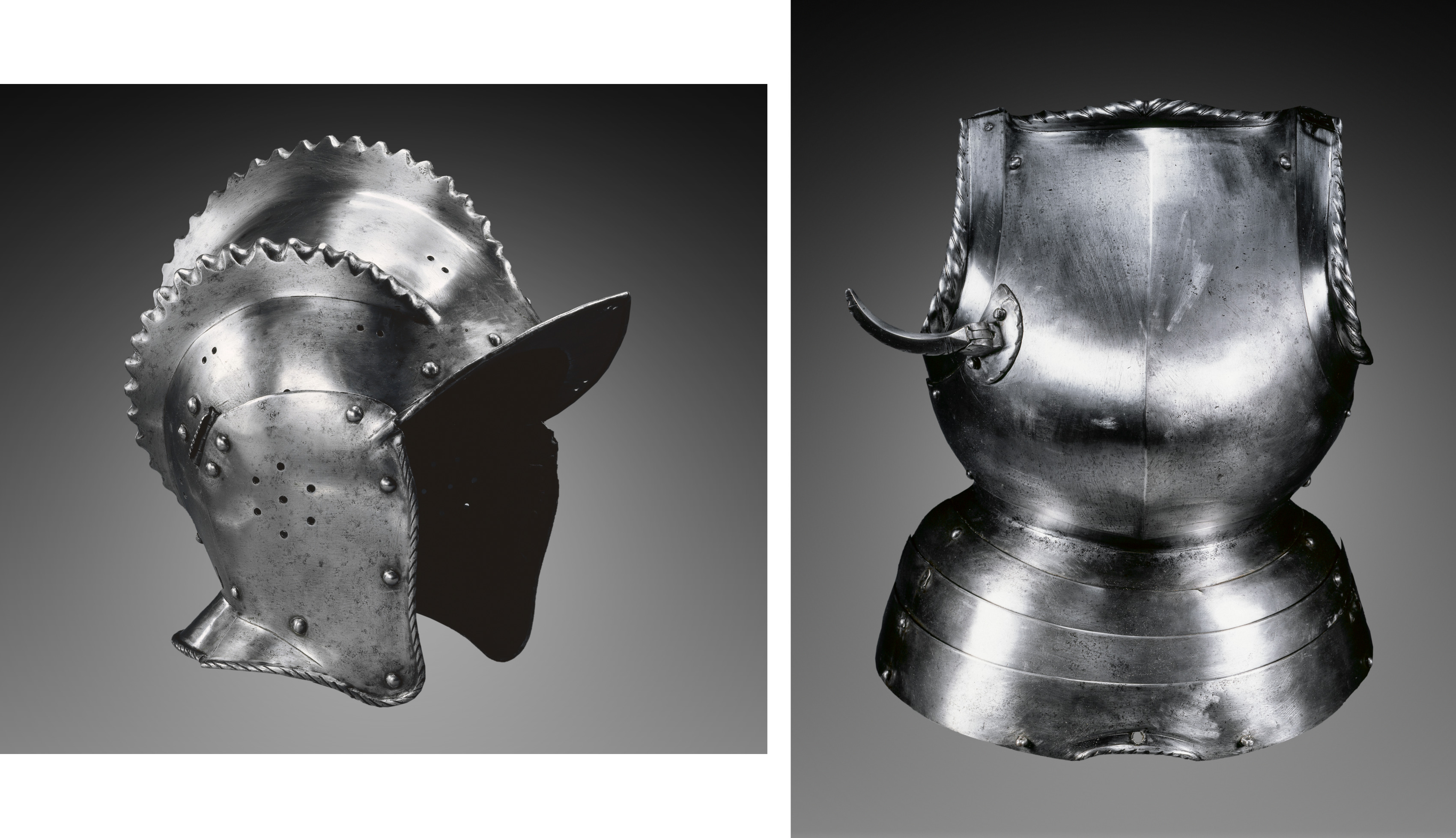
At Zoey Fashion Lab, the Chief Fabric Deconstructionist operates at the intersection of historical artifact and futuristic vision. Our latest analysis examines a remarkable subject: Elements from an Armor, originating from Germany. This piece, constructed from steel, leather bands, and steel-and-leather composites, is not merely a relic of martial history. Through our lens, it becomes a New DNA Strand—a genetic blueprint for an avant-garde aesthetic that redefines structure, protection, and the human form. This report dissects the armor’s technical components, material dialogue, and stylistic potential, proposing a radical recontextualization for contemporary fashion.
Technical Deconstruction: The Anatomy of German Armor
Steel: The Rigid Skeleton
The primary component, steel, serves as the armor’s exoskeletal foundation. In historical German armor, particularly from the 15th and 16th centuries, steel was forged into articulated plates that mirrored the human anatomy. Each piece—from the cuirass to the gauntlets—was engineered for both defense and mobility. For our analysis, the steel elements represent immutable structure. They are the bones of the design, offering a rigid, polished surface that reflects light and distorts space. In an avant-garde context, steel is not a barrier but a sculptural medium. Its cold, industrial quality contrasts with the warmth of the body, creating a tension that is central to Zoey Fashion Lab’s deconstructive philosophy.
Leather Bands: The Flexible Connective Tissue
Interwoven with the steel are leather bands—strips of treated hide that once functioned as straps and hinges. These bands represent flexibility within rigidity. They allow the armor to articulate at the joints, enabling movement while maintaining structural integrity. In our deconstruction, leather bands become the ligaments of the design. They introduce a tactile, organic element that softens the metallic harshness. The leather’s patina—scratches, creases, and wear—tells a story of use and time. For avant-garde fashion, this is a crucial narrative device: the leather bands can be exaggerated, layered, or suspended to create a sense of controlled chaos, where the garment breathes and shifts with the wearer.
Steel and Leather Composite: The Hybrid Membrane
The third technical element is the composite of steel and leather—where the two materials are fused, riveted, or stitched together. This hybridity is the most advanced aspect of the armor’s construction. It represents a symbiotic relationship between the hard and the soft, the protective and the permeable. In historical German armor, this composite was often used for gorgets or shoulder guards, where flexibility and defense were equally critical. For Zoey Fashion Lab, this composite is a prototype for new materiality. It suggests that garments can be both armor and fabric, offering protection without sacrificing drape. The steel-and-leather composite becomes a canvas for texture play—the smooth coldness of steel against the grain of leather—creating a visual and tactile dialogue that is quintessentially avant-garde.
The New DNA Strand: Reimagining Armor as Genetic Code
From Protection to Expression
Our reference to a New DNA Strand is intentional. In biology, DNA carries the instructions for development, functioning, and reproduction. Similarly, the elements from this German armor can be seen as genetic material for a new fashion language. The steel plates are the dominant genes, dictating form and structure. The leather bands are the recessive genes, introducing flexibility and texture. The composite is the mutation—the hybrid that challenges binary categories. By deconstructing these elements, we extract their core properties: weight, reflectivity, articulation, and patina. These properties become the base pairs in a new design genome, allowing us to engineer garments that are simultaneously historical and futuristic, protective and expressive.
Avant-Garde Style: The Armor Reborn
The avant-garde style demands the rupture of convention. In translating armor elements, we reject literal replication. Instead, we propose a deconstructed silhouette that fragments the original forms. Imagine a jacket where the steel plates are suspended like scales, attached only at the shoulders, leaving the torso exposed. Leather bands could become trailing tendrils that wrap around the arms, mimicking the movement of muscle. The steel-and-leather composite might be laser-cut into geometric patterns, creating a mesh that is both armored and transparent. This is not armor for battle; it is armor for identity—a second skin that shields the wearer from societal norms while exposing their inner strength.
Material and Process: Crafting the Avant-Garde Armor
Deconstructive Techniques
To realize this vision, we employ deconstructive techniques that honor the original craftsmanship while subverting its purpose. Rivet removal allows us to separate steel plates from their leather bindings, freeing them to be repositioned. Leather distressing—through sanding, burning, or soaking—creates a raw, organic edge that contrasts with the polished steel. Steel etching introduces surface patterns that reference the armor’s original engraving but are abstracted into futuristic motifs. The composite is re-engineered using modern adhesives and stitching, allowing for greater flexibility and lighter weight. Each process is documented as part of the garment’s genetic history, adding layers of meaning to the final piece.
Wearability and Movement
An avant-garde design must not merely be a static sculpture; it must engage with the body in motion. The steel elements, while heavy, can be strategically placed to create dynamic balance. For instance, a single steel pauldron on one shoulder can offset the weight of leather draping on the opposite hip. The leather bands, when left uncut, can flow like fabric, catching air and creating a silhouette that changes with each step. The composite sections can be hinged with modern hardware—such as ball joints or elastic connectors—allowing for a range of motion that the original armor never possessed. The result is a garment that performs, transforming the wearer into a living, moving artifact.
Conclusion: The Armor as a Blueprint for the Future
The Elements from an Armor, with their German origins and technical precision, offer Zoey Fashion Lab a rich vocabulary for avant-garde expression. By deconstructing the steel, leather bands, and steel-and-leather composite, we uncover a New DNA Strand that redefines the relationship between body and garment. This is not about recreating history but about mutating it—taking the protective, structural logic of armor and infusing it with the fluidity, vulnerability, and spectacle of contemporary fashion. The result is a design that is both ancient and alien, rigid and responsive, armored and exposed. In the hands of a Chief Fabric Deconstructionist, the armor becomes a living system—a testament to the endless possibilities of material and form. Zoey Fashion Lab stands ready to forge this new path, where every rivet, strap, and plate carries the code for a revolutionary aesthetic.