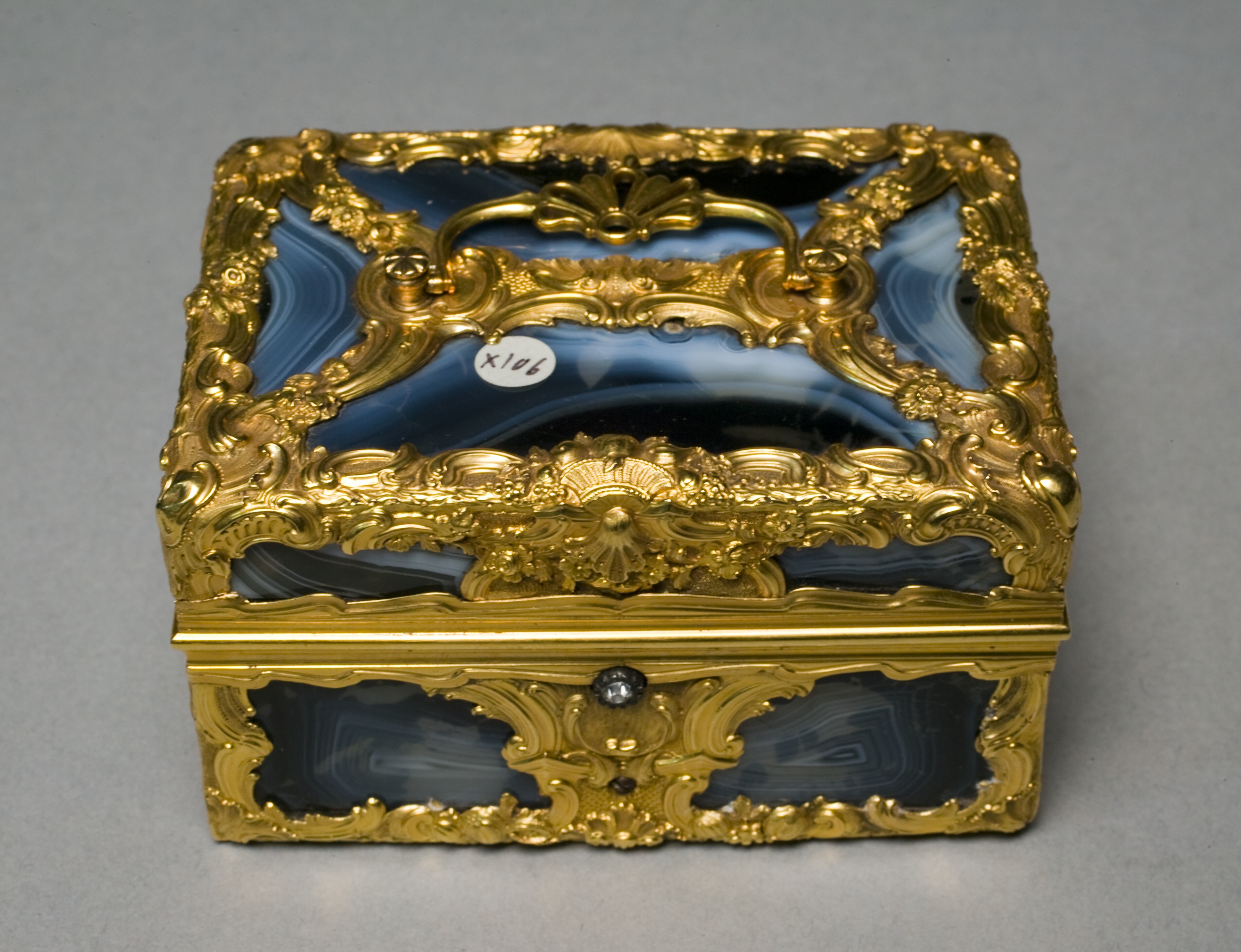
Deconstructing the Vanity Case: An Avant-Garde Analysis of the Mid-18th Century Nécessaire
At Zoey Fashion Lab, we engage in fabric deconstruction not merely as a process of unmaking, but as a method of archaeological excavation into the material and symbolic DNA of artifacts. The subject of this analysis—a mid-18th century English Vanity Case, or Nécessaire—presents a profound paradox. Composed of gold, agate, and fitted with gold-mounted implements and a mirror, this object is a portable theater of personal ritual. Yet, its true resonance lies in the tension between its opulent exterior and its intimate, almost morbid interiority. Drawing from the archival resonance of the Mirror with Split-Lea...—a piece that juxtaposes a polished silver mirror with gold-inlaid palm leaf motifs against a cold, carved stone surface narrating a life story—we deconstruct this Vanity Case as an avant-garde artifact that anticipates modern anxieties about identity, mortality, and the performance of self.
Material Dialectics: Gold, Agate, and the Architecture of Vanity
The choice of materials in this Nécessaire is not incidental but deliberately confrontational. Gold, a metal of eternal luster and value, is juxtaposed with agate—a stone of layered, often opaque, geological time. In the context of the mid-18th century, such a case was a statement of conspicuous consumption, a portable treasury for the aristocracy. However, from an avant-garde perspective, this combination creates a material dialectic. The gold represents the surface—the polished, socially constructed identity that the owner presents to the world. The agate, with its veined, stratified structure, embodies the depth—the hidden layers of the psyche, the geological strata of memory and desire.
The interior, fitted with gold-mounted implements—scissors, tweezers, a toothpick, a miniature spoon—transforms the case from a mere container into a toolkit for self-construction. Each implement is a micro-surgical instrument for editing the self. The mirror, the central element, is not just for reflection but for surveillance. In the Mirror with Split-Lea... reference, the mirror is split: one side is a pristine silver surface with gold palm leaves (a symbol of victory and public life), the other is a cold stone slab engraved with a narrative of life and death. This Vanity Case mirrors that duality. The mirror within is a portal, but it is also a trap. It reflects the user's face, but it also reflects the agate's coldness, reminding the user that the flesh beneath the powder is temporary.
Ritual and Performance: The Nécessaire as a Stage
The mid-18th century was an era of theatricality in fashion and social life. The Vanity Case was not just a practical object; it was a prop in the grand performance of aristocratic identity. The act of opening the case, selecting an implement, and adjusting one's appearance was a micro-ritual that reinforced social hierarchy. Yet, the avant-garde interpretation sees this as a precursor to modern performance art. The user is both the performer and the audience, engaging in a private act of self-creation that is inherently public in its implications.
The gold-mounted implements are extensions of the body, akin to prosthetic devices. They mediate the relationship between the self and the social world. The scissors cut away unwanted hair or thread; the tweezers pluck imperfections; the mirror corrects the gaze. This is a cyborgian act of self-modification, centuries before the term was coined. The Vanity Case, therefore, is an early example of wearable technology—not worn on the body, but carried with it, always ready to intervene in the construction of identity.
Archive Resonance: The Split-Leaf Mirror and the Narrative of Mortality
The reference to the Mirror with Split-Lea... is crucial for understanding the temporal dimension of this artifact. The mirror's split surface—one side bright and reflective, the other dark and carved—encapsulates the dialectic of life and death. The palm leaf motif, often associated with victory and eternal life in classical iconography, is here rendered in gold on a silver ground. But the other side, the "cold stone slab," tells a story of life's brevity through relief carving. This is not a simple binary; it is a palimpsest where one surface overwrites the other.
In the Vanity Case, this resonance manifests in the materiality of the agate. Agate is a stone of layered time, each band representing a different geological epoch. When the user opens the case, they are not just looking at their reflection; they are looking into a microcosm of deep time. The gold implements, meanwhile, are contemporary interventions into this ancient material. They are the tools of the present, used to shape the self against the backdrop of eternity. This is the avant-garde gesture: to recognize that every act of vanity is a negotiation with mortality.
The Avant-Garde Interpretation: Deconstructing the Self
Zoey Fashion Lab's approach to deconstruction is to unravel the seams of an object's meaning. For this Vanity Case, the seams are the tensions between public and private, surface and depth, life and death. The case is a micro-architecture of the self, a portable chamber where identity is both constructed and deconstructed. The gold-mounted implements are not just tools; they are weapons in a war against time. The mirror is not just a reflector; it is a confrontation with the inevitability of decay.
In the context of contemporary fashion, this artifact speaks to the performativity of identity. The mid-18th century aristocrat who used this case was engaged in the same act of self-creation as a modern influencer adjusting a filter. Both are using technologies of the self to project an idealized image. But the Vanity Case, with its agate and gold, reminds us that this projection is always haunted by the material. The stone is cold, the gold is heavy, the mirror is fragile. The self is not a digital abstraction but a physical, mortal construct.
Conclusion: The Vanity Case as a Proto-Avant-Garde Object
This mid-18th century English Nécessaire is far more than a historical curiosity. It is a proto-avant-garde object that anticipates the concerns of modern and contemporary art: the fragmentation of identity, the role of technology in self-construction, and the confrontation with mortality. By deconstructing its materials, rituals, and archival resonances, we see that the Vanity Case is a mirror of the human condition—split between the desire for eternal beauty and the knowledge of inevitable decay. For Zoey Fashion Lab, this artifact serves as a template for future deconstruction, reminding us that the most avant-garde gestures are often hidden in the most conventional forms.