The Fragment: An Avant-Garde Deconstruction of Bobbin Lace for SS26
Introduction: The Paradox of the Fragment
In the lexicon of Zoey Fashion Laboratory, the fragment is not a remnant of loss but a generative nucleus—a deliberate rupture from which new structural narratives emerge. For the SS26 season, we interrogate the Global Frontier through the lens of bobbin lace, a material historically bound to domesticity and heritage. Yet, within this laboratory, lace is liberated from its ornamental past. It becomes a tectonic element: a lattice of negative space that defines the body not by covering it, but by fragmenting its silhouette into a series of volumetric propositions. This analysis posits that the fragmented bobbin lace garment operates as a cybernetic membrane—a porous, adaptive architecture that challenges the very notion of a complete form.
Materiality as Rupture: Bobbin Lace Reimagined
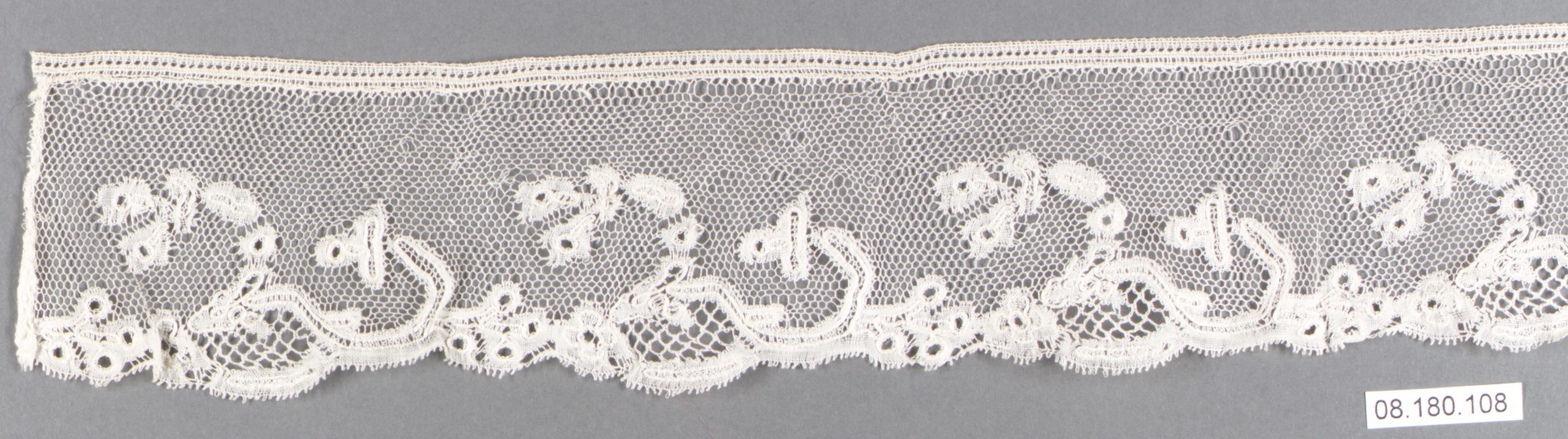
Traditional bobbin lace, with its intricate handcrafted loops and twists, is a testament to excessive patience. For SS26, we subvert this labor by deconstructing its weave into asymmetric, non-repeating patterns. The lace is no longer a cohesive textile but a fractured net—each thread a vector of tension, each gap a deliberate void. This is achieved through laser-cut precision applied to recycled metallic fibers and bio-degradable polymers, fusing the artisanal with the industrial. The result is a lattice of light and shadow that fragments the wearer's form into a series of discontinuous planes. The structural integrity of the garment relies not on continuous fabric, but on the tension between fragments—a tensile architecture where voids become structural arches.
Silhouette as Temporal Collage: The Fragmentary Body
The futuristic silhouette for SS26 rejects the monolithic, streamlined forms of traditional futurism. Instead, we propose a collage of temporalities: a fragmented exoskeleton that appears both ancient and emergent. The bobbin lace fragments are suspended from a carbon-fiber armature that traces the body's kinetic lines—spine, clavicle, iliac crest. These fragments overlap and diverge, creating negative-space volumes that redefine the wearer's proportions. The shoulder, for instance, is not a single point but a constellation of lace discs orbiting a central void. The waist is fractured into a series of floating panels that shift with movement, generating a morphing silhouette that resists static interpretation. This is not a garment that clothes the body; it is a temporal sculpture that fragments the viewer's perception of time and space.
Structural Innovation: The Tension of the Void
The core innovation lies in the structural logic of the fragment. Each piece of bobbin lace is individually tensioned via micro-cables and magnetic couplings, allowing the garment to reconfigure itself in response to the wearer's posture and environment. The fragments are not sewn together; they are suspended in a field of tension, akin to a suspension bridge where each thread bears a load. This tensile system enables dynamic compression and release, creating ephemeral pockets of volume that expand and contract with breath and motion. The voids between fragments become active structural spaces—they are not empty but filled with kinetic potential. This fragmented structuralism challenges the binary of presence and absence, suggesting that the missing part is as constitutive as the existing one.
Functionality as a Fragment of the Future
This collection is not merely conceptual; it is wearable deconstruction. Each garment features modular attachment points that allow the wearer to reconfigure the fragment arrangement—a DIY futurism that empowers the user to co-author the silhouette. The bobbin lace fragments can be detached and reassembled into alternative configurations, transforming a shoulder yoke into a neckpiece or a hip panel into a forearm guard. This fragmentary modularity aligns with sustainable principles: the garment is a system of parts, not a single-use object. The tension cables are adjustable, enabling the wearer to dial in the level of fragmentation—from a dense, protective lattice to a sparse, ethereal net. This is fashion as a living system, where the fragment is the unit of evolution.
Conclusion: The Fragment as a Frontier
In this SS26 study, the fragment is not a symbol of decay but a blueprint for a new structural language. By deconstructing bobbin lace and reassembling it as a tensile field, Zoey Fashion Laboratory proposes a futuristic silhouette that is inherently unstable, adaptive, and generative. The Global Frontier is not a destination but a process of continuous fragmentation—a fractal of possibilities where each missing piece is a potential for new form. This is the avant-garde imperative: to embrace the fragment not as a loss, but as the very condition of innovation. The bobbin lace garment becomes a map of the future, charted through voids and tensions, inviting the wearer to inhabit the gap between what is and what could be.