Deconstructing the Indigenous Sublime: The Blanket Strip as Avant-Garde Architectural Prototype for SS26
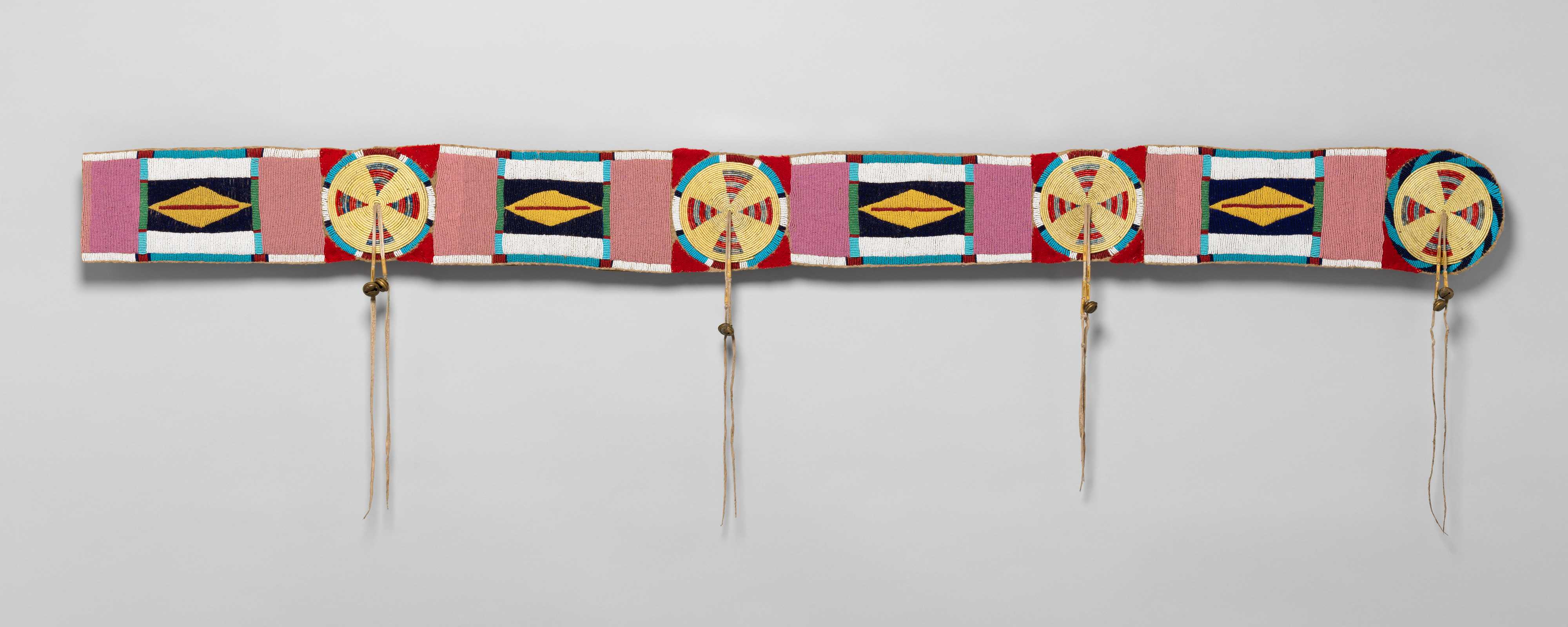
The contemporary fashion laboratory, in its relentless pursuit of the new, often overlooks the most radical blueprints for the future—those etched not in digital code, but in the tactile grammar of ancestral craft. For Zoey Fashion Laboratory’s SS26 collection, we pivot from the sterile futurism of synthetic fabrics to a more profound, destabilizing source: the Niimíipuu (Nez Perce) blanket strip. This is not an exercise in cultural appropriation or nostalgic revival. It is a forensic, avant-garde deconstruction of a utilitarian object into a system of structural innovation, reimagining the human silhouette as a moving architectural landscape. The blanket strip, with its dense materiality of tanned leather, glass beads, horsehair, porcupine quills, dye, wool cloth, and brass bells, becomes the foundational lexicon for a new corporeal armor.
Material Alchemy: From Functional Adornment to Kinetic Exoskeleton
The genius of the Niimíipuu blanket strip lies not in its decorative surface, but in its radical material heterogeneity. It is a composite structure, a pre-industrial laminate where soft, pliable tanned leather serves as the tensile substrate, while porcupine quills and glass beads create rigid, almost ceramic-like panels of resistance. For SS26, we isolate this very tension. The tanned leather is no longer a background; it is re-engineered as a living membrane, a second skin that is both supple and protective. We laser-perforate the leather to mimic the structural lattice of quillwork, creating zones of breathability and transparency that reveal the body’s own kinetic energy.
The glass beads are liberated from their decorative grid. Instead of forming a flat pattern, they are woven into three-dimensional, articulated scales using a technique derived from chainmail. These bead-scales, when attached to the leather base, create a futuristic silhouette that shifts from fluidity to rigid armor as the wearer moves. The horsehair is not merely a fringe; it is a dynamic, directional fiber. We cultivate it into long, stiff filaments that act as structural cantilevers, projecting outward from the shoulders and hips to create a silhouette that is both aggressive and ethereal—a biomorphic exoskeleton that defies gravity. The brass bells are no longer just sound-makers; they become weighted, metallic counterpoints that pull the fabric into dramatic, asymmetrical drapes, transforming the garment into a sonorous, kinetic sculpture.
Structural Innovation: The Quill as a Load-Bearing Element
Traditional porcupine quillwork is a flat, mosaic-like application. Our avant-garde intervention recontextualizes the quill as a vertical, load-bearing architectural element. We split and flatten the quills, then heat-set them into curved, spring-like forms. These quill-springs are then inserted into custom-woven channels within the leather and wool base, creating a corset-like structure that does not constrict but rather articulates the spine. The result is a structural innovation that allows the garment to stand independently when laid flat, yet collapses into organic folds when worn. This is the antithesis of the soft, draping couture of the past; it is a hard, resilient architecture that dialogues with the body’s own skeletal framework.
The wool cloth, typically a soft, insulating layer, is treated with a resin derived from natural dyes to become a semi-rigid, sculptural shell. We cut it into geometric, interlocking panels that echo the blanket strip’s original rectangular form, but now these panels are hinged with leather and quill joints. This creates a modular, transformable garment—a literal blanket strip that can be reconfigured from a cape into a tunic, or into a fragmented, asymmetrical skirt. The dye is not merely color; it is a mapping system. We use gradient dyeing techniques to create a visual flow of energy across the garment, from deep, absorbent blacks at the core to vibrant, reflective hues at the extremities, mimicking the way light plays across the original beadwork.
Futuristic Silhouettes: The Body as a Contested Topography
The SS26 silhouette derived from this analysis rejects the naturalized curves of the human form. Instead, it proposes a futuristic silhouette that is jagged, asymmetrical, and deliberately unstable. The shoulder line is extended outward by horsehair cantilevers, creating a sharp, aerodynamic profile that recalls both avian wings and industrial machinery. The waist is not cinched but rather obscured by a cascade of bead-scales and leather panels that create a visual break, a tectonic fault line across the torso. The hips are exaggerated by the addition of brass bell clusters that hang from the quill-spring framework, creating a rhythmic, percussive movement that announces the wearer’s presence before they are seen.
The hemline is deliberately fragmented. The wool cloth is cut into long, uneven strips that are tipped with porcupine quills, creating a trailing, almost weaponized edge. This is not a garment for passive observation; it is a garment for territorial claim. The tanned leather is used in its raw, unlined state on the interior, allowing the natural grain and marks of the animal hide to become an integral part of the design’s narrative. This is the avant-garde imperative: to make visible the process of construction, the violence of cutting, the labor of stitching, and the raw materiality of the object.
Conclusion: The Future is a Return to the Material
Zoey Fashion Laboratory’s SS26 analysis of the Niimíipuu blanket strip is not a nostalgic glance backward; it is a radical proposition for the future of couture. By deconstructing this Indigenous artifact into its core material and structural logics—tanned leather as membrane, glass beads as scale armor, horsehair as cantilever, porcupine quills as load-bearing springs, dye as energy map, wool cloth as rigid panel, and brass bells as kinetic counterweight—we have engineered a new typology of garment. It is a structural innovation that challenges the very definition of wearability, proposing a silhouette that is at once ancient and alien, protective and performative. The blanket strip, in its original form, was a statement of identity and belonging. In our reimagining, it becomes a statement of becoming—a dynamic, architectural armor for the post-human body of SS26. The future of fashion is not in the virtual, but in the visceral, the tactile, and the profoundly material. This is the definitive avant-garde couture analysis.