Deconstructing the Pectoral: A Study in Avant-Garde Resonance
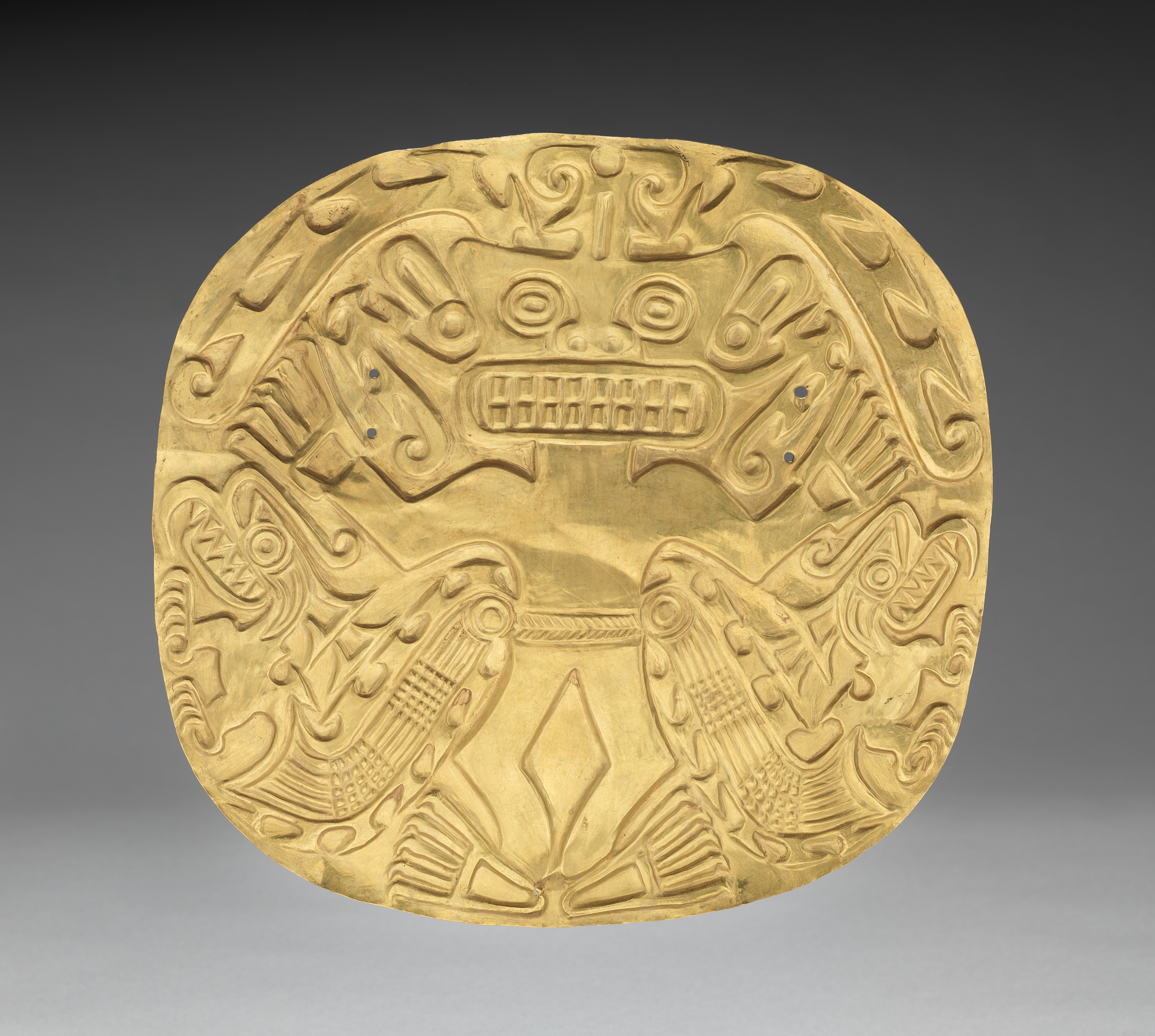
At Zoey Fashion Lab, we approach historical artifacts not as static relics, but as dynamic blueprints for radical sartorial expression. The subject of this analysis—a Pectoral (Chest Plaque) from the Intermediate Region of Panama, Conte style, circa 5th-10th Century, crafted from a gold alloy—presents a profound challenge to contemporary design. Its archive resonance, described as “一面是光洁银镜上以黄金镶嵌的纷繁棕叶纹,另一面是冰冷石棺板上以浮雕诉说的生命叙事,” translates to a dualistic tension: one side a polished silver mirror inlaid with intricate gold palm leaf motifs, the other a cold sarcophagus slab narrating life through relief. This duality is the core of our avant-garde deconstruction. We will dissect its technical, symbolic, and narrative layers to extract a new lexicon for the modern form.
I. Technical Deconstruction: The Alchemy of Alloy and Surface
The pectoral’s primary material—a gold alloy—immediately signals a sophisticated metallurgical understanding. The Conte style, known for its high-carat gold work, often utilized tumbaga, a copper-gold alloy prized for its ability to be cast and hammered with precision. For our avant-garde framework, this alloy is not merely a metal; it is a code of transformation. The copper content introduces a chromatic instability: over time, the surface oxidizes, shifting from bright gold to a deeper, reddish-gold patina. In a fashion context, this suggests a garment or accessory that evolves with wear, a living surface that records time and interaction.
The “polished silver mirror” side of the archive resonance is a critical technical facet. The pectoral likely features a high-polish finish achieved through meticulous burnishing, creating a reflective plane that captures and distorts the viewer. In avant-garde design, we can reinterpret this as speculative materials: liquid metal coatings, dichroic films, or polished stainless steel that mirrors the environment, making the wearer both subject and object. The “gold inlaid palm leaf motifs” (棕叶纹) introduce a textural counterpoint—a relief pattern achieved through repoussé or filigree. This is not flat decoration but a topographic narrative, a raised map of organic growth. Our deconstruction demands that we translate this into fabric: think laser-cut metallic leathers, 3D-printed polymer overlays, or hand-embroidered gold thread that rises from the base cloth like a living vine.
II. Symbolic Deconstruction: The Mirror and the Sarcophagus
The archive resonance’s dual description—the mirror and the sarcophagus—presents a philosophical schism that is the heart of our avant-garde interpretation. The mirror side represents the surface of identity: polished, reflective, and immediate. It is the self as spectacle, a projection of power, wealth, and divinity. In Conte culture, such pectorals were worn by elite warriors or shamans, their golden surfaces meant to dazzle and command. The palm leaf motif further amplifies this: the palm is a symbol of triumph, resurrection, and the eternal cycle of life. For our design, this translates into ornamental armor—a chest piece that is both protective and performative, a shield that reflects the gaze of others while asserting the wearer’s status.
The sarcophagus side, however, is the depth of mortality. “Cold stone” and “relief narration” evoke the funerary context: these pectorals were often placed on the chest of the deceased, serving as a talisman for the afterlife. The relief carvings—scenes of human figures, animals, or cosmological events—are not mere decoration but a visual biography, a frozen story of a life lived. This side is the anti-fashion—it rejects the ephemeral in favor of the eternal. In our avant-garde deconstruction, this becomes a critique of fashion’s obsession with the new. We propose a garment that carries its own history, perhaps through embedded digital screens displaying biographical data, or through physical patina that records the wearer’s movements and touches. The sarcophagus side demands that we design for legacy, not trend.
III. Narrative Deconstruction: The Archive as a Living Text
The archive resonance is not a static description but a provocation to narrative. The phrase “Mirror with Split-Leaf” (from the truncated reference) suggests a fracture—a mirror that is broken or divided. This fracture is the catalyst for our avant-garde intervention. The pectoral, in its original context, was a unified object worn on the chest, the center of the body’s axis. But the archive’s dual description implies a split identity: the living self (mirror) and the dead self (sarcophagus) coexisting in one artifact. This is a powerful metaphor for the contemporary human condition—the constant negotiation between public persona and private truth, between digital projection and physical reality.
For Zoey Fashion Lab, this narrative fracture translates into a deconstructed silhouette. Imagine a chest plaque that is not a single piece but a modular system: one half is a polished, reflective surface (perhaps a mirrored visor or a metallic corset), while the other half is a textured, relief-embellished panel (using 3D-printed resin or hand-carved wood). The two halves are connected by a hinge or a magnetic clasp, allowing the wearer to choose which side faces forward. This is not merely a design choice but a performative act: the wearer can flip between the mirror and the sarcophagus, between spectacle and introspection. The palm leaf motifs become a repeating pattern that bridges both halves, suggesting that life and death are not opposites but a continuous weave.
IV. Avant-Garde Application: The Zoey Fashion Lab Interpretation
Our final deconstruction synthesizes these elements into a proposed collection piece. The pectoral is reimagined as a wearable architecture for the upper torso. The base is a lightweight, carbon-fiber frame (echoing the gold alloy’s strength) covered in a silver-mirror laminate. This frame is cut into asymmetrical, organic shapes that recall the palm leaf’s split form. Inlaid into the mirror surface are gold-leaf-printed biodegradable mylar strips, arranged in the palm leaf motif—a commentary on the tension between eternal gold and ephemeral material. The reverse side is a relief-printed silicone panel, molded from a 3D scan of a pre-Columbian sarcophagus carving, with figures and symbols rendered in a tactile, skin-like texture.
The piece is designed to be worn over a sheer, deconstructed base garment—perhaps a netted bodysuit or a fragmented jersey—so that the body is both revealed and obscured. The pectoral’s weight is distributed via a harness system, allowing it to float slightly above the chest, creating a gap that literalizes the split between the mirror and the sarcophagus. This gap is not a flaw but a space for breath, for the wearer’s own narrative to insert itself. The final effect is a garment that is simultaneously ancient and futuristic, a talisman for the modern shaman who navigates the dualities of existence.
In conclusion, the Conte-style pectoral is not a historical artifact to be copied but a resonance to be amplified. Its technical mastery, symbolic depth, and narrative fracture provide a rich foundation for avant-garde fashion that is both intellectually rigorous and emotionally potent. At Zoey Fashion Lab, we do not merely deconstruct—we reconstruct meaning, transforming gold and stone into a living dialogue between the self and the cosmos.