Deconstructing the Vessel: The Tea Caddy as a Blueprint for SS26 Avant-Garde Couture
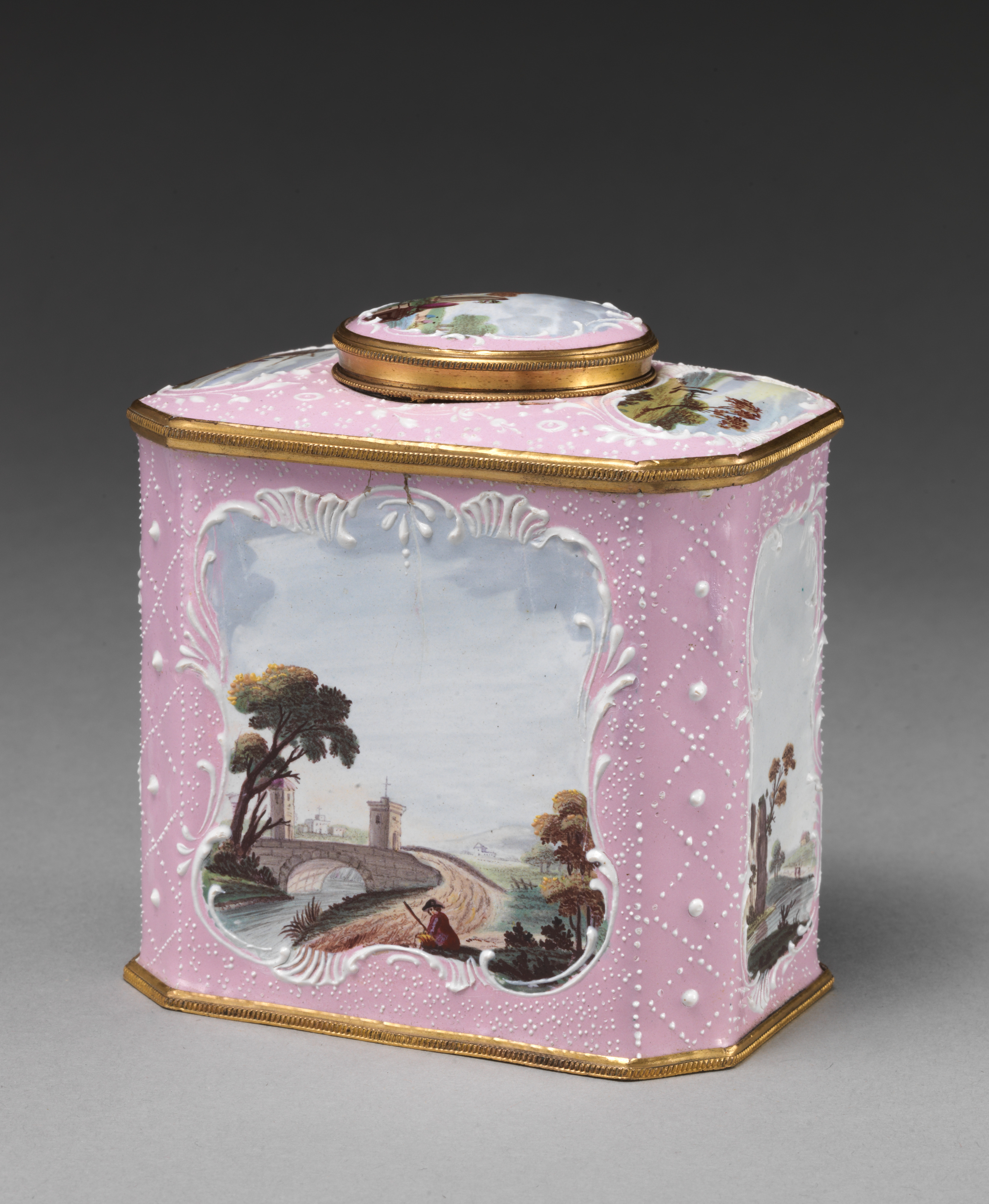
The tea caddy, a seemingly quotidian object of ritualistic storage, has long been a silent witness to the confluence of culture, commerce, and craft. Yet, within the crucible of Zoey Fashion Laboratory, this Global Frontier artifact—specifically, an enamel-on-copper specimen—transforms into a radical manifesto for Spring/Summer 2026. This is not a study in historical reproduction. It is an excavation of latent architectural potential, a dialogue between the rigid, protective shell and the precious, ephemeral contents it once guarded. The enamel's glossy, almost liquid surface and the copper's underlying tensile strength become the dual protagonists in a narrative of futuristic silhouettes and structural innovation that redefines the body as both a vessel and a landscape.
The Enamel Paradox: From Ornament to Armature
At first glance, the enamel finish of a traditional tea caddy suggests delicacy, a decorative veneer of color and light. But in the SS26 context, we re-read this surface as a performance membrane. Enamel is a vitreous layer fused to metal at extreme temperatures—a process of controlled destruction to achieve permanence. The avant-garde garment, therefore, cannot simply mimic this sheen; it must embody its material dialectic.
Liquid Armor and Bioluminescent Shells
The primary silhouette derived from the enamel layer is the liquid carapace. We propose garments constructed from thermoformed polymer composites with a high-gloss, ceramic-like finish. These are not soft drapes but rigid, almost exoskeletal panels that articulate with the body's movement. The color palette—deep cobalt, oxidized verdigris, and imperial gold—is lifted directly from the caddy's decorative motifs, but recontextualized as chromatic armor. Imagine a bodice that resembles a segmented beetle's shell, its surface reflecting light like a pool of mercury. The innovation lies in the articulated joinery: laser-cut, micro-hinged seams that allow for a fluid range of motion while maintaining the uncompromising geometry of the vessel. This is futuristic silhouette as defensive architecture, a second skin that protects the wearer from the chaos of the external world.
Enamel as Light-Transmitting Surface
The enamel's translucency—its ability to hold color while allowing a hint of the copper beneath to glow—inspires a layered light technology. We integrate electroluminescent threads and photochromic pigments into the garment's surface. During daylight, the fabric appears as a matte, deep crimson or jade. Under UV light or at night, it pulses with an internal luminosity, mimicking the way light plays across a glazed ceramic surface. This is not mere decoration; it is a dynamic interface that responds to environmental stimuli, turning the wearer into a living, breathing artifact of the Global Frontier.
The Copper Substrate: Structure, Tension, and Deconstruction
If enamel provides the surface, copper provides the skeletal logic. Copper is a material of ancient lineage—malleable yet strong, conductive, and prone to patina. For SS26, we deconstruct the tea caddy's copper core to reveal its tensile architecture. The garment becomes a structural scaffold where the body is not clothed but framed.
Deconstructed Cage Silhouettes
The most radical silhouette emerges from the deconstructed caddy form. We envision a dress that is essentially a hollow cage—a lattice of copper-plated metal or carbon-fiber-reinforced resin that traces the negative space around the torso. The wearer is not enveloped but suspended within the structure. This is a direct inversion of the tea caddy's function: instead of containing tea, the garment contains air, light, and movement. The silhouette is architectural and volumetric, with sharp, angular shoulders that flare outward like the caddy's lid, and a tapered, almost wasp-like waist that echoes the vessel's base. The structural innovation lies in the modular assembly: individual copper-like segments can be detached, rearranged, or removed entirely, allowing the wearer to shift from a full cage to a minimalist harness. This is couture as kinetic sculpture.
Patina as Narrative: The Wabi-Sabi of Futurism
Copper's natural patina—the greenish-blue oxidation that develops over time—offers a profound lesson in temporal aesthetics. For SS26, we embrace controlled degradation as a design principle. Garments are pre-treated with chemical patination to create unique, organic patterns of verdigris and rust. This is not a flaw but a biography of the object. The futuristic silhouette is thus not sterile or pristine; it is weathered, lived-in, and evolving. A copper-paneled skirt might have a gradient of patina from deep bronze at the waist to a sea-green at the hem, suggesting a garment that has been submerged in time. This material storytelling aligns with the Global Frontier ethos—a fusion of ancient craft and radical future-thinking.
Structural Innovation: From Vessel to Mobile Habitat
The tea caddy's primary function—to preserve and protect—is translated into wearable architecture that redefines the body's relationship to space. For SS26, the garment becomes a mobile habitat, a portable environment that shields, conceals, and reveals.
Inflatable Chambers and Pneumatic Silhouettes
Inspired by the caddy's airtight seal, we introduce pneumatic structures into the silhouette. Integrated air bladders, controlled by micro-pumps, can be inflated to create dramatic, bulbous volumes—a sleeve that expands into a sphere, a collar that rises like a protective dome. This is futuristic silhouette as transformative architecture. The wearer can modulate their presence: deflated, the garment is sleek and linear; inflated, it becomes a statement of volumetric power. The enamel-on-copper reference is echoed in the metallic-coated fabrics that cover these chambers, their glossy surfaces reflecting the environment like a polished vessel.
Modular Panel Systems and Magnetic Assembly
The copper caddy's construction—often a seamless, hand-hammered body—inspires a modular panel system for the garment. We propose a collection of interlocking, magnetic panels that can be assembled into a dress, a jacket, or a cape. Each panel is a composite of enamel-like polymer on one side and a copper-infused textile on the other, allowing for reversible wear. The structural innovation is the magnetic closure system: no zippers, no buttons, only the silent, precise alignment of rare-earth magnets. The silhouette is endlessly customizable, a democratic architecture where the wearer becomes the architect. This is the ultimate expression of the Global Frontier: a garment that is both a singular object and a system of infinite possibilities.
Conclusion: The Vessel as Manifesto
In this definitive avant-garde analysis for Zoey Fashion Laboratory, the tea caddy is not a relic but a prophetic blueprint. Its enamel-on-copper construction reveals a duality of surface and structure, ornament and armature, preservation and transformation. For SS26, we translate these principles into futuristic silhouettes that are at once protective and permeable, rigid and fluid, ancient and alien. The structural innovations—articulated joinery, pneumatic volumes, modular magnetic systems—are not merely technical feats; they are philosophical statements. They ask: what does it mean to clothe the body of the future? The answer lies in the vessel—a container for the self that is also a portal to the next frontier. The tea caddy, in its silent, enameled dignity, has spoken. We are listening.