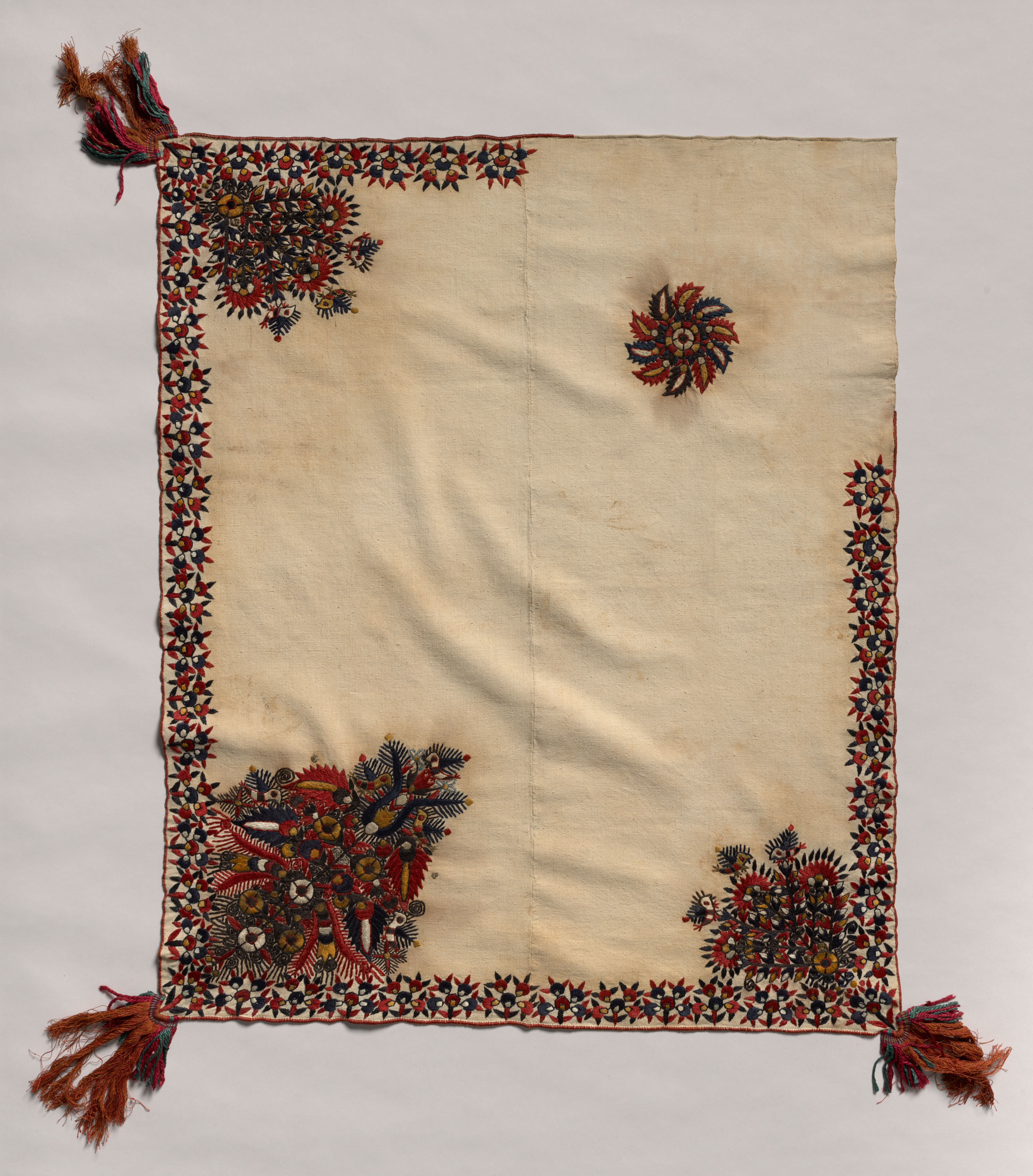
Deconstructing the Archive: An Avant-Garde Analysis of an Algerian Embroidered Textile
At Zoey Fashion Lab, our methodology for fabric deconstruction transcends mere material analysis. We engage with textiles as living archives, repositories of cultural memory, technical mastery, and aesthetic philosophy. The subject of this analysis—a furnishing textile from Algeria, hand-embroidered on a linen ground with silk threads and natural dyes—presents a particularly potent case study. Its reference, "Archive Resonance," evokes a dialogue between the 16th and 17th centuries and the contemporary avant-garde. We must dismantle this artifact not to destroy it, but to understand the radical potential embedded within its fibers.
Material Provenance: Linen, Silk, and the Alchemy of Dye
The foundational material is linen, a bast fiber derived from the flax plant. In the context of North Africa, linen cultivation and weaving have deep historical roots, predating the Islamic period. Its selection for a furnishing textile is strategic: linen offers exceptional tensile strength, breathability, and a unique, slightly irregular texture that absorbs light differently than cotton. For the avant-garde designer, linen’s inherent “hand” provides a counterpoint to industrial smoothness. It is a material that refuses to be anonymous; every slub and variation in thread thickness is a record of its natural origin and artisanal processing.
Contrasting with the matte, grounded nature of the linen is the silk embroidery thread. Silk, a protein fiber, introduces a radically different optical and tactile quality. Its natural luster creates a play of light across the embroidered surface—a shimmer that shifts with the viewer’s angle. This is not a static decoration; it is a dynamic, kinetic element. The juxtaposition of linen’s earthy absorbency and silk’s reflective brilliance establishes a core tension: the dialogue between the terrestrial and the ethereal, the durable and the delicate.
The third component, natural dye, is where the most profound cultural and chemical complexity resides. Algerian dyers historically mastered a palette derived from local flora, insects, and minerals. Reds from madder root or cochineal, blues from indigo, yellows from saffron or pomegranate rind—these are not mere colors but concentrated expressions of place. Each dye bath is a chemical negotiation between the mordant (often alum or iron), the fiber, and the organic pigment. The resulting hues possess a depth and variability that synthetic dyes cannot replicate. They fade gracefully, they breathe with the fabric, and they carry the memory of their source. For the avant-garde, this instability is not a flaw but a feature—a reminder that the textile is alive, aging, and in constant dialogue with its environment.
Technical Analysis: The Embroidery as Structural Intervention
The embroidery technique employed by the Algerian artisan is not merely surface ornamentation. It is a structural intervention that redefines the linen ground. The silk threads, stitched in patterns likely derived from Berber, Arab, and Ottoman influences, create areas of increased density and tension. The ground fabric is physically altered: it is pulled, compressed, and layered. This creates a topographical map of raised and recessed surfaces.
From a deconstructionist perspective, we identify several key technical operations:
- Counted-thread work: Many North African embroideries are executed on even-weave linen, where the stitches are precisely counted over the warp and weft threads. This imposes a rigorous, geometric logic on the design. The artisan works within a grid, yet the organic variation of hand-stitching introduces subtle irregularities—a humanizing imperfection within a system of order.
- Stitch vocabulary: The specific stitches—cross stitch, satin stitch, chain stitch, and perhaps the more complex “Algerian eyelet” stitch—each perform distinct functions. Satin stitches create solid, luminous blocks of color. Cross stitches build pattern through repetition. Chain stitches offer flowing, linear elements. The combination of these stitches generates a polyphonic texture, a visual and tactile conversation between different modes of mark-making.
- Dye interaction with fiber: The natural dyes interact uniquely with the silk. Because silk is a protein fiber, it absorbs dye differently than the cellulose-based linen. The colors on the silk threads appear more vibrant, more saturated, almost glowing against the more subdued linen background. This creates a chromatic hierarchy that guides the eye across the composition.
Cultural and Aesthetic Resonance: The Archive as Avant-Garde Source
The reference “Archive Resonance” points to the period of the 16th to 17th centuries—a time of intense cultural exchange across the Mediterranean. The Ottoman Empire’s influence extended into Algeria, bringing with it artistic vocabularies from Istanbul, Persia, and beyond. Simultaneously, trade with Europe introduced new materials and motifs. This textile is not a pure, isolated artifact; it is a hybrid object, a testament to centuries of cross-pollination.
For the avant-garde designer, this hybridity is the most valuable asset. The traditional motifs—perhaps stylized floral forms, geometric medallions, or calligraphic elements—are not to be replicated but re-contextualized. The avant-garde impulse is to extract the underlying principles: the tension between geometric order and organic variation, the interplay of matte and lustrous surfaces, the use of embroidery as a structural, not merely decorative, act.
We can imagine a Zoey Fashion Lab collection that translates these principles into contemporary forms. The linen ground becomes a base garment—a deconstructed jacket or a sculptural dress. The silk embroidery is reinterpreted as strategic, high-contrast appliqués or laser-cut overlays that mimic the density and light-play of the original stitches. The natural dye palette is translated into a modern color story, perhaps using eco-conscious dyes that retain the same depth and variability. The embroidery’s topographical quality inspires three-dimensional surface treatments: pleating, smocking, or bonded layers that create a similar relief map on the body.
Conclusion: The Radical Act of Resonance
To deconstruct this Algerian furnishing textile is to recognize it as a radical document. It is not a relic to be preserved under glass, but a source code for future creation. The linen and silk, the natural dyes and hand stitches, the cultural hybridity and historical depth—these are not constraints but provocations. The avant-garde designer’s task is to listen to the archive’s resonance, to allow its frequencies to vibrate through new materials, new forms, and new contexts. In doing so, we honor the original artisan not by copying her work, but by continuing her legacy of innovation, dialogue, and fearless material exploration. The fabric speaks; our role is to translate its language into the future.