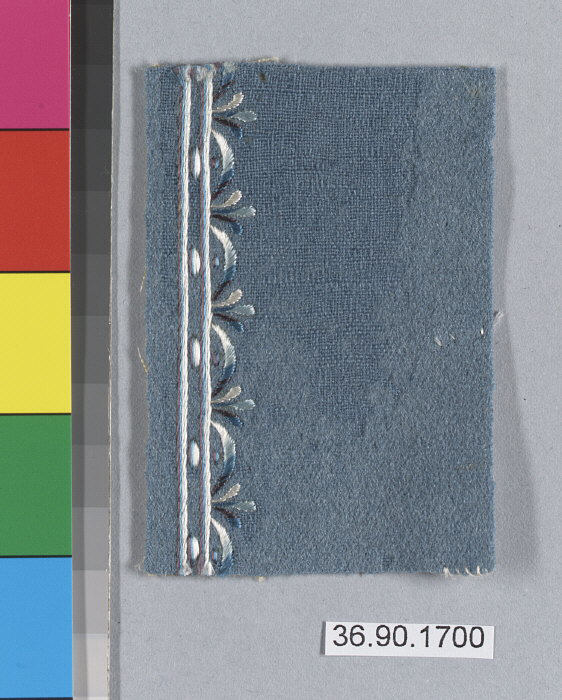
Deconstructing the Global Frontier: Silk on Felt as a Paradigm of Structural Innovation for SS26
The intersection of tactile restraint and fluid opulence has long been a contested territory in avant-garde couture. For Zoey Fashion Laboratory’s SS26 collection, the Sample—a garment born from the dialectic of silk on felt—emerges not merely as a prototype but as a definitive manifesto. Drawing from an origin point designated as the Global Frontier, this piece transcends geographic and temporal boundaries to propose a new architectural lexicon for the body. It is a study in controlled chaos, where the supple, reflective nature of silk is forcibly anchored by the dense, matte weight of felt, creating a silhouette that is both futuristic and archaeologically primal.
Silk as Liquid Architecture: The Paradox of Fluidity
Silk, in this context, is stripped of its conventional associations with softness and drape. Instead, it is engineered as a liquid structural element. The material is not merely draped; it is tensioned, pleated, and suspended from the felt substructure. This creates a visual effect of frozen motion—a garment that appears to be caught mid-transformation. The silk sections are cut on extreme bias, generating asymmetrical volumes that cascade and fold like digital simulations of fluid dynamics. Yet, this fluidity is deliberately interrupted. The silk is not allowed to fall freely; it is cinched, pinned, and anchored at strategic points by the felt, producing negative space where the body is both revealed and concealed. This is not a dress that follows the body; it is a structure that the body inhabits, a temporary shelter of light and shadow.
Felt as Armature: The Weight of the Future
Felt, traditionally a material of warmth and domesticity, is reimagined here as a structural exoskeleton. Its non-woven, compressed nature allows for unprecedented sculptural integrity. In the Sample, felt is used to create rigid, almost architectural panels that jut outward from the silhouette, forming geometric protrusions that recall both Brutalist concrete and organic bone structure. These panels are not decorative; they are load-bearing elements that define the garment’s futuristic silhouette. The felt is laser-cut with precision, creating lattice-like perforations that reduce weight while maintaining structural rigidity. This interplay of opacity and void—where the felt is both solid and permeable—creates a visual rhythm of light and density. The felt acts as the garment’s spine, dictating the silhouette’s angularity, while the silk provides the skin, a shimmering counterpoint to the felt’s matte austerity.
Deconstructive Silhouette: The Non-Linear Body
The silhouette of the Sample is a deliberate rejection of classical proportion. It eschews the waist, the hip, and the shoulder as anchoring points. Instead, the garment proposes a non-linear body, where volume is distributed asymmetrically. One shoulder is exaggerated into a sharp, wing-like projection of felt, while the opposite side is left bare, a cascade of silk falling from a single point. The hemline is not a line at all but a series of fragmented edges—some terminating at the knee, others trailing to the floor. This deconstructive aesthetic is not about destruction but about reassembly. The garment is assembled from disparate modules: a felt collar that rises like a modernist building, a silk panel that wraps around the torso like a second skin, a felt train that unfurls like a geological fault line. Each module is connected by visible, industrial-grade stitching, a deliberate exposure of the garment’s construction process. This is couture as engineering, where the seams are not hidden but celebrated as evidence of the object’s making.
Structural Innovation: The Tension System
The most radical innovation in the Sample is the tension system that binds silk to felt. Rather than relying on traditional sewing or adhesive, the garment employs a series of internal cable-like threads woven through both materials. These cables are tensioned from within, creating a dynamic relationship between the silk’s fluidity and the felt’s rigidity. When the wearer moves, the tension shifts, causing the silk to lift or settle, altering the silhouette in real-time. This is kinetic architecture—a garment that is never static, always in a state of recalibration. The tension points are visible as small, metallic eyelets, reinforcing the garment’s industrial, futuristic character. This system allows for a modular fit, where the wearer can adjust the tension to create different volumes, from a tight, sculptural cocoon to a loose, flowing envelope. It is a direct challenge to the passive nature of traditional couture, transforming the garment into an interactive structure.
Material Dialectics: Opacity, Reflectivity, and Texture
The visual impact of the Sample is driven by a rigorous material dialectic. The silk is treated with a high-gloss finish, reflecting light in shimmering, unpredictable patterns. In contrast, the felt is matte, absorbing light and creating deep pools of shadow. This creates a chiaroscuro effect across the garment’s surface, where the silk appears to float above the felt, separated by a thin layer of air. The texture is equally polarized: the silk is smooth, almost liquid to the touch, while the felt is rough, fibrous, and grounding. This tactile tension is a metaphor for the Global Frontier—a meeting point between the hyper-polished future and the raw, unrefined past. The garment’s color palette is deliberately monochromatic: black felt against white silk, with occasional flashes of silver from the eyelets and cables. This restraint amplifies the structural drama, ensuring that the silhouette and material interplay remain the primary focus.
Contextualizing the Standalone Study: A Blueprint for SS26
As a standalone avant-garde study, the Sample serves as a blueprint for SS26. It proposes a future where couture is not about ornamentation but about spatial negotiation. The garment challenges the notion of wearability, suggesting that clothing can be a form of habitable sculpture. The Global Frontier origin is not incidental; it reflects a world where cultural and material boundaries are dissolving, where silk from one continent meets felt from another, where traditional craft meets digital precision. For Zoey Fashion Laboratory, this piece is a declaration of intent: to deconstruct the very idea of a garment, to rebuild it from the ground up using materials as both medium and message. The Sample is not a finished product but a proposition—a question about what the body can become when liberated from the constraints of conventional tailoring. It is a garment that demands to be seen, studied, and ultimately, reimagined.
In the futuristic silhouette of the Sample, we witness the birth of a new aesthetic language—one that speaks in volumes, tensions, and voids. It is a language that will define SS26, pushing the boundaries of what couture can be, and what it can mean in an era of global flux and technological possibility.