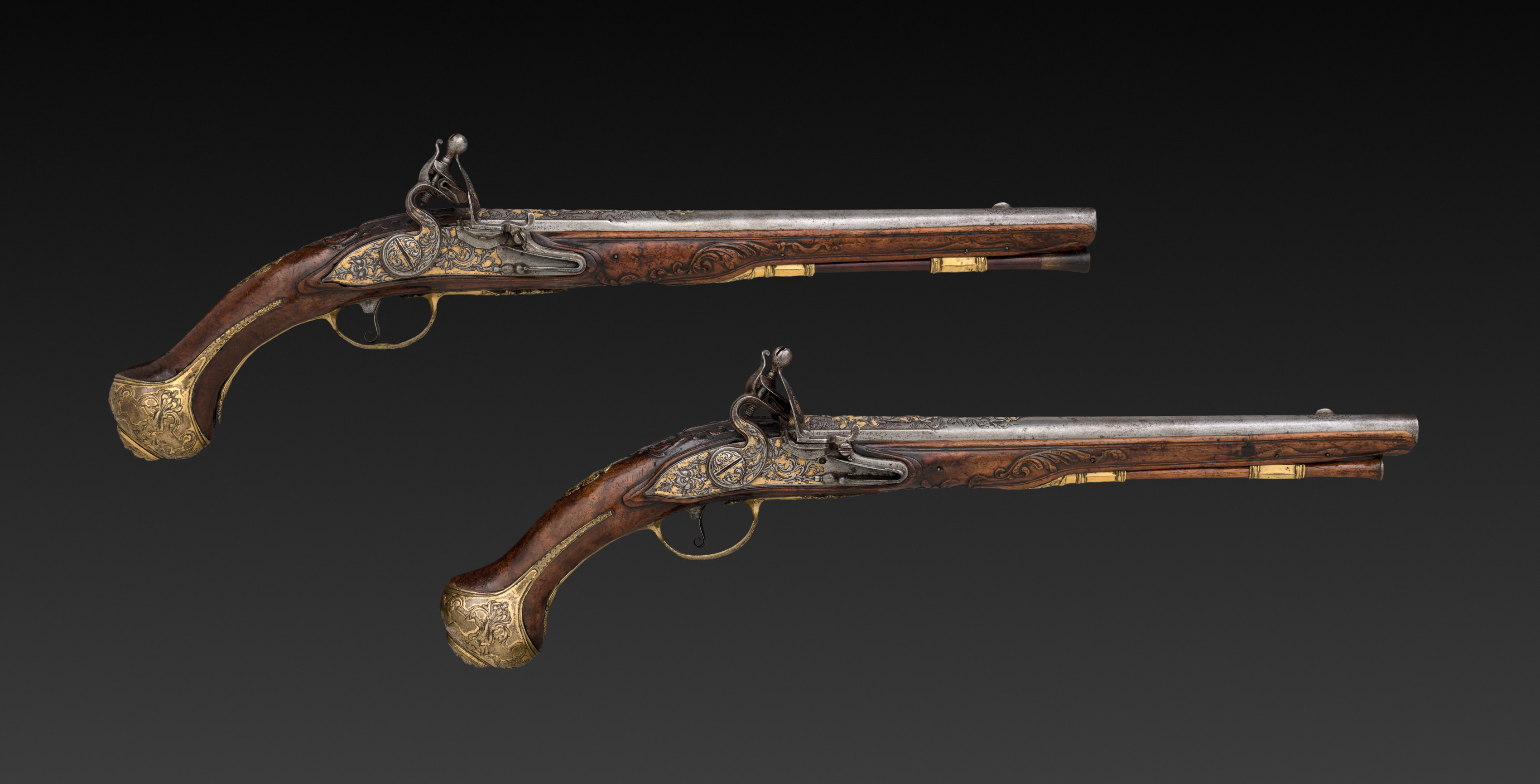
Deconstructing the Flintlock: An Avant-Garde Analysis of the Franco-Flemish Pistol
At Zoey Fashion Lab, our mission is to deconstruct historical artifacts into their essential material, structural, and symbolic DNA, then re-engineer them as avant-garde fashion statements. The pair of Franco-Flemish flintlock pistols from early 18th-century Liège presents a uniquely rich substrate for this process. These are not merely weapons; they are exquisite sculptures of power, precision, and ornamentation, forged at the intersection of artisanal mastery and technological innovation. Their analysis reveals a complex lexicon of form, surface, and function that can be translated into radical, contemporary garment design.
Material DNA: Steel, Gold, and Walnut Burl
The core materials of these pistols—steel with gold inlay, gilt-brass mounts, and walnut burl stock—form a dramatic triad of contrasting textures, weights, and connotations. The steel is the backbone: cold, hard, and functional. Its polished surface reflects light with a sharp, metallic clarity. The gold inlay, however, introduces a counterpoint of warmth, luxury, and deliberate opulence. This is not a gilded surface but a precise, embedded line—a thread of precious metal woven into the utilitarian fabric of the weapon. The gilt-brass mounts (trigger guard, butt cap, side plate) add a third metallic register: a brassy, slightly warmer gold tone with a matte or polished finish, depending on wear. Finally, the walnut burl stock provides the organic, tactile anchor. Its swirling grain, rich brown hues, and smooth, polished surface offer a stark contrast to the cold metal, evoking the natural world and the human hand that shaped it.
For an avant-garde fashion application, this material triad suggests a layered, deconstructed garment. The steel translates to rigid, structural elements: a corset of polished stainless steel with laser-cut, organic shapes that mimic the burl’s grain. The gold inlay becomes a technique of metallic embroidery or liquid metal appliqué—fine, gold-toned threads or foils embedded into a dark, matte base fabric (perhaps a deep charcoal wool or a blackened silk). The walnut burl inspires the primary textile: a heavily textured, hand-dyed jacquard or a digitally printed velvet that replicates the wood’s swirling, three-dimensional grain. The gilt-brass mounts could be reinterpreted as oversized, sculptural hardware—a brass zipper pull shaped like a flintlock’s cock, or gilt-brass grommets along a structural seam.
Structural DNA: The Mechanics of Form and Function
The flintlock’s mechanism is a masterpiece of kinetic design. The cock (which holds the flint), the frizzen (the steel striking plate), and the pan (holding the priming powder) are not merely functional parts; they are articulated, sculptural elements that define the weapon’s silhouette. The chiseled high-relief decoration on the lock plate and barrel is not superficial—it is integral to the object’s identity, transforming a tool into a work of art. The butt of the stock is shaped to fit the palm, while the barrel is a long, tapering cylinder of controlled power.
In avant-garde fashion, this mechanical logic can be translated into modular, articulated garments. Imagine a jacket where the shoulder pad is a sculpted, chiseled form reminiscent of the cock and frizzen, perhaps in burnished leather or molded resin. The sleeve could feature a series of interlocking, kinetic panels that mimic the flintlock’s action—a zipper that, when pulled, reveals a flash of gold inlay beneath a dark outer layer. The high-relief decoration becomes a technique of 3D surface manipulation: embossed leather panels, hand-stitched corded seams, or laser-cut metal filigree applied like armor over a sheer base. The butt of the stock inspires a curved, ergonomic pocket or a structural hip piece that echoes the pistol’s grip, while the barrel’s length suggests a dramatic, asymmetrical hemline or a trailing, detachable train.
Symbolic DNA: Power, Precision, and the Avant-Garde Gesture
Beyond material and structure, these pistols carry profound symbolic weight. They are objects of controlled violence, refined into an art form. The Franco-Flemish origin, particularly Liège, was a hub of arms manufacturing for the European elite, meaning these pistols were status symbols, tools of dueling, and emblems of personal authority. The gold inlay and chiseled decoration speak to a culture where power was displayed not through brute force but through meticulous craftsmanship and exquisite detail. The flintlock mechanism itself is a symbol of precision—a split-second sequence of events that must function flawlessly.
In the context of avant-garde fashion, this symbolic DNA translates into a design philosophy that challenges conventional notions of femininity and power. A garment inspired by these pistols would not be overtly aggressive but rather controlled, deliberate, and architectural. The gold inlay becomes a metaphor for the hidden, precious details that only reveal themselves upon close inspection—a lining of gold-shot silk, a secret pocket embroidered with metallic thread, a clasp shaped like a miniature flintlock. The chiseled high-relief decoration suggests a garment that is both armor and ornament, where every seam, every fold, every button is a deliberate, sculptural gesture. The overall silhouette would be sharp, structured, and slightly asymmetrical, echoing the pistol’s profile: a long, clean line (the barrel) punctuated by a concentrated burst of detail (the lock mechanism).
Avant-Garde Translation: The Zoey Fashion Lab Collection
From this deconstruction, we propose a capsule collection titled "Liège Mechanism." Key pieces include:
- The Walnut Burl Gown: A floor-length gown in a digitally printed velvet that replicates the burl’s grain, with a structural corset of polished steel panels that mimic the lock plate. Gold-thread embroidery traces the lines of the chiseled decoration across the bodice.
- The Flintlock Jacket: A cropped, double-breasted jacket in blackened wool, with oversized gilt-brass buttons shaped like the pistol’s mounts. The sleeves feature articulated, kinetic panels that open to reveal a flash of gold foil when the arm moves.
- The Powder Pan Skirt: A high-waisted, A-line skirt with a deep, hidden pocket (the pan) lined in gold silk. The hem is asymmetrical, with a long, trailing panel that echoes the barrel’s length. A chiseled, high-relief belt in molded leather cinches the waist.
- The Cock and Frizzen Headdress: A sculptural headpiece in burnished brass and polished steel, with a kinetic element that clicks into place when the wearer turns their head.
This collection is not costume. It is a re-engineering of historical DNA into a new, wearable language of power, precision, and avant-garde artistry. The flintlock pistols are not relics; they are blueprints for a future where fashion is both weapon and ornament, structure and gesture.