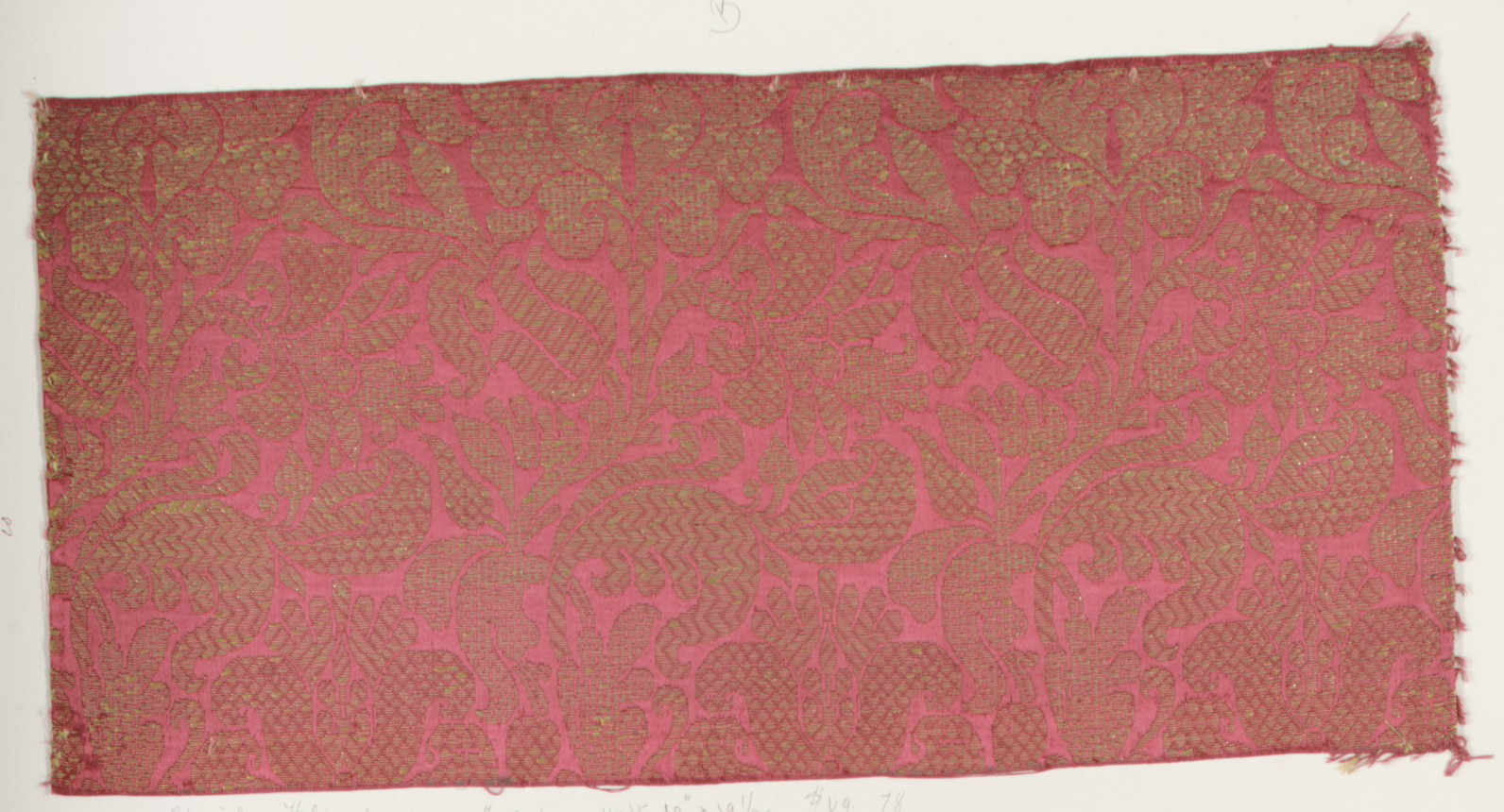
Deconstructing the Horizon: An Analysis of 'Fragment'
In the lexicon of avant-garde fashion, the term 'fragment' traditionally implies a broken part of a whole, a shard of a former unity. For Zoey Fashion Laboratory's SS26 standalone study, 'Fragment' is re-contextualized as a primary ontological unit, a complete entity born from the dissolution of obsolete sartorial paradigms. Originating from the conceptual 'Global Frontier'—a non-place representing the liminal space between collapsed geopolitical boundaries and nascent digital territories—this collection does not propose garments as such, but as wearable architectures for a deracinated future. Utilizing the paradoxical duality of silk and metal thread, the study interrogates protection and vulnerability, permanence and ephemerality, crafting a narrative where the silhouette itself becomes a site of radical innovation.
Structural Innovation: The Exoskeletal Cocoon
The core architectural principle of 'Fragment' is the exoskeletal cocoon silhouette. Moving beyond the deconstruction of the 1990s, which often revealed a fragile interior, this approach constructs a new exterior from dissected components. Imagine a traditional kimono sleeve, its planar geometry fractured along geodesic lines, then reconstituted with surgical precision using metal thread couching. The resulting structure is a rigid, shoulder-mounted form that extends into a fluid silk drape, creating a kinetic paradox: static, armored topography melting into liquid movement. This is not tailoring in the classical sense; it is industrial design applied to the organic form. Seams are not hidden but emphasized as load-bearing joints, often sealed with a fine electroplated finish, rendering the construction process as the primary aesthetic. The metal thread acts not merely as embellishment but as a functional tensile element, a conductive nervous system within the silk membrane.
Material Dialectics: Silk as Substrate, Metal as Syntax
The profound innovation of 'Fragment' lies in its alchemical treatment of material. The specified silk is not the habotai of old-world luxury but a bio-engineered, high-tensile variant, digitally printed with micro-circuit patterns that are then meticulously traced and overlaid with the metal thread. This transforms the silk from a passive surface into an active, responsive substrate. The metal thread—a proprietary alloy with memory-shape properties and a dull, asteroid-like patina—is applied using techniques borrowed from aerospace composite lamination and traditional Japanese kintsugi. The result is a fabric that exists in a state of controlled contradiction: it holds a structural memory while appearing deliberately eroded, as if recovered from a future archaeological dig. The cold, mineral hardness of the metal clashes sensuously against the warmth of the silk, challenging the wearer's and observer's perception of comfort and utility.
Futuristic Silhouette: The Asymmetric Monolith
The SS26 silhouette emerging from this material and structural research is decisively monolithic yet dynamically asymmetric. Volume is not created through pleating or gathering, but through cantilevered planes and torsion-based draping. One dominant example is a dress that appears as a single, continuous fragment of material, wrapping the torso in a spiraling form that originates from a structured, metal-thread-reinforced bustier and dissipates into a ragged, silk cascade. The hemline is not a uniform circumference but a topographical map, varying from severe, geometric points to soft, vanishing trails. Crucially, the silhouette often incorporates negative space as a design element—geometric apertures framed by metal thread that reveal the body not as flesh, but as another layer of the architectural narrative. This creates a powerful interplay of exposure and enclosure, suggesting a future where the boundary between garment and environment is porous.
Conceptual Context: The Standalone Study as Manifesto
As a standalone study, 'Fragment' operates as a pure, uncompromised manifesto for Zoey Fashion Laboratory's forward trajectory. It rejects the commercial cycle to engage in fundamental research. The 'Global Frontier' origin is key: this is attire for a citizen of nowhere and everywhere, for whom identity is assembled from cultural and digital fragments. The collection’s pieces are autonomous artifacts, each capable of instigating a dialogue on post-human aesthetics, sustainability through permanence, and the emotional resonance of armored clothing. The use of metal thread as a connective, conductive element subtly hints at wearables' inevitable integration with biotechnology, positioning fashion as the interface.
In conclusion, 'Fragment' for SS26 is a definitive step in the evolution of avant-garde couture. It moves past decoration and into the realm of speculative design and wearable philosophy. By masterfully manipulating the dialectic between silk and metal thread to create groundbreaking silhouettes of exoskeletal elegance, Zoey Fashion Laboratory does not predict the future of fashion. It constructs, fragment by deliberate fragment, the very blueprint for its next incarnation.