Deconstructing the Divine: The Kongo Cruciform Pendant as a Catalyst for SS26 Avant-Garde Silhouettes
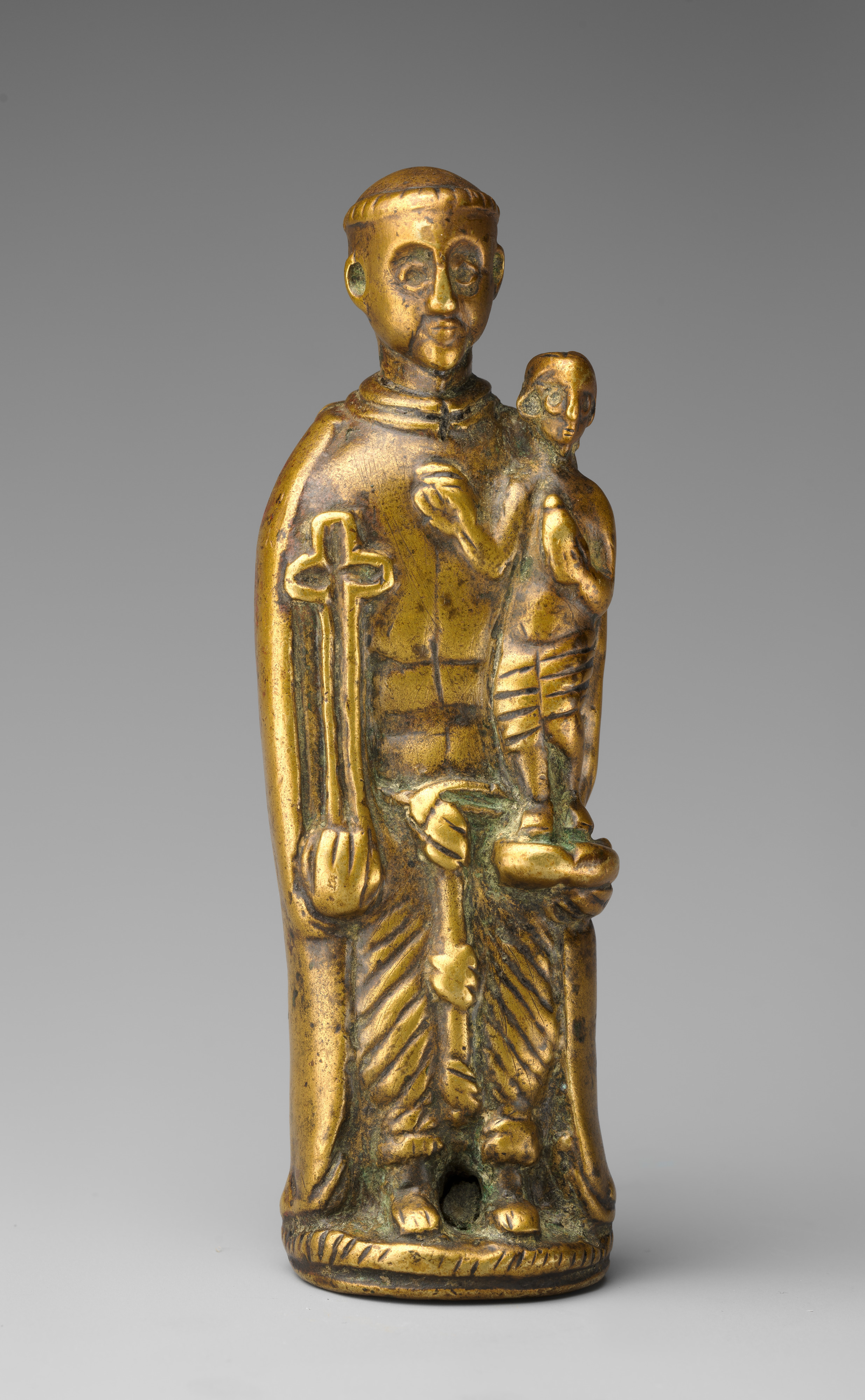
In the relentless pursuit of a new sartorial lexicon, the avant-garde designer must look beyond the temporal confines of contemporary fashion and into the resonant artifacts of history. The subject of this definitive analysis—a partially hollow cast brass pendant depicting Saint Anthony of Padua, originating from the Kongo peoples of the Kongo Kingdom—is not merely a relic of syncretic spirituality. It is a blueprint for structural innovation. At Zoey Fashion Laboratory, we recognize this object as a portal to a futuristic silhouette, one that collapses the boundaries between the sacred, the structural, and the speculative. For the SS26 season, this pendant serves as the foundational thesis for a collection that reimagines the human form as a vessel of kinetic architecture and metaphysical resilience.
From Relic to Rigid: The Metallurgical Imperative
The pendant’s materiality—partially hollow cast brass—is the first point of departure for a garment architecture that defies conventional drape. Brass, an alloy of copper and zinc, possesses a unique acoustic and thermal conductivity, yet its casting into a partially hollow form creates a paradox of weight and void. For SS26, this translates into a radical rethinking of the garment’s surface. The collection’s foundational piece, the “Kongo Carapace,” will utilize laser-sintered metallic polymers to mimic the pendant’s hollow core. The result is a series of modular breastplates and shoulder structures that are simultaneously rigid and lightweight, allowing for a silhouette that floats above the body while maintaining an unyielding, armorial presence. The hollow interior becomes a design principle: pockets of negative space are integrated into the garment’s architecture, creating a visual and physical dialogue between the wearer and the void. This is not armor for protection; it is armor for presence, a futuristic exoskeleton that channels the pendant’s original function as a talisman of protection and identity.
Syncretism as Silhouette: The Saint Anthony Paradox
Saint Anthony of Padua, a 13th-century Portuguese Franciscan, was reinterpreted by Kongo artisans as a figure of power and mediation, merging Catholic iconography with local spiritual beliefs. This syncretism is a powerful metaphor for the SS26 silhouette. The pendant’s depiction of Saint Anthony—often holding the Christ Child or a lily—is rendered with a stylized, almost abstract geometry that flattens perspective into a graphic symbol. Our design translation will capture this through a technique we term “iconographic draping.” Garments will feature asymmetrical, angular lapels and collars that mimic the pendant’s carved folds, but rendered in bio-engineered silk organza and recycled aluminum mesh. The saint’s halo becomes a circular, floating neckline supported by a carbon-fiber armature, allowing the fabric to hover away from the clavicle. This creates a silhouette that is both devotional and dystopian—a halo of industrial grace. The lily, a symbol of purity, is deconstructed into a series of petal-like, laser-cut panels that articulate with the body’s movement, transforming the static pendant into a dynamic, kinetic garment.
The Hollow Cast: Negative Space as Positive Structure
The pendant’s partially hollow construction is the most profound structural innovation for our SS26 line. In traditional casting, the hollow interior reduces weight while preserving volume. For Zoey Fashion Laboratory, this principle is applied to the garment’s architecture through inflatable and deflatable chambers integrated into the silhouette. Imagine a jacket where the sleeves are constructed from a series of interconnected, hollow brass-toned panels that can be inflated with compressed air to create a dramatic, sculptural volume, or deflated to a sleek, second-skin fit. This is not mere novelty; it is a response to the fluidity of modern life. The wearer becomes the architect of their own silhouette, capable of shifting from a minimalist, streamlined profile to a maximalist, protective form at will. The pendant’s hollowness also suggests a vessel for storage or ritual. We will incorporate hidden, zippered compartments within these hollow structures, referencing the pendant’s likely use as a container for relics or sacred earth. This turns the garment into a repository of personal meaning, a wearable reliquary for the 21st century.
Futuristic Silhouettes: The Asymmetry of the Sacred
Kongo cruciform pendants are rarely perfectly symmetrical. The hand-crafted nature of the brass, combined with the wear and tear of ritual use, creates a deliberate asymmetry that we will amplify for SS26. The collection’s signature silhouette is the “Antonian Asymmetric,” a one-shouldered, floor-length gown where the single shoulder strap is a sculpted brass-like metallic resin, mimicking the pendant’s suspension loop. The fabric—a liquid, chrome-finished jersey—cascades diagonally from this rigid anchor, creating a diagonal line that slices the body into geometric zones. The opposite hip is then built out with a hollow, cage-like bustle made from 3D-printed brass filaments, echoing the pendant’s hollow interior. This silhouette is a study in controlled chaos—a futuristic interpretation of the sacred that embraces imperfection as a design virtue. The asymmetry is not a flaw; it is a statement of individuality, a rejection of mass-produced symmetry in favor of the handcrafted, ritualistic error that gives the original pendant its power.
Material Alchemy: Brass, Light, and the Digital Age
The brass of the pendant is not a static material; it ages, oxidizes, and reflects light in unpredictable ways. For SS26, we will harness this alchemy through dynamic, color-shifting textiles. Using thermochromic and photochromic dyes, our garments will shift from a dull, oxidized green-bronze to a brilliant, polished gold when exposed to body heat or UV light. The partially hollow cast of the pendant inspires a technique of layered, perforated leathers and meshes that reveal glimpses of the skin or an underlying garment, creating a moiré effect that changes with movement. The result is a collection that is alive, a living artifact that responds to its environment. This is not a costume; it is a wearable system, a futuristic vestment that channels the pendant’s original role as a mediator between the earthly and the divine, now translated into a dialogue between the human and the digital.
Conclusion: The Pendant as a Portal
The Kongo Saint Anthony pendant is not a historical curiosity; it is a radical proposition for the future of fashion. Its partially hollow cast brass teaches us about structural integrity through emptiness. Its syncretic iconography demands a silhouette that is both sacred and subversive. Its asymmetry and wear celebrate the beauty of the imperfect. For Zoey Fashion Laboratory’s SS26 collection, this pendant is the catalyst for a new avant-garde language—one where the garment is no longer a covering, but a structure; no longer a fabric, but an architecture; no longer a relic, but a revelation. The future of couture is not in the new, but in the re-contextualized. This is the definitive statement of our laboratory: from the Kongo Kingdom to the catwalk, the sacred object becomes the blueprint for the silhouette yet to come.