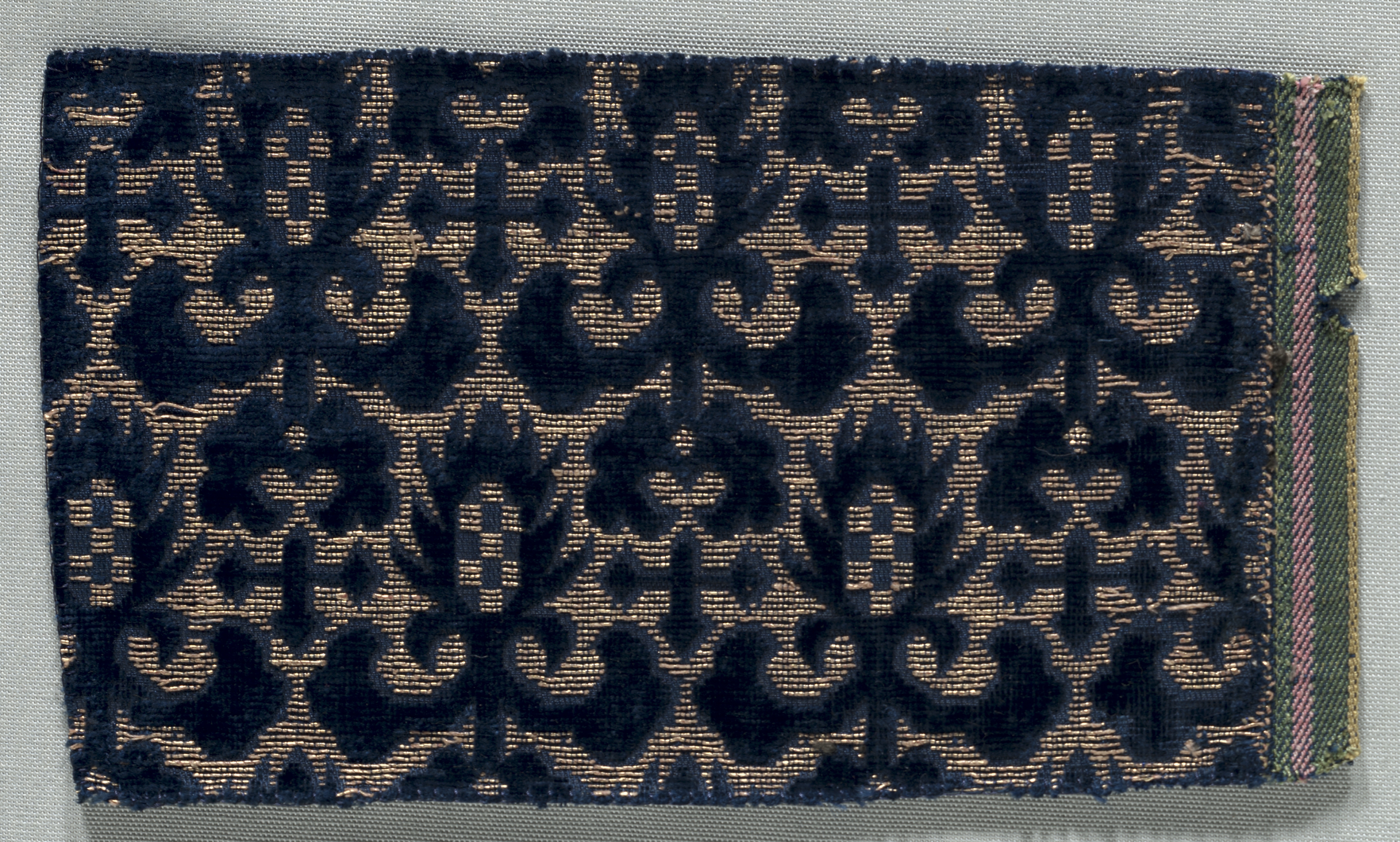
Technical Deconstruction: The Velvet Fragment
The provided artifact, a 17th-century Italian velvet fragment, represents not merely a textile but a dense historical codex. Our analysis begins at the molecular level. Velvet, by its technical definition, is a warp-pile fabric where supplementary warp threads are raised over wires or rods during weaving to form loops, which are then either cut to create the characteristic plush, upright pile or left uncut for a denser, more textured finish. The 17th-century Italian variant, particularly from centers like Genoa, Venice, or Florence, was renowned for its exceptional quality, achieved through high-thread-count silk grounds and densely packed, finely cut pile. The "reference: new DNA strand" is a potent metaphor. It instructs us to view this not as a static relic, but as a genetic blueprint—a sequence of structural decisions (pile height, twist, density, ground weave) that encode its tactile and visual language. This DNA is one of luxury, depth, and controlled light absorption.
Historical Genome & Deconstructed Code
The fragment's origin places it at the zenith of European textile artistry. 17th-century Italian velvets were engines of economic and cultural power, worn by aristocracy and clergy to signify status through a display of inaccessible technology and material wealth. The "code" embedded within is one of opulence through restraint. Unlike later, more flamboyant patterns, these velvets often relied on the profound richness of the material itself—the way it consumes and then gently releases light, creating a luminous, shifting surface from a single hue. Any patterning, likely a ciselé (cut and uncut pile) or voided velvet technique, would have been architectural and symbolic, not merely decorative. Deconstructing this for Zoey Fashion Lab means isolating these core genes: the profound tonal depth, the tactile invitation, and the authority of materiality over overt graphic statement.
Recombinant Strategy: Splicing with Avant-Garde Principles
The directive "Style: Avant-garde" mandates a radical recombination of this historical DNA. Avant-garde fashion operates on principles of disruption, conceptual rigor, and the recontextualization of form and function. Our task is to splice the "velvet gene" into a new, unexpected host organism. This is not about creating historical costume or applying velvet as a seasonal trim. It is about allowing the fundamental properties of 17th-century velvet to mutate and dictate avant-garde forms.
Conceptual Applications: From Fragment to Framework
1. Structural Pile, Deconstructed Support: The pile's inherent structure—a field of fragile, upright filaments—can be macro-engineered. Imagine architectural garments where the pile is not a surface but a volumetric core. Coat shoulders or corset structures could be built from dense, foam-like blocks of technical velvet, where the pile provides both form and a shock-absorbing, tactile interface with the body. The garment's shape is literally built from amplified pile.
2. Phototropic Surfaces & Chromatic Depth: The velvet's light behavior is its most potent avant-garde property. We can engineer this further with bi-phase or thermo-chromatic dyes applied to the pile tips versus the ground. The result is a fabric that changes color with movement, body heat, or environmental light, realizing the historical "shimmer" as a dynamic, interactive technology. A single garment moves from deep burgundy to molten gold, not through print, but through the inherent physics of its pile.
3. Negative Space & Voided Pile: The historical technique of voiding (creating pattern by leaving areas free of pile) can be pushed to an extreme. Instead of floral motifs, we void pile to create functional apertures—lacing grommets, ventilation channels, or windows to underlying structural seams. The pattern becomes a technical schematic, revealing the garment's architecture. The contrast between plush and void echoes the digital concept of positive/negative space, rendered in profound texture.
4. The "DNA Strand" as Literal Form: Interpreting the reference most directly, the double-helix structure can inform silhouette and construction. Garments could twist around the body in helical spirals, with the velvet's nap direction changing with each twist to alter light capture along the path. Seams and closures could follow genetic ribbon or ladder patterns, making the blueprint of construction the primary aesthetic.
Material Recombinants & Ethical Code
The avant-garde mandate also requires ethical and sustainable interrogation. The 17th-century silk velvet is a benchmark, not a prescription. We must develop its ethical recombinant: a velvet with identical optical and haptic properties derived from next-generation materials. Proposals include:
• Microbial Cellulose Velvet: Lab-grown cellulose, fermented into a mat, then precision-laser-cut to create a biodegradable, vegan pile with customizable density and degradation timelines.
<>• Regenerated Oceanic Polymer Velvet: A plush fabric woven from yarns derived from recycled fishing nets and marine waste, where the pile hides the recycled content while offering the same luxurious hand.• Programmable Electro-Luminescent Pile: Integrating microscopic, flexible LEDs into the tips of synthetic pile, creating a velvet that can be programmed to emit light, pulse, or display patterns—the ultimate evolution of its light-manipulating heritage.
Conclusion: The New Organism
The 17th-century Italian velvet fragment, through the lens of Zoey Fashion Lab, ceases to be a swatch for inspiration. It is a donor genome. The resulting avant-garde collection should feel like a new species—one that speaks the ancient, tactile language of opulence but operates by a radically contemporary set of rules. The garments will not look historical, but they will feel inevitable, as if the core principles of depth, interaction, and material authority have finally found their true, disruptive form. The "New DNA Strand" is a hybrid: one helix is the historic code of crafted luxury; the other is the avant-garde imperative for conceptual innovation and ethical responsibility. Their synthesis is the future of meaningful texture.