Deconstructing the Chasuble: A Technical and Avant-Garde Analysis for Zoey Fashion Lab
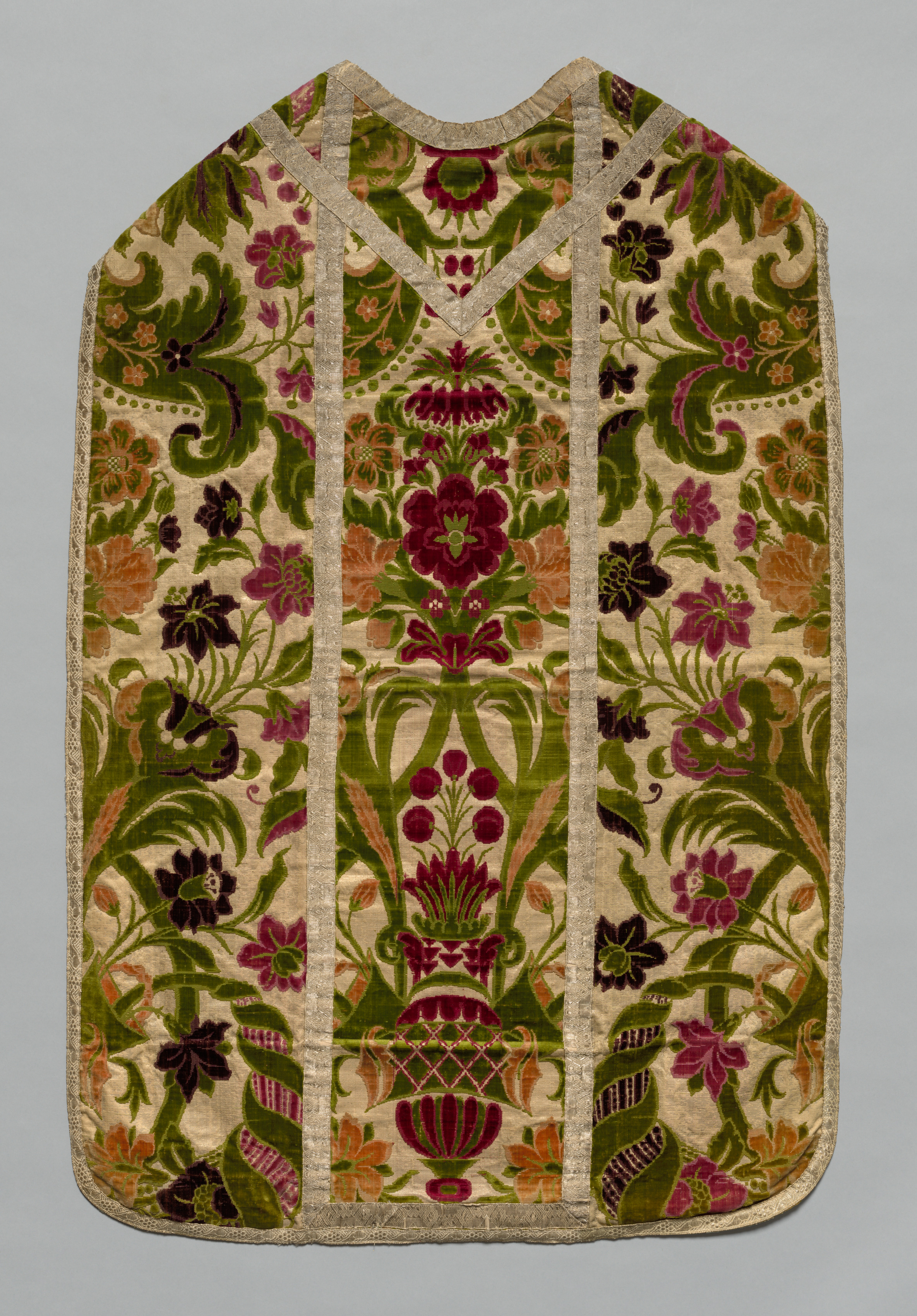
As the Chief Fabric Deconstructionist for Zoey Fashion Lab, I present a comprehensive analysis of a singular textile artifact: a chasuble originating from Genoa, Italy, constructed from silk and gilt metal threads through a complex woven technique incorporating both cut and uncut velvet. This piece, referenced under the conceptual framework of "New DNA Strand," serves as a pivotal case study for our avant-garde design philosophy. The chasuble is not merely a historical garment; it is a living archive of material intelligence, a blueprint for radical reinterpretation. This analysis will dissect its technical composition, cultural lineage, and potential for transformation within the context of Zoey Fashion Lab’s commitment to deconstructive innovation.
Technical Deconstruction: The Woven Matrix of Silk and Gilt Metal
The chasuble’s foundational structure is a woven fabric, a sophisticated interplay of silk and gilt metal threads. The silk warp and weft provide a supple, lustrous base, while the gilt metal threads introduce a rigid, reflective counterpoint. These metal threads are typically composed of a silk core wrapped in a thin strip of silver-gilt, creating a yarn that is both precious and structurally demanding. The weaving itself is a compound weave, likely a lampas or brocade technique, where supplementary wefts of metal thread are introduced to form the pattern against a silk ground. This creates a fabric with distinct front and back faces, the former dominated by the shimmering metal, the latter by the silk’s matte finish.
The most compelling technical feature is the simultaneous use of cut and uncut velvet. Velvet is produced by weaving an extra set of pile warps over metal rods; when the rods are removed, loops are formed. Uncut velvet retains these loops, creating a textured surface that catches light softly. Cut velvet involves slicing these loops open, resulting in a dense, plush pile with a deeper, more absorbent quality. In this chasuble, both techniques coexist within the same woven structure. The uncut loops likely form the background or secondary motifs, offering a tactile, matte contrast to the cut pile’s rich, velvety depth. This dual-pile construction is extraordinarily complex, requiring precise control of the loom to alternate between loop formation and cutting. The result is a fabric with three-dimensional topography, where light and shadow play across the surface, creating a dynamic visual experience.
The gilt metal threads are not merely decorative; they introduce significant structural constraints. Their stiffness limits the fabric’s drape, making the chasuble a rigid, sculptural form rather than a fluid garment. The metal also affects the fabric’s weight, tensile strength, and susceptibility to tarnishing. This technical tension—between the silk’s fluidity and the metal’s rigidity, between the cut pile’s softness and the uncut loops’ resilience—is the core of the fabric’s material DNA. It is a textile that resists easy manipulation, demanding a deconstructive approach that respects its inherent properties while subverting its original purpose.
Cultural and Historical Context: Genoese Opulence and Liturgical Form
Genoa, a maritime republic at the crossroads of trade routes, was a center for luxury textile production from the 14th to 17th centuries. The city’s weavers specialized in velluto a due corpi (double-body velvet) and velluto cesellato (chiseled velvet), often incorporating metal threads for ecclesiastical and aristocratic patrons. The chasuble, as a liturgical vestment, was designed for the Catholic Mass, its form—a poncho-like garment—symbolizing the yoke of Christ. Its opulent materials signified the Church’s wealth and the sacred nature of the ritual.
However, this chasuble’s avant-garde potential lies in its subversion of that very context. The garment is a relic of a hierarchical, ritualistic system. The silk and gold speak to power, devotion, and tradition. But the fabric’s technical complexity—the cut and uncut velvet, the metal threads—also speaks to a mastery of material that transcends its original function. It is a testament to human ingenuity, a system of threads that encodes not just a pattern but a worldview. For Zoey Fashion Lab, this historical weight is not a burden but a resource. The chasuble becomes a palimpsest, a surface upon which we can inscribe new meanings by erasing, fragmenting, and reassembling its components.
New DNA Strand: Deconstructive Methodology and Avant-Garde Application
The reference to "New DNA Strand" is critical. It frames the chasuble not as a finished object but as a genetic code—a set of instructions for creating new forms. Our deconstructive methodology will treat the fabric as a sequence of material information that can be spliced, mutated, and recombined. The goal is not to replicate the chasuble but to extract its core principles—the interplay of cut and uncut surfaces, the tension between silk and metal, the sculptural rigidity—and translate them into avant-garde garments that challenge conventional fashion.
Deconstructive Strategies:
- Fragmentation and Reassembly: We will dissect the chasuble into its constituent parts: the metal-thread brocade sections, the cut velvet panels, the uncut velvet loops. These fragments will be reassembled into non-traditional silhouettes—asymmetrical jackets, deconstructed dresses, modular accessories. The metal threads can be liberated from the weave and used as structural elements, like exposed wiring or embroidery on sheer silk organza.
- Surface Manipulation: The dual-pile velvet offers a rich terrain for intervention. We can burn out sections of the cut pile using chemical etching, revealing the underlying silk ground. The uncut loops can be pulled or sheared to create new textures, blurring the line between intact and destroyed. The gilt metal can be oxidized or patinated to introduce an aged, industrial quality, contrasting with the original opulence.
- Structural Inversion: The chasuble’s rigid drape can be exploited in avant-garde construction. We can use the fabric as a sculptural shell for exaggerated shoulders, architectural collars, or cage-like forms. The garment’s original liturgical shape—a vestment designed to cover the body—can be inverted to expose the body, creating a tension between concealment and revelation.
- Digital Translation: The chasuble’s pattern can be 3D-scanned and translated into digital knit or print designs. The cut and uncut velvet textures can be simulated in jacquard weaves or digital embroidery, allowing for mass-customization while preserving the material’s DNA. The metal threads can be replaced with conductive fibers, integrating technology into the fabric for interactive or illuminated garments.
Avant-Garde Silhouettes and Concepts:
The resulting designs will reject the chasuble’s original function as a sacred vestment. Instead, they will embrace deconstruction as a form of critique—questioning the boundaries between sacred and profane, tradition and innovation, luxury and decay. A possible collection might include:
- A deconstructed chasuble dress with one sleeve missing, the hemline ragged, and the metal threads exposed as raw, fraying edges.
- A corset top made from the cut velvet panels, worn over a sheer silk base, with the uncut loops forming a tactile, organic pattern.
- A sculptural coat where the chasuble’s rigid form is exaggerated into a bell-shaped silhouette, with the metal threads creating a metallic sheen that shifts with movement.
- Accessories such as a metal-thread choker or a velvet bag with cut and uncut sections, serving as wearable artifacts of the deconstructive process.
Conclusion: The Chasuble as a Living Code
The Genoese chasuble is more than a textile; it is a material manifesto. Its technical complexity—the woven silk and gilt metal, the cut and uncut velvet—represents the pinnacle of historical craftsmanship. Yet, its true value for Zoey Fashion Lab lies in its potential for transformation. By treating its structure as a "New DNA Strand," we can deconstruct its material language and re-synthesize it into forms that challenge contemporary fashion’s obsession with novelty. The chasuble’s avant-garde future is not as a relic but as a catalyst—a source of technical and conceptual inspiration for garments that are both deeply rooted in history and radically forward-looking. This analysis confirms that the chasuble is not an end point but a beginning, a strand of material DNA ready to be recombined into the unknown forms of tomorrow.