Deconstructing the Ducal Silhouette: An Avant-Garde Necro-Futurist Manifesto for SS26
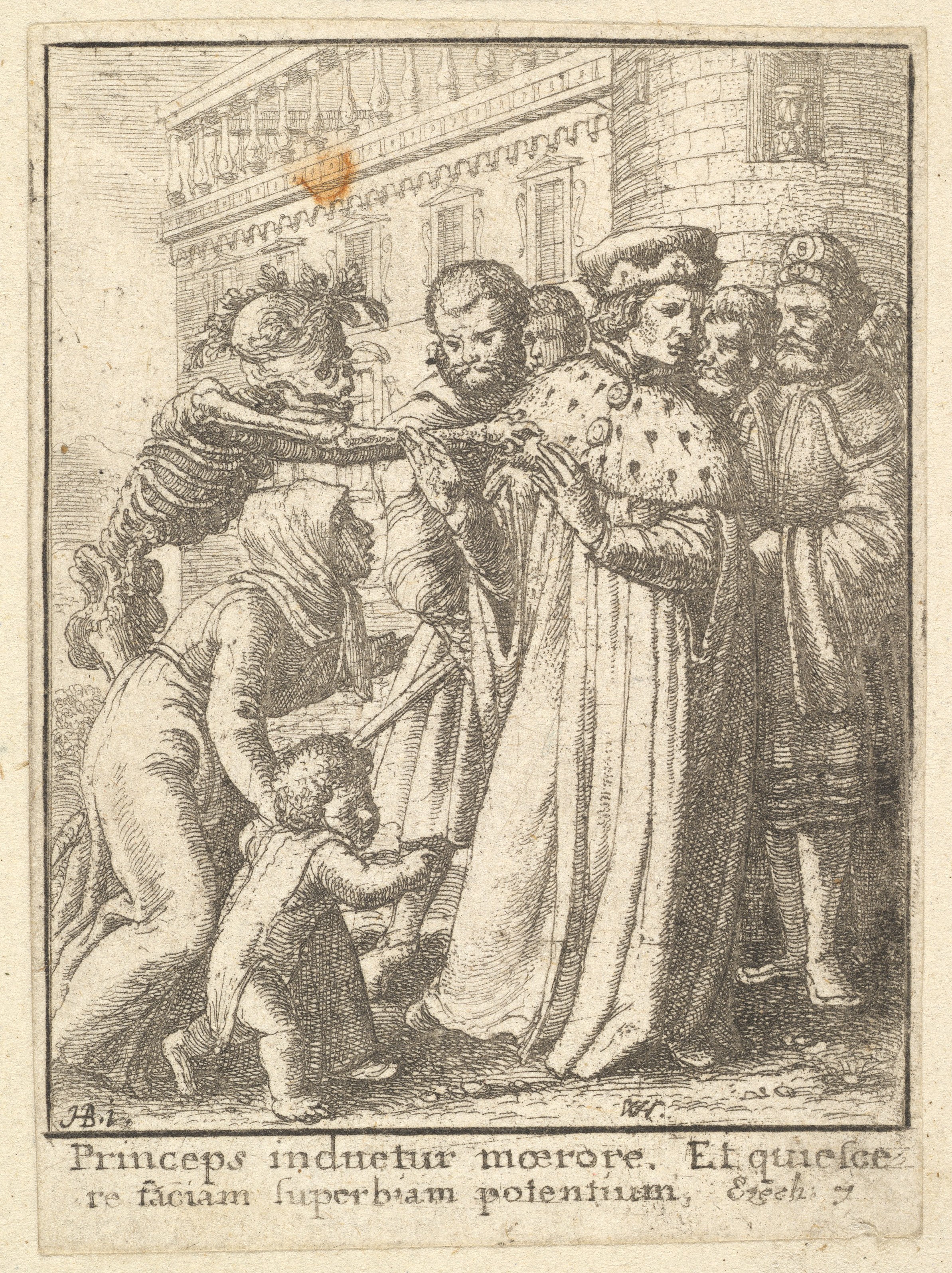
The aristocratic figure, historically a bastion of rigid tradition and sartorial excess, undergoes a radical transmutation in Zoey Fashion Laboratory’s SS26 study. Drawing from the spectral etching “Duke, Dance of Death” (second state of four), we dissect not a man, but a structural allegory—a cadaverous blueprint for power’s decay. This is not costume; it is necropolitical couture, where the Duke’s skeletal frame becomes the armature for a new, post-human silhouette. The etching’s raw, scratched linework and its dual-state existence (the second state capturing an intermediate moment of composition) inform our core thesis: fashion as a perpetual state of becoming and undoing. For SS26, we abandon the living body’s softness, embracing the fossilized architecture of authority.
Silhouette as Skeletal Armature
The Duke’s form is not draped; it is excavated. Our silhouette rejects the organic curves of the human torso in favor of a geometric, exoskeletal frame. The shoulders—once padded with velvet and ermine—are now cantilevered carbon-fiber struts, jutting outward at sharp, asymmetrical angles. This is not a shoulder pad; it is a load-bearing architectural bracket. The waist, traditionally cinched, is instead hollowed out, creating a void between the ribcage and pelvis. Garments are suspended from a central spine-like harness, leaving the torso exposed as a negative space. The etching’s dramatic chiaroscuro—where the Duke’s silhouette bleeds into the void—is translated into laser-cut leather panels that appear to dissolve at the edges, mimicking the etching’s scratchy, incomplete line. The result is a ghostly, deconstructed power suit: a jacket that is all structure and no substance, a vestige of authority worn by a specter.
Materiality: The Etching’s Second State
The second state of the etching holds the key to our material language. Unlike the polished final print, the second state reveals unfinished lines, erasures, and overlaid corrections. Zoey Fashion Laboratory translates this into a layered, process-revealing textile. We employ reactive polymers that change opacity when stretched, exposing the garment’s internal stitching and bonding agents—a literal unmaking of the garment’s history. The Duke’s fur-lined collar becomes deconstructed bio-plastic filaments, each strand individually heat-set to curl like a frozen, dying vine. The etching’s cross-hatching is reimagined as laser-perforated, multi-layered organza, where each layer is a different shade of bone-white, ash-gray, and tarnished silver. The fabric itself breathes like a fossil record, with the top layer revealing the “final” design, while the underlayers show the erased, rejected sketches of the silhouette. This is couture as archaeological dig.
Structural Innovation: The Dance of Death’s Kinetic Tension
The etching’s title, “Dance of Death,” implies motion—a grotesque, inevitable choreography. Our structural innovation is a kinetic, articulated frame that responds to the wearer’s movement. The Duke’s rigid posture is subverted by magnetic joint systems at the elbows and knees, allowing the garment to shift between two states: static, monumental stillness and jerky, marionette-like motion. This is achieved through micro-servos embedded in the garment’s spine, controlled by a gyroscopic sensor. When the wearer stands still, the garment locks into a severe, architectural pose—a living statue of authority. The moment they walk, the frame loosens, and the panels clatter and slide like a skeleton’s bones. The etching’s second state—a moment of artistic hesitation—is captured in a programmable fabric that alternates between transparency and opacity, creating a visual stutter that references the unfinished line. This is not wearable technology; it is wearable death knell.
Color Palette: The Necro-Chromatic Spectrum
We reject color as decoration. Our palette is drawn from the etching’s oxidized copper tones and the paper’s aging: verdigris green, rust orange, parchment beige, and bone black. The only accent is a luminous, decaying gold—a metallic foil that tarnishes upon exposure to air, simulating the Duke’s lost opulence. This is not a color story; it is a chemical reaction. Garments are treated with patina-inducing finishes, so each piece evolves over time, mirroring the etching’s deterioration. The palette is a memento mori for the fashion system’s obsession with the new.
Deconstructive Aesthetics: The Unfinished Line
The second state’s unfinished quality is our guiding principle. Seams are left raw, but not as a punk gesture—they are meticulously frayed into a specific, jagged pattern that echoes the etching’s linework. Hems are chemically dissolved in controlled patterns, creating a frayed, bleeding edge that suggests the garment is still being drawn. Pockets are not functional; they are cutout voids that reveal the wearer’s skin, framed by a copper wire embroidery that traces the etching’s cross-hatching. The Duke’s ceremonial sword becomes a detachable, structural element—a carbon-fiber blade that slides into a spine-mounted sheath, but only when the wearer assumes a specific posture. This is deconstruction as a philosophical act: the garment is never complete, always in a state of artistic flux.
Conclusion: The Duke as Post-Human Archetype
Zoey Fashion Laboratory’s SS26 study of the Duke is not a tribute to aristocracy; it is a vivisection of power’s material remains. By embracing the etching’s second state—the unfinished, the erased, the skeletal—we propose a new silhouette for a world where authority is hollow, where the body is a ghost in the machine. This is avant-garde couture as ontological inquiry: the garment does not clothe the wearer; it exposes the architecture of their existence. The Duke, in our hands, becomes a fossil of the future—a warning, a blueprint, and a dance with the inevitable. For SS26, fashion is not about dressing for life; it is about dressing for the afterlife.