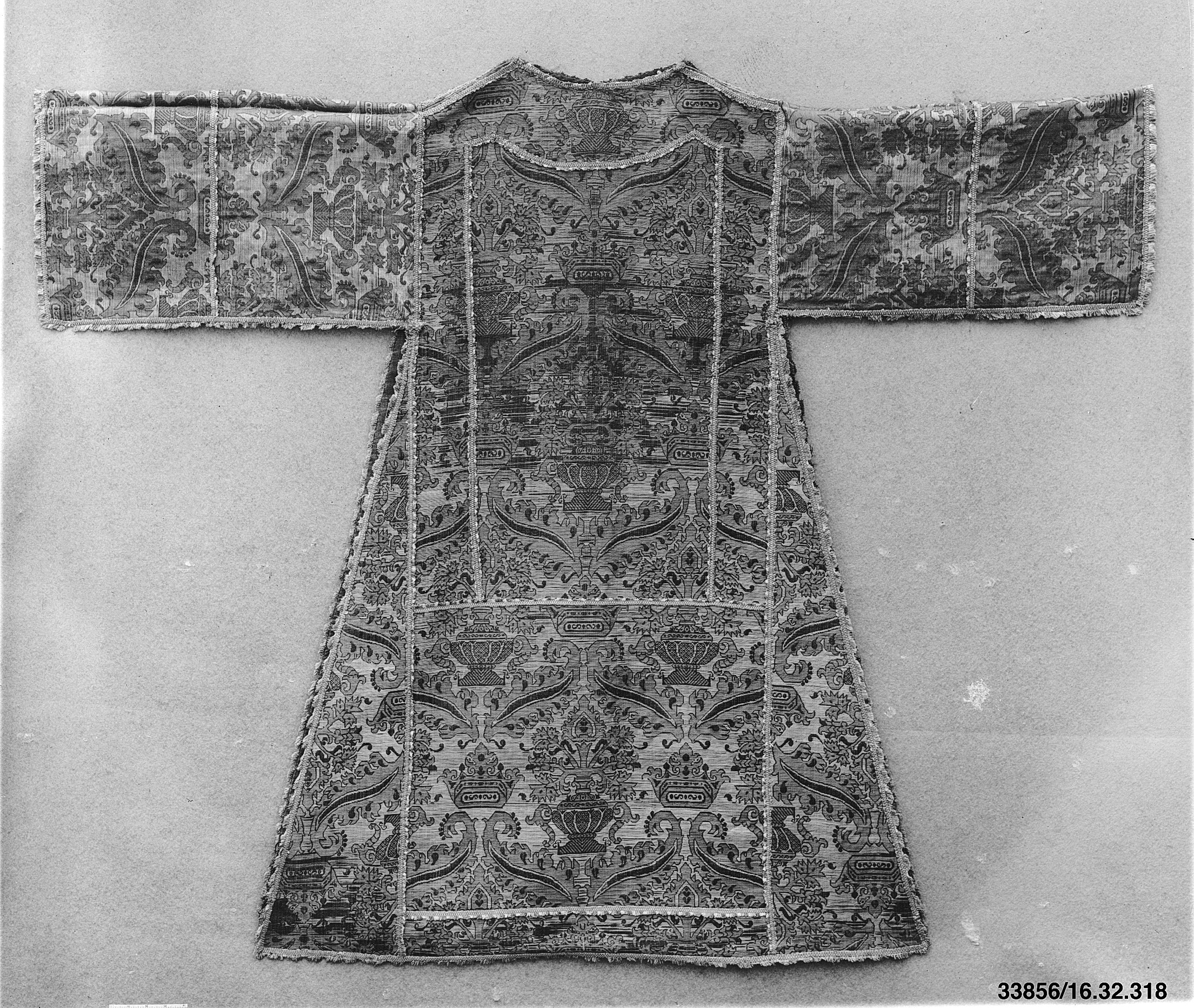
Deconstructing the Dalmatic: A Futurist Reclamation for SS26
The dalmatic, a garment historically synonymous with liturgical solemnity and imperial authority, presents a paradox for the avant-garde. Its origins as a wide-sleeved, T-shaped tunic, often ornately decorated, speak to a static, hierarchical past. For Zoey Fashion Laboratory’s SS26 collection, we propose a radical re-interpretation: a dalmatic not as a relic, but as a cyborgian membrane—a fluid interface between the human form and an evolving digital-physical landscape. This analysis dissects the structural and aesthetic innovations required to transmute this ancient silhouette into a harbinger of tomorrow.
Silhouette as a Site of Tension: The Asymmetrical Drape
The canonical dalmatic is defined by its symmetry and volume. To propel it into a futuristic context, we must first destabilize this equilibrium. The SS26 iteration abandons the rigid T-shape for a dynamic, asymmetrical drape. Imagine a single, continuous length of silk—sourced from a global frontier where regenerative sericulture meets algorithmic dyeing—that is not cut, but rather folded and tensioned across the body. The left side retains a vestigial, sculpted sleeve, a ghost of the original form, while the right side dissolves into a cascading, almost liquid train. This is not merely a design choice; it is a structural statement. The asymmetry signals a departure from the past’s prescribed order, embracing the unpredictable flows of data and energy that define our present. The silk, here, is not a passive material but an active participant, its weight and sheen manipulated by internal, almost invisible weighting agents to create a zero-gravity fall that defies conventional draping physics.
Material Alchemy: Silk as a Conductive Canvas
Silk, traditionally valued for its luster and tactility, is re-engineered for SS26 as a high-performance composite. We propose a hybrid silk that integrates micro-thin, flexible fiber-optic threads within its weave. This is not decorative embroidery; it is a structural lattice. The resulting fabric can shift from opaque to translucent in response to ambient light or biometric data from the wearer. For the dalmatic, this means the garment can “breathe” with the environment. In a low-lit gallery, the silk becomes a glowing, ethereal second skin; in daylight, it reverts to a matte, almost mineral finish. The global frontier of this material lies in its sourcing: a closed-loop, carbon-negative silk farm in the Atacama Desert, where silkworms are fed a diet of genetically optimized mulberry leaves, yielding a fiber with tensile strength comparable to Kevlar. This is silk as armor—not for war, but for navigating the cognitive overload of the 22nd century.
Structural Innovation: The Exoskeletal Lining
The dalmatic’s traditional volume is often achieved through heavy layering or stiff interlinings. For a futuristic silhouette, we reject this additive approach. Instead, we introduce an invisible exoskeleton—a micro-thin, 3D-printed lattice of recycled titanium alloy that is laser-bonded to the interior of the silk. This lattice is not a support; it is a kinetic framework. It allows the dalmatic to hold a sculptural, almost architectural shape when static—think of a cantilevered shoulder that extends 40 centimeters beyond the body—yet collapses into a flat, packable form when not worn. This is a structural innovation that bridges the gap between haute couture and wearable technology. The lattice is calibrated to the wearer’s unique body scan, ensuring that the garment’s dramatic silhouette is not merely a spectacle but an extension of their own skeletal structure. The result is a dalmatic that is simultaneously monumental and intimate, a second architecture for the human form.
Deconstructive Aesthetics: The Unfinished Hem and the Digital Fray
Deconstruction in avant-garde fashion often implies a deliberate incompleteness—a raw edge, a missing seam. For the SS26 dalmatic, we push this concept into the digital realm. The hem of the garment is not cut but algorithmically fringed. Using a laser cutter guided by a generative adversarial network (GAN), the silk’s edge is dissolved into a series of micro-fringes that vary in length and density. This creates a visual effect of “digital decay,” as if the garment is dissolving into pixels. The unfinished hem is not a sign of neglect but a deliberate commentary on the ephemerality of digital existence. Paired with the asymmetrical drape, this detail ensures that the dalmatic reads as a work-in-progress, a prototype for a future self that is never fully realized. The global frontier of this aesthetic lies in its rejection of finality; the garment is designed to be reprogrammed by the wearer over time, with new fringes or structural elements added via modular, magnetic attachments.
Color and Light: The Monochrome Spectrum
Color in a futuristic dalmatic must transcend mere pigment. We propose a monochrome palette that is actually a spectrum of light. The base silk is a deep, almost black indigo, achieved through a zero-waste, bacteria-based dye process. The fiber-optic threads woven into the fabric emit a soft, pulsating light in hues of cyan, magenta, and white. This is not a garish LED display; it is a chromatic respiration. The light patterns are generated by the wearer’s heart rate variability, creating a garment that is a living, emotional map. In the context of SS26, this dalmatic becomes a social interface, broadcasting the wearer’s internal state to the world. The monochrome base ensures that the light appears as a spectral afterimage, a ghost of color that enhances the garment’s ethereal, almost holographic quality.
Conclusion: The Dalmatic as a Portal
The SS26 dalmatic for Zoey Fashion Laboratory is not a revival or a mere reinterpretation. It is a portal—a garment that dissolves the boundaries between past and future, material and digital, body and environment. By leveraging the global frontier of regenerative silk, algorithmic design, and exoskeletal engineering, we transform a symbol of static authority into a dynamic, responsive system. This is the definitive avant-garde gesture: to take the most ancient of forms and force it to speak the language of tomorrow. The dalmatic is no longer worn; it is inhabited. It is a cyborgian second skin that questions what it means to be clothed in an age of ubiquitous data and fluid identity. For the collector, this is not a garment to be preserved but a prototype to be evolved—a living document of fashion’s capacity to deconstruct, innovate, and reimagine the very act of dressing.