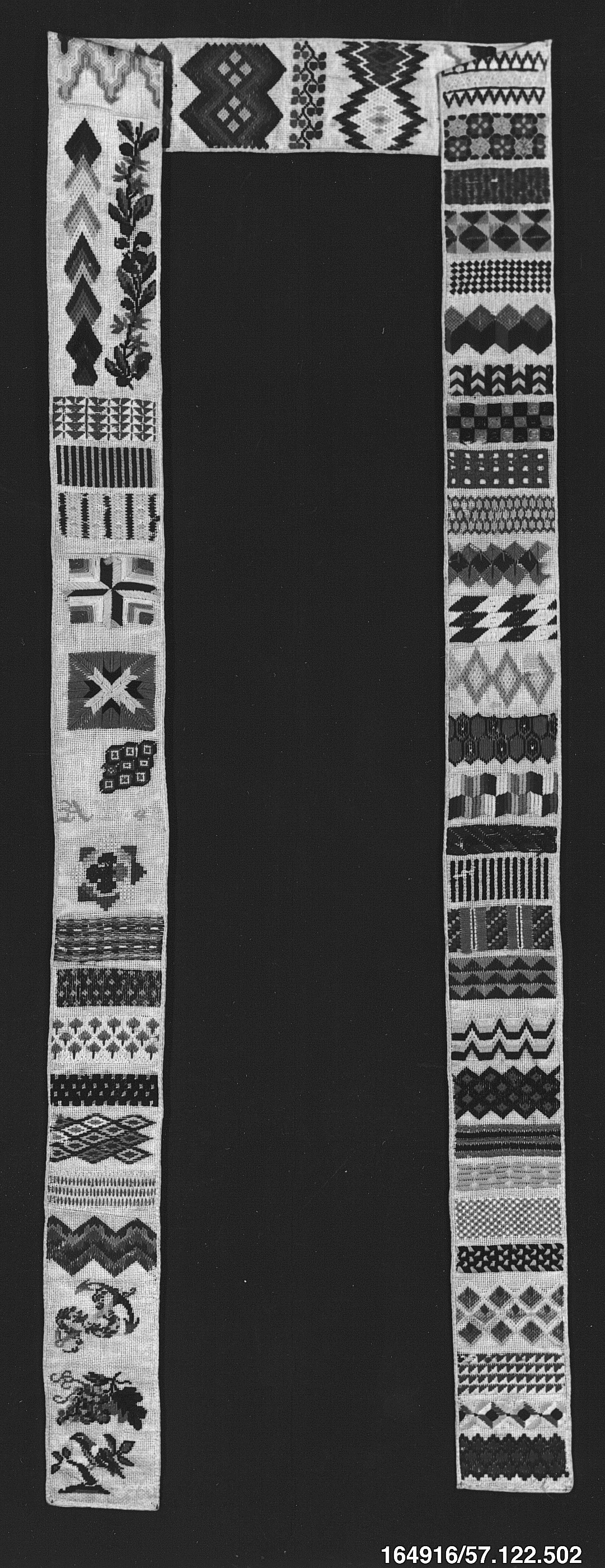
The Sampler Deconstructed: A Prologue to SS26 Structuralism
In the rarefied air of Zoey Fashion Laboratory’s SS26 collection, the Sampler emerges not as a mere textile swatch, but as a radical manifesto. Originating from the Global Frontier—a liminal space where digital fabrication meets nomadic craftsmanship—this specimen of wool on canvas transcends its humble nomenclature. It becomes a blueprint for a new sartorial order, one predicated on the subversion of material logic and the redefinition of silhouette through architectural tension. This analysis dissects the Sampler’s role as a catalyst for deconstructive couture, arguing that its humble, grid-like origins are the foundation for a futuristic, anti-gravitational wardrobe.
The Dialectic of Wool and Canvas: A Material Subversion
The choice of wool on canvas is a deliberate act of structural heresy. Wool, traditionally associated with softness, insulation, and organic drape, is here forced into a rigid, painterly dialogue with canvas—a material of tensile strength and utilitarian flatness. This is not a simple layering; it is a collision. The wool yarn is not woven into the canvas; it is punched, stitched, and grafted onto it, creating a topography of raised loops and compressed fibers. The result is a textile exoskeleton—a surface that is both tactile and impenetrable, soft and unforgiving. This duality is the core of the Sampler’s avant-garde power. It rejects the binary of “fabric as second skin” and instead proposes fabric as architectural cladding.
From a futuristic silhouette perspective, this material hybridity allows for unprecedented structural innovation. The canvas provides the rigid armature—the unseen skeleton—while the wool acts as a malleable, reactive skin. This is not a garment that drapes; it is a garment that stands. The Sampler’s surface becomes a site of kinetic memory, where every stitch and loop records the tension of its creation. For SS26, this translates into silhouettes that are geometric, angular, and volumetric. Imagine a jacket where the shoulder pads are not inserted but extruded from the canvas base, the wool forming a cantilevered peak. Or a skirt that flares not from the waist but from a single, off-center point, the canvas acting as a structural ribcage beneath the wool’s chaotic, organic surface. The Sampler is not a pattern; it is a prototype for a new human form.
Deconstructive Aesthetics: The Grid as a Revolutionary Act
The Sampler’s inherent grid—the repeated, systematic placement of stitches—is not a sign of order but of controlled chaos. In the hands of Zoey Fashion Laboratory, the grid becomes a tool for deconstruction. Each stitch is a point of potential failure, a locus of tension that can be pulled, loosened, or exaggerated. This is the aesthetics of the incomplete. The garment does not hide its construction; it flaunts it. The raw edges of the canvas are left exposed, the wool threads trailing like unfinished sentences. This is a deliberate move against the polished, seamless finishes of mainstream luxury. It is a celebration of process over product.
For SS26, this deconstructive impulse manifests in asymmetrical, fragmented silhouettes. A coat, for example, might be constructed from multiple Sampler panels, each one stitched at a different tension, creating a rippling, tectonic surface. The left sleeve might be fully formed, while the right is only a ghost—a grid of wool loops with the canvas exposed. This is not a mistake; it is a statement on temporal decay and the fragility of form. The wearer is not adorned; they are inhabiting a construction site. The Sampler becomes a wearable ruin, a monument to the process of making and unmaking. This aligns with the Global Frontier context, where cultural and material boundaries are constantly being erased and redrawn.
Futuristic Silhouettes: The Anti-Gravitational Body
The true innovation of the Sampler lies in its ability to redefine the human silhouette. Traditional tailoring works with the body’s contours; the Sampler works against them. The rigid canvas base allows for extreme, sculptural volumes that defy gravity. For SS26, we see the emergence of the “suspended torso”—a silhouette where the garment appears to float around the body, held aloft by internal, invisible structures. The wool-on-canvas construction is ideal for this: the canvas acts as a structural frame, while the wool provides a soft, ethereal outer layer that seems to breathe and move independently.
Consider a dress that is essentially a geometric cage—a series of interlocking canvas panels, each one densely stitched with wool. The dress does not touch the skin; it hovers, creating a negative space between body and garment. This is a futuristic armor, not for protection but for psychological projection. The wearer is both present and absent, their form suggested but not revealed. This silhouette is deeply anti-naturalistic, rejecting the curves and lines of the human body in favor of pure, abstract geometry. It is a silhouette that speaks to a future where identity is not fixed but architecturally constructed.
Further, the Sampler enables modular innovation. Because the canvas is a rigid base, individual Sampler units can be detached and reattached via magnetic or mechanical fasteners. A sleeve can become a collar; a panel can become a bag. This is transformative couture, where the garment is not a fixed object but a kit of parts. The silhouette becomes malleable in real-time, adapting to the wearer’s environment or mood. This is the ultimate expression of the Global Frontier—a garment that is never finished, always in a state of becoming.
Structural Innovation: The Tension of the Incomplete
At the level of construction, the Sampler introduces a radical departure from traditional pattern-making. The canvas base is not cut to follow the body’s shape; instead, it is scored, folded, and pleated to create three-dimensional forms. The wool stitching then locks these folds in place, creating permanent, structural creases. This is origami with textile, but with a crucial difference: the wool’s softness introduces a counterpoint of chaos. The folds are not clean; they are frayed, bulging, and uneven. This is a deliberate deconstruction of technical perfection.
For SS26, this technique produces garments that are both rigid and fluid. A jacket might have a back panel that is a single, folded canvas sheet, its sharp angles softened by a dense, woolen surface that seems to melt over the edges. The tension between the canvas’s structural logic and the wool’s organic growth creates a dynamic, living surface. This is not a garment that ages gracefully; it is a garment that evolves with wear, the wool pilling and the canvas creasing in new patterns. It is a record of its own history.
Conclusion: The Sampler as a Visionary Artifact
The Sampler, in its deceptively simple form, is a cornerstone of Zoey Fashion Laboratory’s SS26 vision. It is a material and conceptual pivot point, turning away from the constraints of traditional tailoring toward a future of architectural, anti-gravitational, and modular dressing. The wool on canvas is not a fabric; it is a system—a system of tension, release, and perpetual transformation. It challenges the wearer to see clothing not as a covering but as a construction, a deliberate act of making that is never fully complete. In a world of mass-produced sameness, the Sampler offers a radical alternative: a garment that is a singular, evolving artifact, a testament to the enduring power of deconstructive innovation and the limitless potential of the Global Frontier. It is not a sample; it is a declaration of war on the ordinary.