Deconstructing Sovereignty: The Prince and Groom as a Blueprint for SS26 Structural Innovation
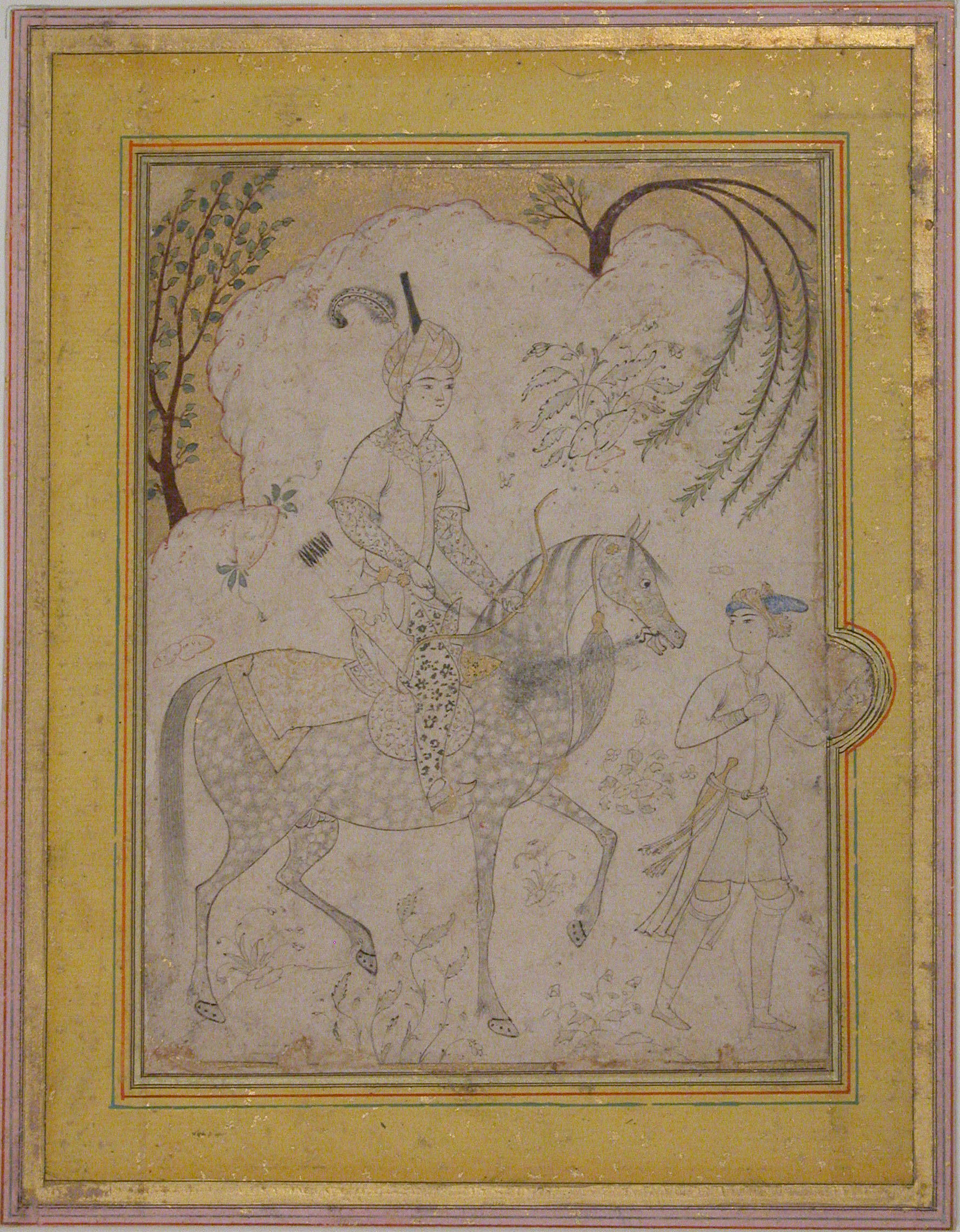
The artwork Prince and Groom, emerging from the conceptual Global Frontier, presents not a narrative but a tectonic proposition. For Zoey Fashion Laboratory’s SS26 avant-garde couture directive, this study in ink, watercolor, and gold is decoded as a masterclass in fluid structuralism and contested silhouette. The piece’s inherent tension—between the defined, regal authority of the “Prince” and the mutable, service-oriented concept of the “Groom”—provides the foundational dialectic for a collection that seeks to architect the future body through contradiction. We move beyond mere garment construction into the realm of wearable polemics, where structure is both armor and vulnerability, and silhouette is a negotiable space.
Silhouette as a Negotiated Territory: From Monarchic Rigor to Liquid Form
The SS26 silhouette, inspired by this study, rejects monolithic form. It operates on a principle of asymmetric sovereignty. One shoulder may be fortified with a rigid, architectural flourish—a pauldron rendered in biopolymer resin or molded leather hardened with nano-ceramics, echoing the Prince’s implied coronet or epaulette. This strength dissipates across the torso, dissolving into the Groom’s fluidity through panels of technical chiffon or liquid-metal jersey that drape, pool, and respond to kinetic energy. The silhouette is not worn; it is activated by movement, transitioning from structured emblem to flowing continuum with each step. Trouser forms will hybridize, featuring one leg in a precise, tailored line and the other in a deconstructed hakama or draped culotte, manifesting the artwork’s duality in a single stride.
Critical to this is the manipulation of scale and void. The ink washes suggest not solid mass but permeable space. SS26 will incorporate strategic negative space as a structural element. Corsetry will be reimagined as exoskeletal wire frames, tracing the body’s topography without concealing it. Jackets may present with laser-cut apertures, revealing underlayers of gold-leaf-printed silicone or watercolor-hued organza that bleed beyond the confines of the outer shell. This creates a layered dimensionality, a literal deconstruction of the traditional fashion “layer,” making the interior as critically important as the exterior facade.
Material Alchemy: Translating Ink, Water, and Gold into Tactile Architecture
The specified medium is a direct manifesto for material innovation. The ink translates not as print, but as substance. We will pioneer the use of deep matte lacquers on neoprene and technical wool, creating surfaces that absorb light, offering an infinite, non-reflective depth. The watercolor bleed is paramount—this will be achieved through advanced gradient dye-sublimation on silk georgette, but more radically, through hydro-chromic fabrics that shift hue in response to atmospheric humidity, embodying the Groom’s adaptive nature. Garments become living canvases, their color stories evolving throughout the wear.
The gold is not mere embellishment; it is structural integrity and disruptive highlight. We will move beyond thread and lamé. Imagine gold-palladium alloy wires woven into jacquard, providing tensile support. Envision 24-karat gold nano-coatings vapor-deposited onto sections of molded acrylic, creating hard, jewel-like facets that interrupt soft textiles. This application references the artwork’s precise gilded accents, positioning gold as a functional, load-bearing element within the garment’s architecture, a nod to the Prince’s latent power within the fluid whole.
Structural Innovation: The Exoskeletal Embrace and Kinetic Draping
The core innovation for SS26 lies in redefining the relationship between garment and body. Inspired by the line work in Prince and Groom, we will develop external articulation systems. Inspired by robotic gait aids and anatomical drawings, lightweight carbon-fiber rods will be sheathed in leather or fabric, creating a graceful exoskeleton that extends from the spine over the shoulders, not to restrict but to amplify posture and movement. These are the “bones” of the silhouette, visible and celebrated.
Conversely, kinetic draping will embody the watercolor’s spontaneity. Utilizing algorithms derived from fluid dynamics, we will cut and drape fabrics so that their fall is not static but programmed to create specific, evolving forms as the body moves. A single piece of cloth, through precise bias cutting and strategic weighting with magnetic beads or micro-sensors, will transform from a sleek column into a dramatic, unfolding train—a sartorial event triggered by the wearer’s motion. This represents the Groom’s service to action, the garment in perpetual service to the body’s narrative.
The Zoey SS26 Proposition: Wearable Contradiction
The definitive analysis concludes that Prince and Groom mandates a collection of wearable contradictions. SS26 for Zoey Fashion Laboratory will be a sartorial dialectic: hard versus soft, defined versus diffuse, sovereign versus servant. Each piece will be a standalone study in balancing these forces. The result is couture that is intellectually rigorous and emotionally resonant—garments that question the very nature of protection, presentation, and identity. They are not for a future world of sterile minimalism, but for a complex, nuanced frontier where the self is multifaceted and the most powerful statement is a beautifully resolved tension. This is not fashion as clothing; it is fashion as applied philosophy for the body, built from the blueprint of a single, potent study on paper.