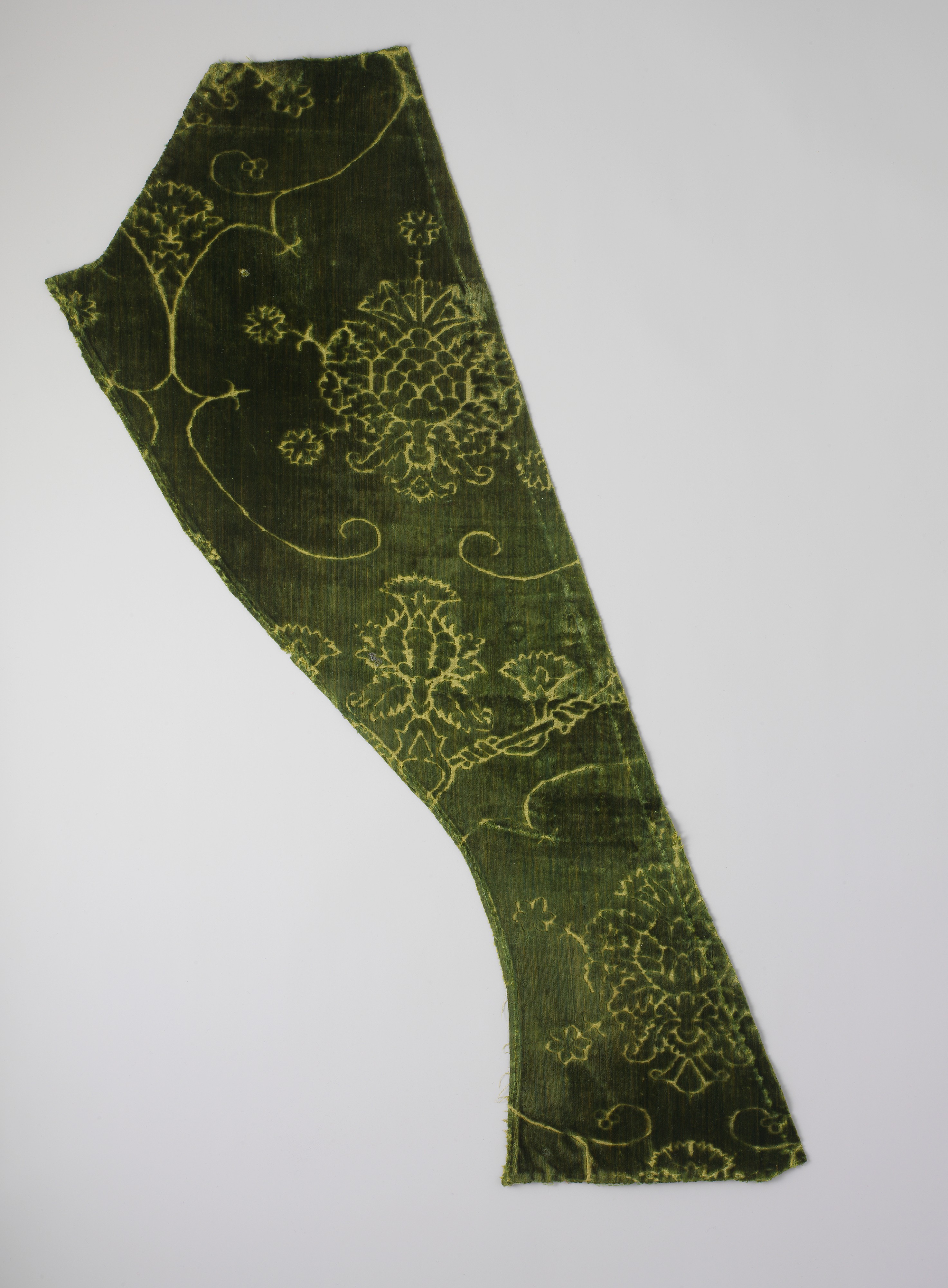
The Speculative Silhouette: Silk as Structural Anomaly in Zoey Fashion Laboratory’s SS26 Avant-Garde Lexicon
In the vanguard of contemporary couture, where the boundaries of garment architecture dissolve into pure conceptual expression, Zoey Fashion Laboratory presents a singular piece that redefines the very essence of silk. This is not a fabric of draping or softness; it is a medium of controlled chaos, a material transformed into a structural anomaly. The subject of this analysis—a standalone avant-garde study from the Global Frontier collection—is a testament to the laboratory’s commitment to deconstructive aesthetics and futuristic silhouettes. For SS26, silk is no longer a passive substrate but an active agent of volumetric rebellion, challenging the wearer’s perception of form, gravity, and identity.
Deconstructing the Global Frontier: Silk as a Geopolitical Material
The Global Frontier collection situates silk within a paradox: it is both ancient and hypermodern, organic and synthetic in its treatment. This piece, a conceptual armature, begins with raw silk filaments sourced from the edge of technological possibility—bio-engineered and spun in microgravity conditions, mimicking the tensile strength of carbon fiber while retaining silk’s intrinsic luster. The result is a fabric that behaves like a liquid metal, capable of supporting rigid geometries without the need for boning or internal structures. The deconstructive aesthetic is evident in the deliberate asymmetry: a single sleeve that bifurcates into two helical forms, each terminating in a floating, untethered panel. This is not a garment for the passive observer; it is a conversation between the body and its environment, where every fold is a calculated disruption.
The silhouette defies traditional anthropometry. The shoulders are exaggerated into sharp, avian-like points, while the waist is cinched not by a belt but by a series of interlocking silk rings that compress the torso into a tubular, almost architectural column. This juxtaposition of expansive upper volume and constrained lower mass creates a visual tension that is both unsettling and exhilarating. The futuristic silhouette is further accentuated by the use of negative space: strategic cutouts that reveal the skin but only through layers of translucent silk, creating a trompe-l’oeil effect that questions the boundary between garment and anatomy.
Structural Innovation: The Silk Armature and Kinetic Draping
What distinguishes this piece from conventional avant-garde work is its integration of structural innovation with kinetic potential. The silk has been treated with a proprietary nanocoating that allows it to stiffen or soften in response to body heat and ambient humidity. This smart material enables the garment to shift from a static sculpture to a dynamic, flowing form as the wearer moves. The back panel, for instance, is a single sheet of silk that fans out into a series of accordion-like pleats when the wearer’s temperature rises, creating a train that moves like a living organism. This is not mere decoration; it is a functional response to the environment, a dialogue between the garment and the world.
The construction method itself is a radical departure from traditional couture. Instead of cutting and sewing, the piece is assembled through a process of sonic welding and laser bonding, where the silk fibers are fused at molecular levels to create seamless joints. The seams are not hidden; they are celebrated as structural elements, appearing as glowing, translucent lines that traverse the garment like circuit boards. This approach allows for unprecedented precision in creating the piece’s signature element: a series of floating, cantilevered panels that hover above the body, held in place by invisible magnetic fields embedded in the silk. The panels shift with the wearer’s breath, creating a constant, subtle motion that mimics the flutter of wings or the pulse of a machine.
Deconstructive Aesthetics: The Art of Controlled Imperfection
The deconstructive aesthetic is not about chaos but about revealing the process of creation. In this piece, the raw edges of the silk are left unfinished, frayed intentionally to expose the fiber’s internal structure. These frayed ends are then woven into secondary, decorative patterns that resemble neural networks or topographical maps. The effect is a garment that appears to be in a state of perpetual becoming, as if it were simultaneously being constructed and deconstructed. This is a deliberate commentary on the transient nature of fashion itself—a medium that exists only in the moment of wear, then vanishes into memory.
The color palette is deliberately monochromatic: a spectrum of whites, from stark optical white to warm ivory, with subtle shifts in opacity and texture. This lack of color forces the viewer to focus entirely on form and light. The silk’s surface is treated with a micro-etching that refracts light differently depending on the angle, creating a moiré pattern that shifts as the wearer moves. This optical effect is a signature of the Global Frontier collection, blurring the line between garment and environment, between the physical and the virtual.
Futuristic Silhouettes and the Body as Architecture
The silhouette of this piece is a study in futuristic architecture. The front of the garment is a rigid, almost Brutalist structure—a series of interlocking geometric panels that rise from the hip to the shoulder, creating a diagonal line that slices across the torso. The back, by contrast, is fluid, cascading into a long, asymmetrical train that pools on the floor like molten glass. This dichotomy between front and back, between rigidity and fluidity, is a deliberate exploration of the body as a site of conflict. The wearer becomes a living sculpture, a monument to the tension between control and release.
The piece also incorporates wearable technology in a subtle, integrated manner. A series of micro-LEDs are embedded within the silk, powered by kinetic energy from the wearer’s movement. These LEDs illuminate the structural seams, creating a glowing map of the garment’s internal logic. The light is not a distraction but an enhancement, revealing the hidden architecture of the piece. This is not fashion as spectacle but fashion as system—a closed loop of energy, form, and function.
Conclusion: The Avant-Garde as a Perpetual Frontier
Zoey Fashion Laboratory’s SS26 piece is more than a garment; it is a manifesto for the future of couture. By reimagining silk as a structural material, by deconstructing the silhouette into its fundamental components, and by embedding the garment with intelligence and kinetic potential, the laboratory has created a work that exists at the intersection of art, engineering, and philosophy. This is the definitive avant-garde study—a piece that does not simply clothe the body but redefines its relationship to space, time, and materiality. In an era where fashion often retreats into nostalgia, the Global Frontier collection pushes forward, into the unknown. The body is no longer a passive vessel; it is a frontier, and this silk armature is the map.