The Spectral Threshold: Deconstructing the Border in Global Frontier Lace
The concept of the border has long served as a geopolitical and psychological demarcation, a line of division and control. Yet, within the avant-garde lexicon of Zoey Fashion Laboratory, the border is not a limit but a generative zone of friction and transformation. For the SS26 season, our investigation plunges into the Global Frontier—a liminal territory where cultural, material, and temporal boundaries dissolve. The chosen medium, bobbin lace, traditionally a symbol of delicate domesticity and heritage, is radically recontextualized as a structural armature for futuristic silhouettes. This analysis deconstructs how the interplay of openwork, tension, and negative space redefines the garment as an architecture of the in-between.
The Paradox of Bobbin Lace: From Fragility to Fortification
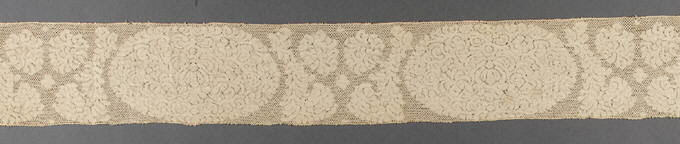
Bobbin lace, with its origins in 16th-century European craftsmanship, is predicated on the systematic crossing and twisting of threads around a rigid pattern. Its inherent aesthetic is one of transparency and porosity, a textile that simultaneously reveals and conceals. In our SS26 proposition, this quality is not a weakness but a profound structural innovation. By treating the lace as a tensile membrane, we invert its historical fragility. The loops and bridges become load-bearing elements, capable of suspending weight, deflecting light, and defining volume without mass. The border here is not a hem or a seam; it is the edge of the void—the point where the garment terminates into the atmosphere, creating a silhouette that is both present and absent.
Consider the “Frontier Lattice” bodice: a complex web of hand-woven bobbin lace executed in a high-tensile nylon-polyester hybrid. The traditional linen threads are replaced with a metallic-infused yarn that holds its shape under tension. The border of this piece is not a clean line but a series of unraveling, fractal-like extensions that mimic the jagged contours of a geopolitical boundary. Each thread end is left raw, suggesting a state of perpetual becoming. This is not a garment that ends; it is a garment that dissolves into space, challenging the viewer to locate where the body ends and the environment begins.
Futuristic Silhouettes: The Silhouette of the Threshold
The SS26 silhouettes are defined by their asymmetrical, cantilevered structures that echo the irregular lines of a demilitarized zone or a contested frontier. The traditional hourglass or A-line is abandoned in favor of forms that are topographical and geological. A key piece, the “Boundary Fracture” coat, is constructed from multiple panels of bobbin lace that are spliced and rejoined at acute angles. The border of each panel is left intentionally frayed, creating a fringed, spectral edge that moves with the wearer like a mirage. The silhouette is not static; it is a dynamic negotiation between the rigid lace structure and the fluidity of the human form.
This is achieved through a technique we call “negative-space arming.” Instead of building volume through padding or stiffening, we carve out the silhouette by removing material. The bobbin lace is engineered to create large, deliberate gaps—holes that are not flaws but functional voids. These voids allow the skin and the environment to become part of the garment’s composition. The border of each void is reinforced with a lattice of twisted threads, creating a tensile strength that prevents distortion. The result is a silhouette that appears to float, as if the garment is a holographic projection held together by invisible forces.
Structural Innovation: The Lace as a Load-Bearing System
The structural innovation of this collection lies in the redefinition of the lace as a truss. In architecture, a truss is a framework of triangles or other polygons that distributes load efficiently. Bobbin lace, with its intersecting threads, is a natural truss system. For SS26, we have developed a proprietary construction method called “Tension-Weave Engineering” that scales this principle to garment scale. The lace is not merely decorative; it is the primary structural element of the garment. The border of each lace section is treated as a stress point, where the threads are doubled or tripled to create a rigid edge that can support the weight of additional materials, such as lightweight resin panels or micro-carbon filaments.
Consider the “Frontier Spine” dress: a vertical column of bobbin lace that runs from the nape of the neck to the hem. The lace is woven in a herringbone pattern that directs stress downward and outward, creating a self-supporting structure. The border of this dress is a continuous, unbroken line of twisted thread that acts as a tension cable, pulling the entire form into a taut, aerodynamic silhouette. There are no seams, no zippers, no fasteners—only the continuous negotiation of thread and void. The garment is donned by stepping into it, the lace stretching and contracting to conform to the body, much like a geodesic dome that adapts to its foundation.
The Global Frontier: Lace as a Cartographic Language
The Global Frontier context imbues the lace with a cartographic dimension. Each thread path is a line of latitude or longitude, a journey across a map. The borders of the lace panels are not arbitrary; they are traced from satellite imagery of actual border zones—the demilitarized zone between North and South Korea, the green line in Cyprus, the Rio Grande. These geopolitical lines are translated into abstract, geometric patterns that disrupt the traditional symmetry of lace. The result is a garment that is a wearable document of global tension, a physical manifestation of the lines that divide and connect humanity.
This is not a nostalgic or sentimental approach. The lace is not a symbol of peace but a record of friction. The raw, unfinished edges of the border mimic the barbed wire and concrete walls that scar the landscape. Yet, the porosity of the lace—the spaces between the threads—suggests permeability and exchange. The garment is a threshold, a place where the body can pass through the border, not as a violation but as a transgressive act of becoming. The wearer is not a citizen of a nation but a citizen of the frontier, a being in constant motion across lines that are both real and imagined.
Conclusion: The Border as a Generative Void
In the final analysis, the border in this SS26 collection is not an end but a beginning. It is the generative void from which new forms emerge. The bobbin lace, with its intricate interplay of presence and absence, becomes the ideal medium for exploring this liminality. The futuristic silhouettes are not about the future as a distant horizon but about the future as a continuous, present-moment negotiation of edges, lines, and thresholds. The structural innovation of the lace as a load-bearing system challenges the very notion of what a garment can be—no longer a covering, but a dynamic, tensile architecture that defines space by its boundaries. Zoey Fashion Laboratory’s SS26 collection is a manifesto for a new kind of fashion: one that builds from the border outward, celebrating the fracture, the gap, and the edge as sites of radical possibility.