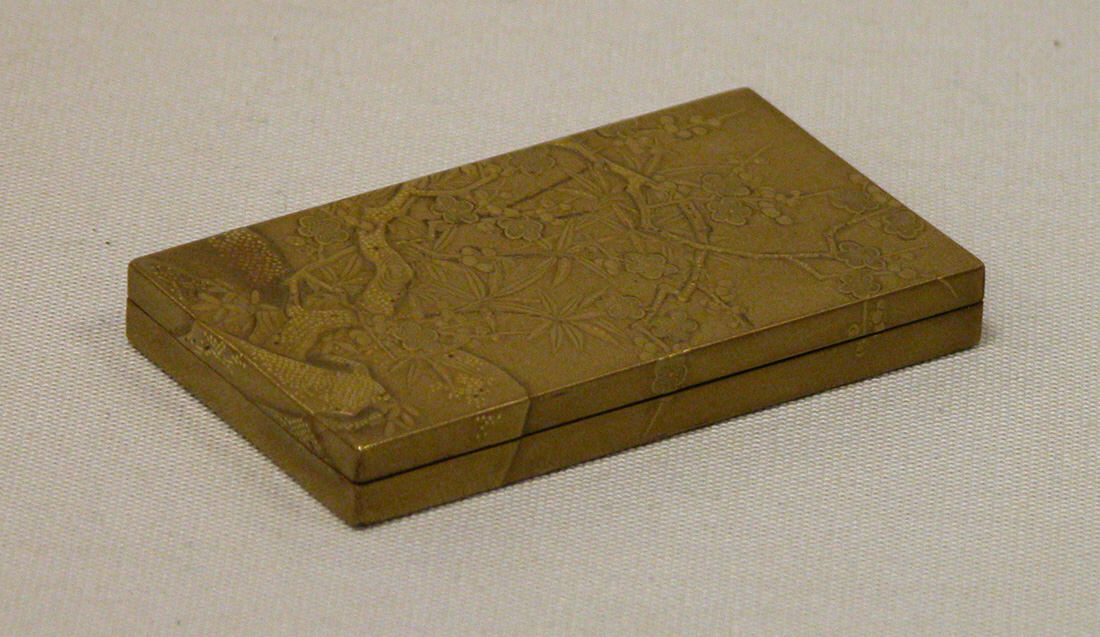
Kobako: Lacquer as a Structural Manifesto for SS26
In the relentless pursuit of architectural transcendence, the fashion laboratory must look beyond the textile archive and into the objecthood of cultural artifacts. The Kobako—a Japanese incense box, lacquered in deep obsidian and accented with gold—is not merely a decorative vessel. It is a structural thesis. For Zoey Fashion Laboratory’s SS26 collection, this artifact becomes a computational blueprint for reimagining the human silhouette as a series of rigid, yet fluid, volumetric modules. The Kobako’s lacquer finish, a material of extreme durability and reflective depth, offers a radical departure from traditional fabric draping. Here, we explore how its geometry, materiality, and cultural weight can be deconstructed into avant-garde garments that defy seasonality and function as wearable sculpture.
The Geometry of Containment: Silhouette as a Closed System
The Kobako’s defining feature is its perfect rectilinear form—a cube or rectangular prism with a tightly fitted lid. In couture terms, this translates into a silhouette that rejects the organic curves of the body in favor of a rigid, container-like architecture. For SS26, envision a jacket that is not draped but assembled: shoulder panels that extend into sharp, cantilevered edges, mimicking the Kobako’s precise corners. The sleeves become detachable, hollow cylinders, lacquered in black with gold leaf inlays, attached via magnetic closures that echo the box’s lid mechanism. This is not a garment that moves with the body; it is a garment that contains the body, transforming the wearer into a living vessel. The waist is cinched not by a belt, but by a structural corset of layered lacquer strips, each shard polished to a mirror finish, creating a visual break that mirrors the Kobako’s lid-to-base division.
Material Alchemy: Lacquer as a Futuristic Skin
Traditional lacquer—urushi—is a natural polymer that cures into an impervious, glass-like surface. For the laboratory, this material is a gateway to a new textile paradigm: the fusion of organic resin with metallic reinforcement. Imagine a bodysuit constructed from flexible, lacquer-infused carbon fiber panels, each segment heat-pressed to achieve the characteristic deep, glossy black. The gold accents are not mere embellishments but structural hinges—thin, gilded titanium joints that allow the rigid panels to articulate. The result is a second skin that is simultaneously armored and fluid, reflecting light in unpredictable patterns. This material innovation allows for zero-waste construction: each panel is precision-cut using CNC milling, with no fabric waste, aligning with the laboratory’s commitment to sustainable futurism. The lacquer’s scent—a subtle, smoky aroma from the curing process—becomes an olfactory signature, a ghost of the Kobako’s original incense function.
Structural Innovation: The Lid as a Modular Component
The Kobako’s lid is not merely a cover; it is a discrete, functional element. In SS26, this principle is applied to modular garment construction. Consider a coat that features a removable, lacquered hood—the lid—that can be detached and worn as a separate headpiece or even a handheld object. The hood’s interior is lined with gold leaf, creating a reflective cavity that amplifies thermal regulation and visual drama. Similarly, sleeves and skirt panels become interchangeable “lids” that snap onto a central bodice frame. This modularity allows the wearer to reconfigure their silhouette from a closed, boxy form to an open, asymmetrical line, depending on context. The locking mechanisms are inspired by traditional Japanese joinery—mortise and tenon joints executed in burnished brass—visible as deliberate design elements, not hidden hardware.
Deconstructive Aesthetics: The Unfinished Lacquer
Avant-garde couture thrives on the tension between perfection and decay. The Kobako, in its pristine state, is flawless. But for SS26, we introduce a deconstructive treatment: the intentionally cracked lacquer. Through thermal shock, select panels are fractured in controlled patterns, revealing a raw, metallic underlayer—a nod to the wabi-sabi philosophy of impermanence. These cracks are stabilized with gold resin (kintsugi), turning flaws into luminous veins. A dress might feature a bodice where the lacquer surface is entirely shattered, with gold lines tracing the fractures like lightning bolts. The skirt, in contrast, remains smooth and glossy, creating a dialogue between destruction and preservation. This technique challenges the notion of luxury as immaculate surface, proposing instead that beauty lies in the artifact’s history of stress and repair.
Futuristic Silhouettes: The Kobako as a Wearable Cube
The most radical silhouette for SS26 is the “Kobako Cube”—a garment that is a literal translation of the box into a wearable form. Imagine a tunic constructed from six lacquered panels, each hinged at the edges, forming a cube that encases the torso. The wearer steps inside through a hidden seam, and the cube is secured with gold clasps. Armholes are cut as precise squares, and the neckline is a perfect rectangle. This is not a garment for movement in the traditional sense; it is a garment for static presentation, for the runway as a gallery. Yet, through the use of micro-hinges, the cube can partially collapse, allowing the wearer to sit or gesture. The effect is both architectural and absurd—a celebration of form over function, a statement that fashion can be pure geometry.
Cultural Context: The Kobako as a Time Capsule
The Kobako is historically a container for incense, used in tea ceremonies and religious rituals. Its gold accents signify wealth and spiritual purity. In SS26, this cultural weight is recontextualized as a commentary on preservation and memory. The garments are designed to be heirlooms—objects that are passed down, their lacquer patina deepening with age. The collection includes a series of “incense pockets”: small, lacquered pouches sewn into the linings of coats, designed to hold dried herbs or synthetic scent capsules. These pockets are invisible from the outside, yet they imbue the garment with a ritualistic function. The wearer becomes a keeper of fragrance, a living Kobako. This fusion of historical reverence and futuristic material science positions the collection as a bridge between ancient craft and speculative design.
Conclusion: The Kobako as a Manifesto
Zoey Fashion Laboratory’s SS26 analysis of the Kobako is not a mere homage to Japanese craft. It is a declaration that the future of couture lies in the objectification of the body. By treating the human form as a container—a vessel for lacquer, gold, and structural innovation—we challenge the very definition of clothing. The Kobako teaches us that beauty is not in fluidity but in precision, not in softness but in hardness. These garments are not worn; they are inhabited. They are not designed; they are engineered. For the avant-garde, the Kobako is not a artifact of the past; it is a blueprint for the next century of fashion. The laboratory’s task is to execute this vision with the same exacting rigor as the master lacquerers of Kyoto—every panel a prayer, every hinge a promise of transformation.