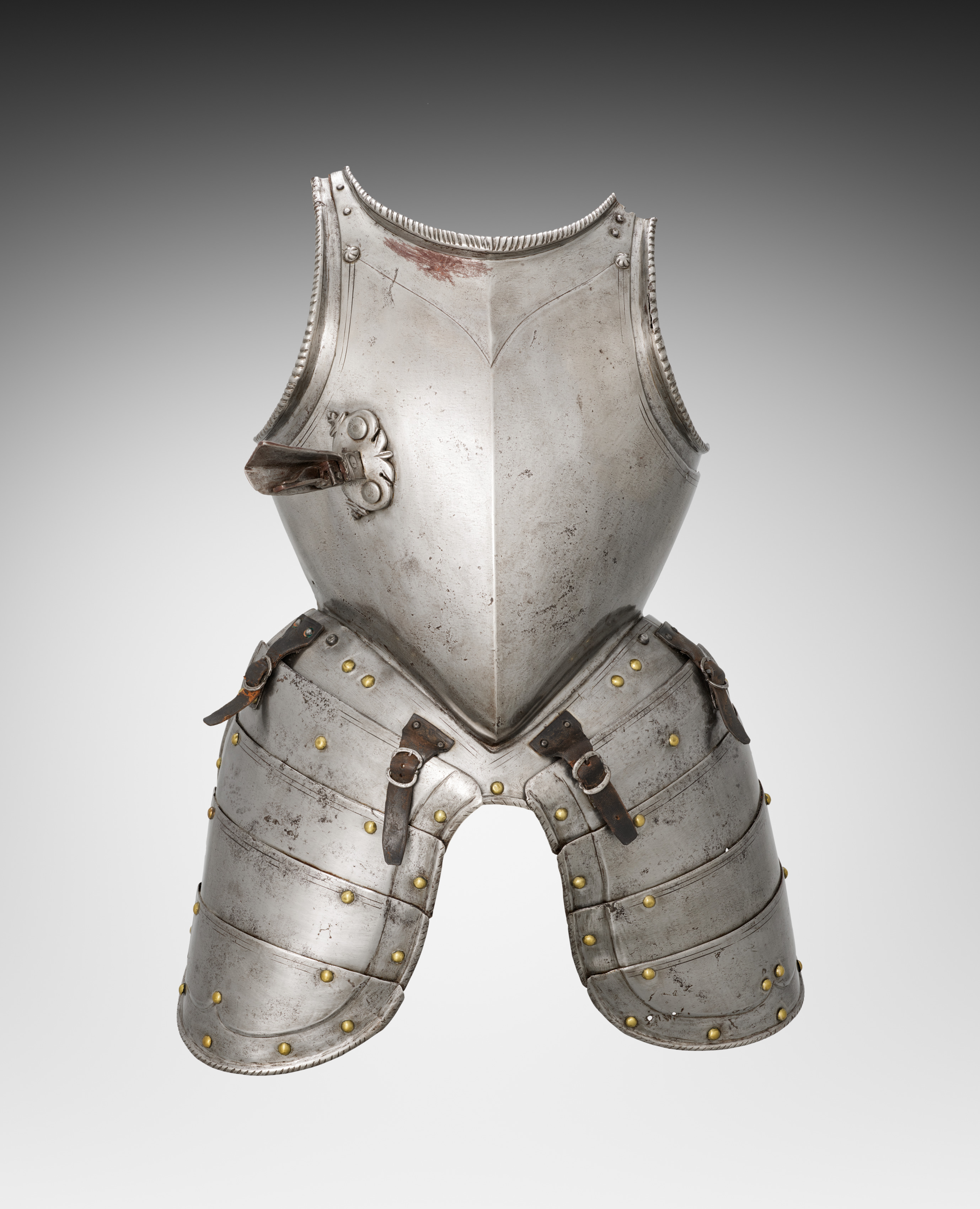
Deconstructing the 16th Century Breastplate: A New DNA Strand for Avant-Garde Fashion
At Zoey Fashion Lab, our mission is to reimagine historical artifacts as living, breathing components of contemporary design. The subject of this analysis—a South German breastplate from the 16th century—is not merely a relic of martial history; it is a structural blueprint for a new paradigm in avant-garde fashion. Crafted from steel, leather straps, and brass rivets, this piece embodies a paradox: it is both a cage and a shield, a symbol of rigid protection and intimate vulnerability. By deconstructing its technical, material, and symbolic DNA, we unlock a series of design principles that challenge the boundaries of modern garment construction.
Materiality as Narrative: Steel, Leather, and Brass
The breastplate’s core materials—steel, leather, and brass—are not accidental. Each carries a distinct weight in the context of 16th-century South German armor, but for Zoey Fashion Lab, they represent a new material lexicon for avant-garde expression. Steel, cold and unyielding, speaks to the human desire for invulnerability. In our reinterpretation, steel is not a barrier but a fluid membrane. We propose laser-cut steel scales that articulate like fish skin, allowing for movement while retaining the visual impact of armor. This transforms the breastplate from a static object into a kinetic sculpture.
Leather straps, originally used to bind the steel plates to the body, become the connective tissue between the wearer and the garment. In the original, these straps were functional; in our design, they are expressive. We envision leather as a second skin—dyed in deep, oxidized tones or left raw to age with the wearer. The straps can be reconfigured, allowing the breastplate to be worn as a corset, a harness, or an asymmetrical shoulder piece. This modularity is key to the avant-garde ethos: the garment is not fixed but evolves with the wearer’s identity.
Brass rivets, the smallest yet most crucial elements, serve as nodes of connection. In the 16th century, they held the armor together; in our lab, they become decorative anchors that invite touch and examination. We propose using oversized, hand-hammered brass rivets that contrast with the steel’s coolness, creating a visual rhythm. These rivets can be arranged in patterns that mimic the human ribcage or spine, turning the breastplate into a wearable anatomical chart. The brass also tarnishes over time, adding a layer of organic decay that aligns with the avant-garde fascination with impermanence.
Structural Deconstruction: From Armor to Architecture
The breastplate’s form—a convex shell that mirrors the male torso—is a masterpiece of ergonomic engineering. Yet, to fit the avant-garde vision, we must break its symmetry. The original design prioritizes protection; our reinterpretation prioritizes tension. We propose slicing the breastplate into overlapping panels that are suspended from a central spine. This creates a fragmented silhouette that reveals the body beneath, challenging the armor’s original purpose of concealment. The gaps between panels can be filled with transparent materials, such as cast resin or fine mesh, to play with visibility and exposure.
The leather straps are reimagined as structural tendons. In the original, they were hidden; in our design, they are exposed and exaggerated. Straps can be woven through the steel panels like a corset lacing, allowing the wearer to adjust the fit and tension. This introduces a performative element: the act of dressing becomes a ritual of binding and release. The brass rivets, now placed at the intersections of straps and steel, become pivot points that allow the panels to rotate slightly, creating a dynamic, almost robotic movement.
We also explore the breastplate’s negative space. The original armor left the back and sides exposed, relying on the wearer’s body for closure. In our design, we invert this: the breastplate becomes a front-facing exoskeleton, while the back is a web of leather and brass—a lattice that echoes the ribcage. This duality—hard front, soft back—mirrors the tension between strength and vulnerability that defines the avant-garde.
Symbolic Recontextualization: The New DNA Strand
The breastplate is a DNA strand of historical memory, encoding centuries of warfare, status, and craft. To translate this into an avant-garde garment, we must extract its symbolic essence and recombine it with contemporary concerns. The original breastplate was a marker of nobility and masculinity; our version challenges these associations. We propose a unisex form that exaggerates the pectoral and sternum lines, creating a sculptural silhouette that transcends gender. The steel can be patinated to resemble organic textures—bone, bark, or stone—blurring the line between the human and the mineral.
The leather straps become metaphors for bondage and liberation. In the 16th century, they bound the armor to the body; in our design, they can be loosened or tightened, symbolizing the wearer’s control over their own presentation. The brass rivets, often used in armor to denote rank, are now arranged in abstract patterns that suggest a new hierarchy—one based on creativity rather than birth. We might engrave each rivet with a unique code, turning the breastplate into a personalized artifact.
Finally, the reference to a "New DNA Strand" implies a genetic recombination. We propose that the breastplate be produced in limited, numbered editions, each with a unique combination of steel, leather, and brass. This seriality mirrors the uniqueness of DNA, making each garment a one-of-a-kind mutation. The wearer becomes both the host and the architect of this new biological form.
Design Application: The Zoey Fashion Lab Breastplate
Our final design for the avant-garde breastplate integrates all these principles. The steel is cut into seven interlocking panels that mimic the human ribs, each connected by a central brass spine. The leather straps are dyed a deep burgundy—a nod to the blood and iron of the original—and are laced through the steel panels in a crisscross pattern. The brass rivets are oversized and hammered, placed at the junctions where the straps meet the steel. The back is left open, with a single leather strap that crosses the spine, held in place by a large brass buckle.
This breastplate is not a costume; it is a wearable sculpture that challenges the wearer to engage with history, materiality, and identity. It can be paired with sheer fabrics, distressed denim, or even another breastplate worn backwards. The possibilities are endless because the DNA of the original has been deconstructed and recombined into a new, living form. At Zoey Fashion Lab, we do not replicate the past; we mutate it into the future.