Deconstructing the Steel Breastplate: A New DNA Strand for Zoey Fashion Lab
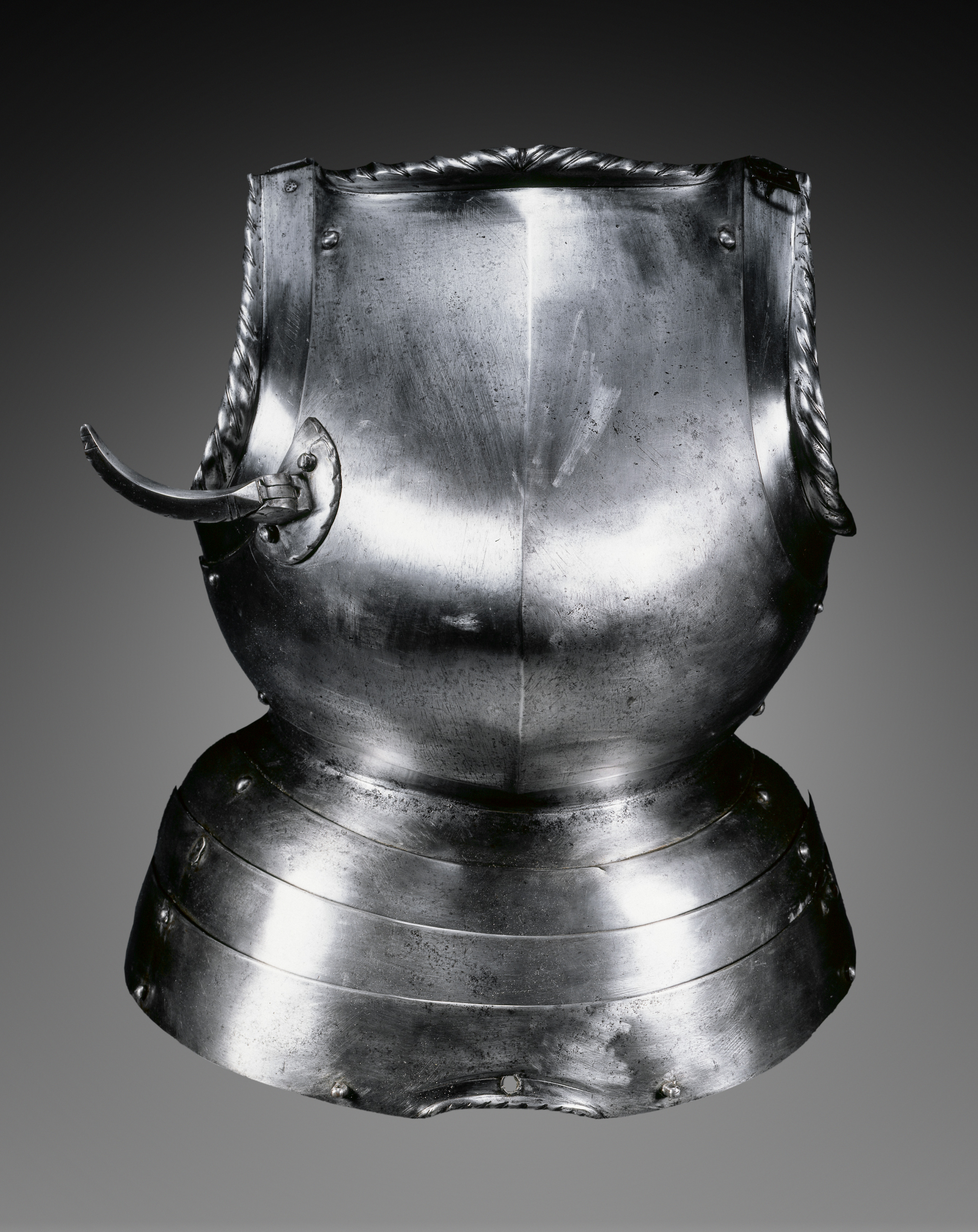
As Chief Fabric Deconstructionist at Zoey Fashion Lab, my role is to interrogate the very fabric of fashion—its materials, its histories, and its potential futures. The subject before us is a steel breastplate, originating from Germany. This is not a mere piece of armor; it is a foundational artifact, a historical shell of protection and status. Our task is to deconstruct it not as a relic, but as a New DNA Strand for an avant-garde collection. We will extract its genetic code—its structural integrity, its cultural weight, its brutalist poetry—and re-sequence it into a living, breathing garment that challenges the boundaries of modern fashion.
I. The Historical Fabric: Steel as a Second Skin
The German steel breastplate, particularly from the 15th and 16th centuries, represents a pinnacle of metallurgical craft. It was not simply a piece of metal; it was a second skin designed for survival. The breastplate’s form follows the male torso with obsessive precision—curved to deflect blows, articulated at the shoulders, and polished to a mirror-like finish that both intimidates and dazzles. In the context of Zoey Fashion Lab, we must view this as a fabric of extreme tension: steel that is simultaneously rigid and fluid, cold and alive.
For the avant-garde, this historical weight is invaluable. The breastplate carries the DNA of power, protection, and performance. It is a garment that declares its function before its aesthetic. Our deconstruction begins by stripping away its historical narrative—the knight, the battle, the chivalric code—and focusing on its pure material essence: the way it compresses the human form into a silhouette of immovable strength. This is the first strand of our new DNA: structural armor as a fashion language.
II. Technical Deconstruction: The Steel as a Living Material
Steel is not a conventional fabric. It does not drape, stretch, or breathe. Yet for the avant-garde designer, these limitations become opportunities. Our analysis must consider the technical properties of the German breastplate: its gauge (typically 1-2 mm thick), its alloy (often carbon steel for hardness), and its construction (hammered, rolled, and riveted).
To re-sequence this material into a New DNA Strand, we must treat steel as a living textile. This involves several key technical propositions:
1. Subversion of Rigidity: Traditional steel breastplates are monolithic. For Zoey Fashion Lab, we propose a segmented steel weave. By laser-cutting the breastplate into interlocking scales or chainmail-like links, we can create a garment that retains the visual and tactile authority of steel while allowing for articulation and movement. This is not armor; it is a steel exoskeleton that breathes with the wearer.
2. Surface as Narrative: The polished surface of the German breastplate is a canvas. We can introduce patination, oxidation, and etching to create a living patina that evolves with wear. This mimics the natural aging of organic fabrics like denim or leather, but with a metallic permanence. The steel becomes a record of the body—scratches, dents, and fingerprints become part of the garment’s biography.
3. Integration with Soft Materials: The new DNA strand must hybridize. We propose fusing the steel breastplate with recycled carbon fiber, bio-plastics, or even 3D-printed mycelium. This creates a gradient from hard to soft, from historical to futuristic. The steel becomes the spine of the garment, while the softer materials form the flesh. This is a literal deconstruction of the binary between armor and clothing.
III. Avant-Garde Styling: The Breastplate as a Statement of Identity
In the avant-garde context, the steel breastplate is not a costume piece; it is a declaration of self. Our reference to a New DNA Strand implies a genetic mutation—a re-coding of the body’s relationship with clothing. The breastplate must be reimagined as a wearable sculpture that challenges conventional notions of gender, vulnerability, and strength.
1. Androgyny and the Armored Silhouette: The traditional breastplate is male-coded. For Zoey Fashion Lab, we will re-cut the form to accommodate a wide range of body types, including non-binary and female torsos. The steel can be molded to accentuate or obscure anatomical features, creating a silhouette that is both protective and provocative. This is armor as a gender-fluid second skin.
2. Theatricality and Performance: The breastplate’s historical purpose was to be seen—on the battlefield, in the tournament, in the portrait. Our avant-garde version must retain this performative quality. We can incorporate integrated LED lighting or electroluminescent panels within the steel’s surface, turning the garment into a living light source. Alternatively, we can use acoustic resonance—the steel can be tuned to vibrate with the wearer’s movements, producing a subtle, percussive sound.
3. Deconstruction as Narrative: The most powerful avant-garde gesture is to break the breastplate—to show its seams, its fractures, its vulnerability. We can leave sections unfinished, with raw edges and exposed rivets. This is not a sign of failure but of honesty. The garment tells the story of its own making, its own history, and its own potential for rebirth. This is the essence of the New DNA Strand: a garment that is never complete, always evolving.
IV. The Zoey Fashion Lab Protocol: From Artifact to Artifact
To bring this deconstruction to life, Zoey Fashion Lab must follow a specific protocol. First, we acquire an authentic German steel breastplate—preferably a damaged or deaccessioned piece from a museum or private collection. Second, we digitally scan the breastplate to create a 3D model. Third, we reverse-engineer its construction, mapping its stress points, its curves, and its historical wear patterns. Fourth, we re-sequence the design using parametric modeling software, allowing us to adjust the steel’s thickness, segmentation, and integration with other materials.
The final step is prototyping. We will create a series of wearable samples, each exploring a different aspect of the New DNA Strand: one that emphasizes movement, one that emphasizes light, one that emphasizes decay. These prototypes will be tested on live models, not just for fit but for emotional resonance. How does the wearer feel when encased in reimagined steel? Does it empower or constrain? Does it evoke the past or the future?
V. Conclusion: The Armor of Tomorrow
The German steel breastplate is not a relic; it is a blueprint. For Zoey Fashion Lab, it represents the ultimate challenge: to transform a material of absolute rigidity into a fabric of infinite possibility. By treating steel as a New DNA Strand, we are not merely creating a garment; we are re-coding the language of fashion itself. The breastplate becomes a metaphor for the avant-garde: a protective shell that is also a site of vulnerability, a historical artifact that is also a futuristic vision, a piece of armor that is also a work of art.
In the hands of Zoey Fashion Lab, the steel breastplate will no longer be a relic of war. It will be a living garment—a second skin of steel and light, of history and mutation, of power and poetry. This is the new strand of DNA we are weaving into the fabric of fashion. And it is unbreakable.