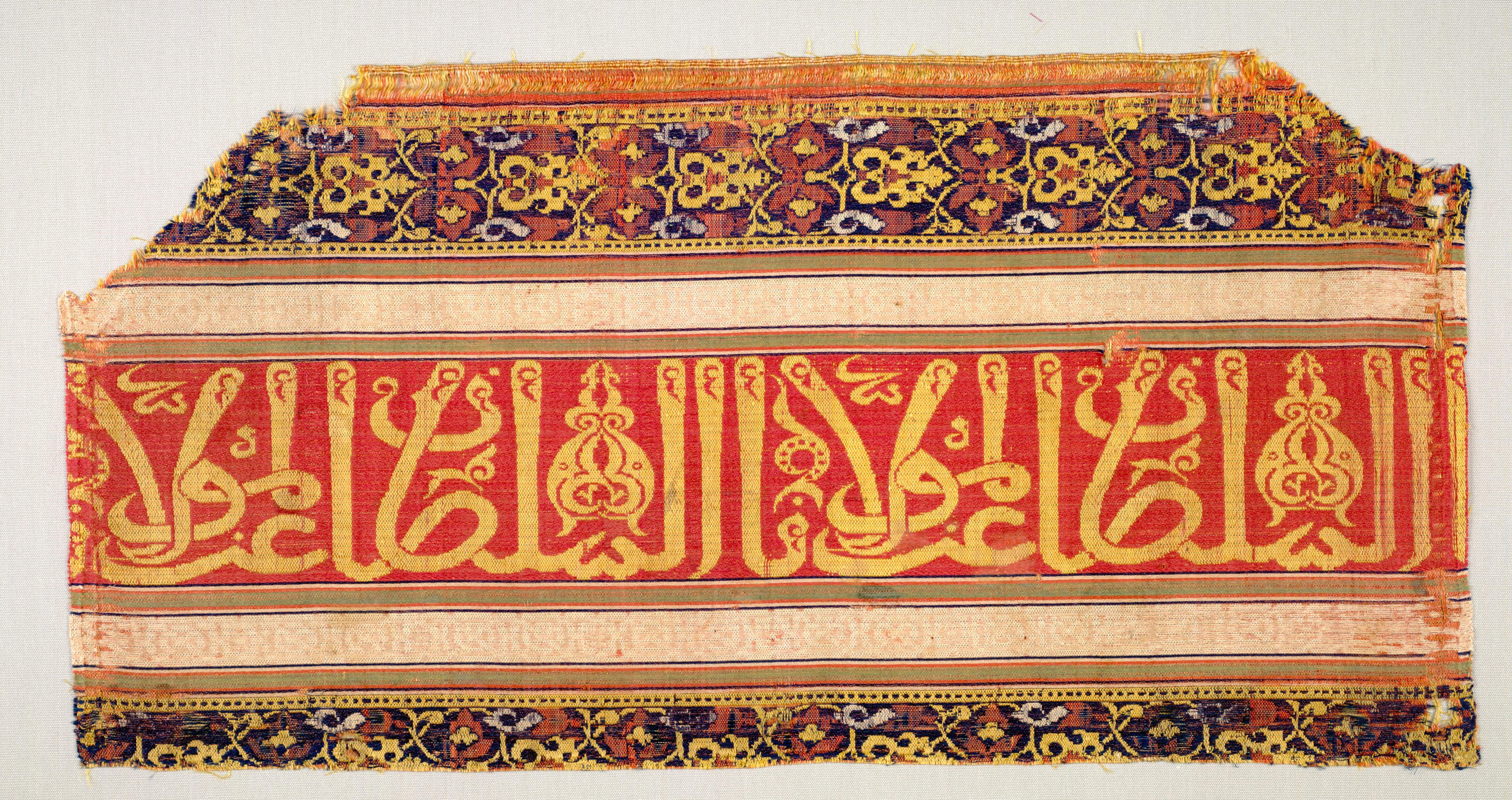
Deconstructing the Nasrid Strand: An Avant-Garde Analysis of Striped Silk from Granada
At Zoey Fashion Lab, the role of the Chief Fabric Deconstructionist is to transcend the conventional boundaries of textile analysis. We do not merely identify fibers and weaves; we interrogate their historical, cultural, and kinetic DNA. The subject of this deconstruction is a fragment of striped silk from the Nasrid period in Granada, Spain—a textile woven with technical mastery in a lampas weave. This piece, referred to internally as "New DNA Strand," is not a relic to be preserved in a museum case. Rather, it is a living, volatile element to be re-engineered for an avant-garde fashion future. Our analysis will dismantle its physical structure, decode its historical resonance, and propose a radical reinterpretation that honors its origins while propelling it into the realm of the unprecedented.
Technical Autopsy: The Lampas Weave and Its Structural DNA
The foundational technical merit of this Nasrid silk lies in its lampas weave. Unlike simpler compound weaves, lampas is a sophisticated, multi-layered structure. It employs a main warp and a binding warp, with a pattern weft that floats on the surface, creating a complex interplay of ground and figure. In this specific fragment, the silk warp threads are tightly spun, providing a resilient, almost metallic base. The pattern wefts, likely dyed with natural madder and indigo, form the distinctive stripes. The structural DNA here is one of controlled tension and deliberate contrast. The stripes are not merely decorative; they are a result of alternating yarns of different thicknesses and twist directions, creating a subtle optical vibration. For the avant-garde designer, this is not a flat pattern but a three-dimensional topographical map. The lampas weave creates a raised, ribbed texture where the stripes meet, offering a tactile landscape that can be exploited through laser-cutting or heat-shrinking techniques. We propose deconstructing this weave by isolating the binding warp threads, effectively "unzipping" the fabric into its constituent layers, then re-laminating them with a thermoplastic film to create a rigid, sculptural material that retains the original stripe rhythm but in a new, structural form.
Historical Resonance: The Nasrid Code and Granada's Legacy
This silk originates from the Nasrid period (1232–1492), the final Islamic dynasty in Spain, centered in Granada. The Alhambra palace complex is the architectural echo of this textile's aesthetic. The stripes in Nasrid silk are not random; they are a coded visual language referencing the al-tiraz tradition—royal workshops that produced inscribed textiles, often bearing the ruler's name or blessings. The stripes themselves, typically in green, white, and red, are thought to symbolize the paradise gardens of Islamic cosmology, with water channels (stripes) dividing lush vegetation. For the avant-garde, this historical DNA is a narrative of power, spirituality, and cultural synthesis. To honor this, we do not replicate the pattern but recontextualize its semantic weight. We propose a garment that uses the striped silk as a "palimpsest"—a surface upon which the original dye recipes are digitally scanned and then re-printed using bio-luminescent bacteria. The stripes would glow faintly in darkness, referencing the star-filled Andalusian sky, while the lampas texture becomes a tactile Braille-like code for the Nasrid royal lineage. This transforms the garment from a historical artifact into a living, breathing document of cultural memory.
Avant-Garde Reinterpretation: The New DNA Strand
The "New DNA Strand" reference is critical. We view this silk not as a finished product but as a genetic strand to be spliced, mutated, and re-expressed. The avant-garde aesthetic demands a break from the planar, two-dimensional garment. Our deconstruction proposes the following radical interventions:
1. De-Weaving and Re-Spinning: The lampas weave is to be carefully unravelled, not into threads, but into ribbon-like strips of the original fabric. These strips are then twisted with a conductive silver-coated nylon filament. The result is a "smart yarn" that retains the historical silk's color and texture but now carries electrical conductivity. This yarn can be woven into a new textile using a digital jacquard loom, creating a garment that changes color or emits light in response to the wearer's biometric data—heart rate, temperature, or even emotional state. The stripes of the original become the circuits of the future.
2. Negative Space and Architectural Armature: The original silk's lampas structure is inherently architectural, with its warp and weft acting as beams and columns. We propose a garment that inverts this architecture. Using a 3D-printed nylon exoskeleton, we will suspend the original silk fragments as floating panels, held away from the body. The stripes, once flat, become a kinetic screen that shifts with movement, creating moiré patterns. The negative space between the silk and the body becomes the new "fabric"—a void filled with the wearer's presence. This echoes the Nasrid concept of muqarnas (stalactite vaulting), where the structure is as important as the surface.
3. Decomposition as Design: The natural silk fibers of the Nasrid fragment are protein-based and biodegradable. For a truly avant-garde statement, we propose a time-based garment that begins as a complete striped silk dress but is treated with a bacterial culture that gradually decomposes the silk in specific, patterned areas. Over weeks, the dress would "erode," revealing a second layer of a bio-fabricated cellulose mesh underneath, printed with a digital map of Granada's Albaicín district. The decomposition is not destruction but transformation, referencing the inevitable decay of all historical artifacts while creating a new, ephemeral beauty. The stripes of the original become the pathways of the decomposition process, guiding the bacteria like water channels in a garden.
Conclusion: The Future of the Past
This Nasrid striped silk is not a finished garment; it is a provocation. Its lampas weave offers a technical puzzle; its historical stripes offer a narrative code; its origin in Granada offers a cultural gravity. For Zoey Fashion Lab, the avant-garde is not about ignoring history but about reanimating it through rupture. The "New DNA Strand" garment will be a living archive—a piece that speaks of Islamic Spain's sophistication while shouting a futuristic, disruptive language. It will be a garment that is at once a relic and a prophecy, a fabric that remembers its past while being forced to imagine its future. This is the deconstructionist's mandate: to find the hidden threads and pull until the entire fabric of history unravels into something new.