Sacred Geometry in Motion: Deconstructing the Via Sacra for SS26
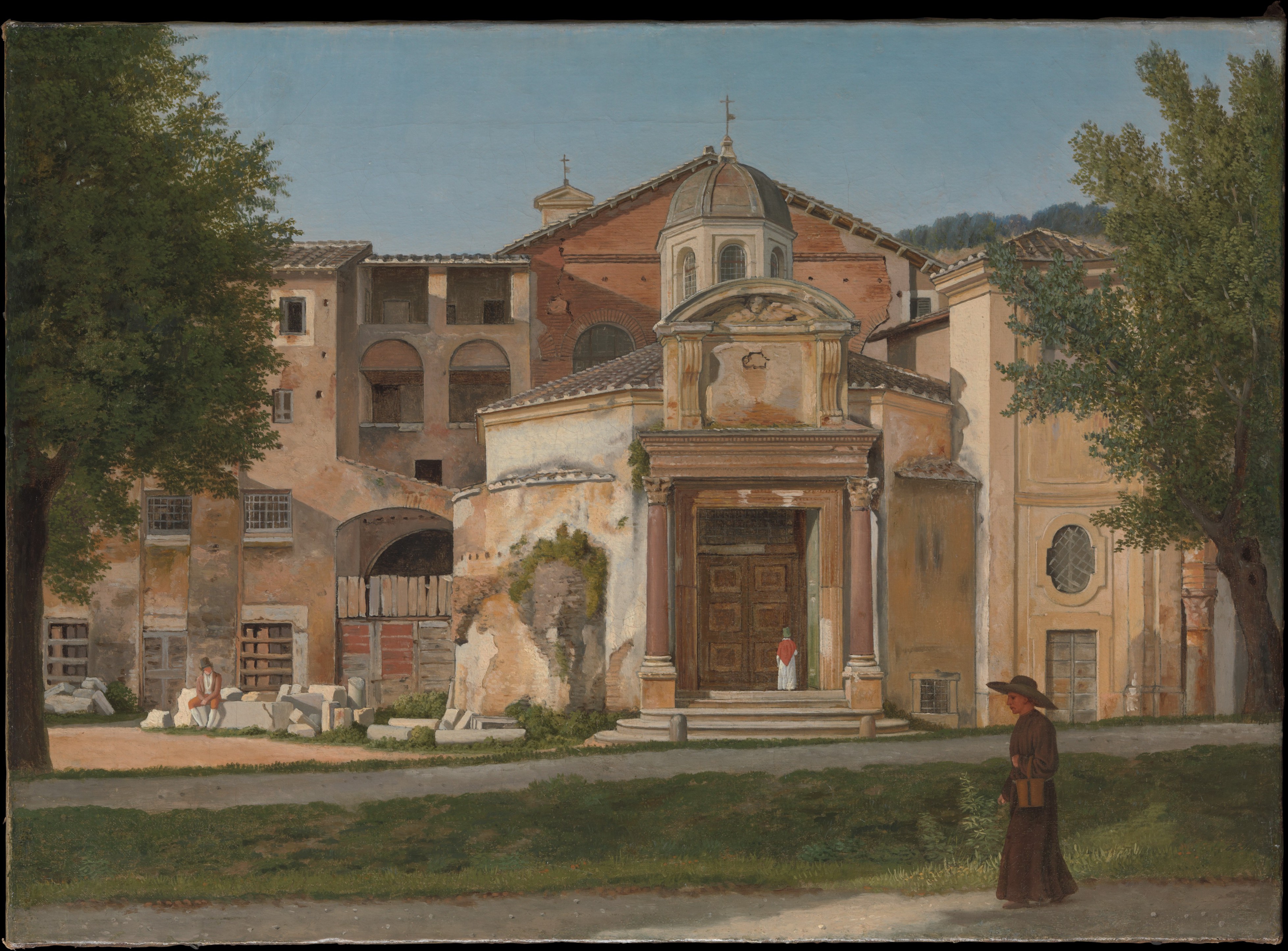
The intersection of sacred architecture and avant-garde fashion represents a profound dialogue between permanence and ephemerality, between the divine and the corporeal. For Zoey Fashion Laboratory’s SS26 collection, we have selected a specific fragment of the Via Sacra in Rome—the Church of Saints Cosmas and Damian—as a foundational text. This 6th-century basilica, built upon the ruins of the Temple of Peace and the Roman Forum, embodies a layered, palimpsestic history that resonates deeply with our deconstructive ethos. The oil-on-canvas study of this site, rendered in raw, unvarnished strokes, becomes not merely a reference but a blueprint for futuristic silhouettes and structural innovation. This analysis dissects how the church’s architectural vocabulary—its triumphal arch, its apse mosaic, its stratified foundations—can be translated into a wearable, avant-garde system of garment architecture.
The Palimpsest Principle: Layering as Structural Innovation
The Church of Saints Cosmas and Damian is a masterclass in stratified construction. Its very ground plan reveals superimposed epochs: the Republican-era Via Sacra, the Imperial Temple of Peace, and finally the Christian basilica. For SS26, this principle of palimpsest informs a radical approach to garment layering. We move beyond mere fabric stacking; we propose architectural strata that are both visible and functional. Consider a coat whose outer shell mimics the basilica’s 6th-century apse mosaic—a rigid, almost ceramic panel laser-cut from recycled PET or bio-resin, depicting a fragmented Christ in Majesty. Beneath this, a second layer, cut from a translucent, thermo-sensitive polymer, reveals the ghost of the Roman Forum’s travertine paving. A third, innermost layer, a micro-perforated silk organza, echoes the Via Sacra’s basalt blocks, allowing air to circulate through the garment’s “ruins.” The innovation lies not in the layers themselves but in their differential rigidity: the outer shell stands proud and immovable, the middle layer shifts with temperature, and the innermost skin breathes with the wearer’s movement. This creates a living architecture, where the garment’s structural integrity is a function of its own history.
From Arch to Silhouette: The Triumphal Arch as Shoulder Armature
The defining architectural feature of Saints Cosmas and Damian is its triumphal arch, a monumental opening that frames the apse. In our SS26 translation, this arch becomes a shoulder armature—a structural exoskeleton that redefines the human silhouette. We reject the natural curve of the clavicle in favor of a sharp, parabolic cantilever. Using a combination of carbon-fiber rods and 3D-printed titanium nodes, we construct a shoulder piece that projects outward and upward, mimicking the arch’s span. The fabric—a metallic organza woven with copper threads—is tensioned across this armature like the arch’s intrados. The result is a silhouette that is simultaneously protective and vulnerable: the arch shields the upper torso while leaving the neck and chest exposed, echoing the basilica’s open, welcoming portal. This is not a costume; it is a wearable structural system that reorients the wearer’s posture, forcing a regal, forward-facing stance. The arch’s keystone is reinterpreted as a magnetic clasp at the sternum, allowing the armature to be disassembled and reconfigured—a nod to the dismantling and rebuilding of the original Roman structures.
Mosaic as Modular Textile: Pixelated Devotion
The apse mosaic of Saints Cosmas and Damian—a stunning vision of Christ descending on a golden sky—offers a radical textile innovation for SS26. We propose modular mosaic panels that function as both fabric and armor. Each “tessera” is a hexagonal or triangular unit, 3D-printed from a bioplastic composite infused with crushed marble and gold leaf. These units are not sewn; they are magnetically linked to a flexible, conductive base layer. The wearer can reconfigure the mosaic in real time—spreading it across the back for a full cape, concentrating it on the chest for a breastplate, or dispersing it into a cascading skirt. This modularity is a direct response to the mosaic’s original function: it was not a static image but a devotional tool, meant to be read in sections as light shifted across the apse. In SS26, the garment becomes a dynamic icon, its surface changing with the wearer’s gestures. A microcontroller embedded in the base layer can even trigger a subtle vibration in specific tesserae, creating a haptic, meditative experience—a technological glossolalia that echoes the mosaic’s divine imagery.
Stratified Foundations: The Via Sacra as a Ground Plane
Below the church lies the Via Sacra itself—a sacred road paved with massive basalt blocks. This ground plane becomes the foundation for our footwear and lower-body silhouettes. We propose a stratified boot whose sole is a direct cast of the Via Sacra’s uneven surface. Using photogrammetry of the original stones, we create a 3D-printed sole in recycled aluminum, with each block’s irregular shape preserved. The upper of the boot is a single piece of laser-cut, heat-molded leather that rises in a continuous sweep to the mid-thigh, mimicking the road’s upward gradient toward the Capitoline Hill. The heel is a negative space—a hollowed-out arch that creates an optical illusion of floating, as if the wearer is suspended above the ancient stones. This boot is not merely a shoe; it is a measure of time, a literal footprint of history. For the lower garment, we introduce a deconstructed skirt composed of rigid, segmented panels that articulate like basalt paving stones. Each panel is hinged with titanium hardware, allowing the skirt to shift from a narrow column to a wide, processional form. The interior is lined with a crushed velvet that references the church’s liturgical textiles, creating a tactile contrast between the hard, historical exterior and the soft, devotional interior.
Light and Shadow: The Apse as a Photonic Environment
The apse of Saints Cosmas and Damian is a masterwork of light manipulation. The mosaic’s gold background catches the morning sun, creating a halo effect around the figures. For SS26, we translate this into a photonic garment that manipulates ambient light. The outer shell of a trench coat is woven from a proprietary optical fiber yarn that channels light from micro-LEDs at the collar to the hem. The pattern of illumination is programmed to mimic the sun’s path across the apse—starting at the left shoulder at dawn, intensifying at the chest at noon, and fading at the right hip at dusk. This is not mere decoration; it is a structural element. The optical fibers are interwoven with shape-memory alloys that contract when heated by the LEDs, causing the fabric to pleat and billow in response to the light cycle. The coat becomes a living, breathing organism, its silhouette shifting with the time of day. This innovation challenges the static nature of traditional couture, proposing a garment that is temporally responsive—a wearable clock, a calendar, a sundial.
Deconstructing the Altar: The Cruciform as a Silhouette System
The altar of the church, with its cruciform plan, provides a final structural innovation. We deconstruct the cross into a modular silhouette system that can be worn as a harness, a cape, or a full-body exoskeleton. The cross’s vertical beam becomes a central spine of carbon fiber that runs from the nape of the neck to the base of the spine. The horizontal beam is articulated at the shoulders, allowing it to pivot and lock into multiple positions. When locked horizontally, it creates a powerful, cruciform silhouette that dominates the space. When pivoted forward, it forms a protective cage around the torso. When pivoted backward, it becomes a dramatic train, echoing the processional cloaks of the basilica’s clergy. The entire system is connected by a network of tension cables and ratchets, allowing the wearer to adjust the silhouette in seconds. This is couture as performance architecture—a garment that is both a statement of faith and a tool for spatial negotiation.
Conclusion: The Via Sacra as a Living Laboratory
The Church of Saints Cosmas and Damian is not a relic; it is a living laboratory for structural innovation. By deconstructing its architectural vocabulary—its arches, mosaics, foundations, and light—we have generated a vocabulary for SS26 that is both historically anchored and radically futuristic. The palimpsest principle gives us layered, differential rigidity. The triumphal arch becomes a shoulder armature. The mosaic becomes a modular, magnetic textile. The Via Sacra becomes a stratified boot. The apse’s light becomes a photonic, shape-shifting garment. The altar’s cross becomes a modular silhouette system. This is not fashion as decoration; it is fashion as sacred geometry in motion. The wearer becomes a living monument, a walking palimpsest, a fragment of the Via Sacra itself. For Zoey Fashion Laboratory, SS26 is not a collection; it is a structural manifesto—a proof of concept that architecture, history, and the body can coalesce into a new, avant-garde form of wearable art.