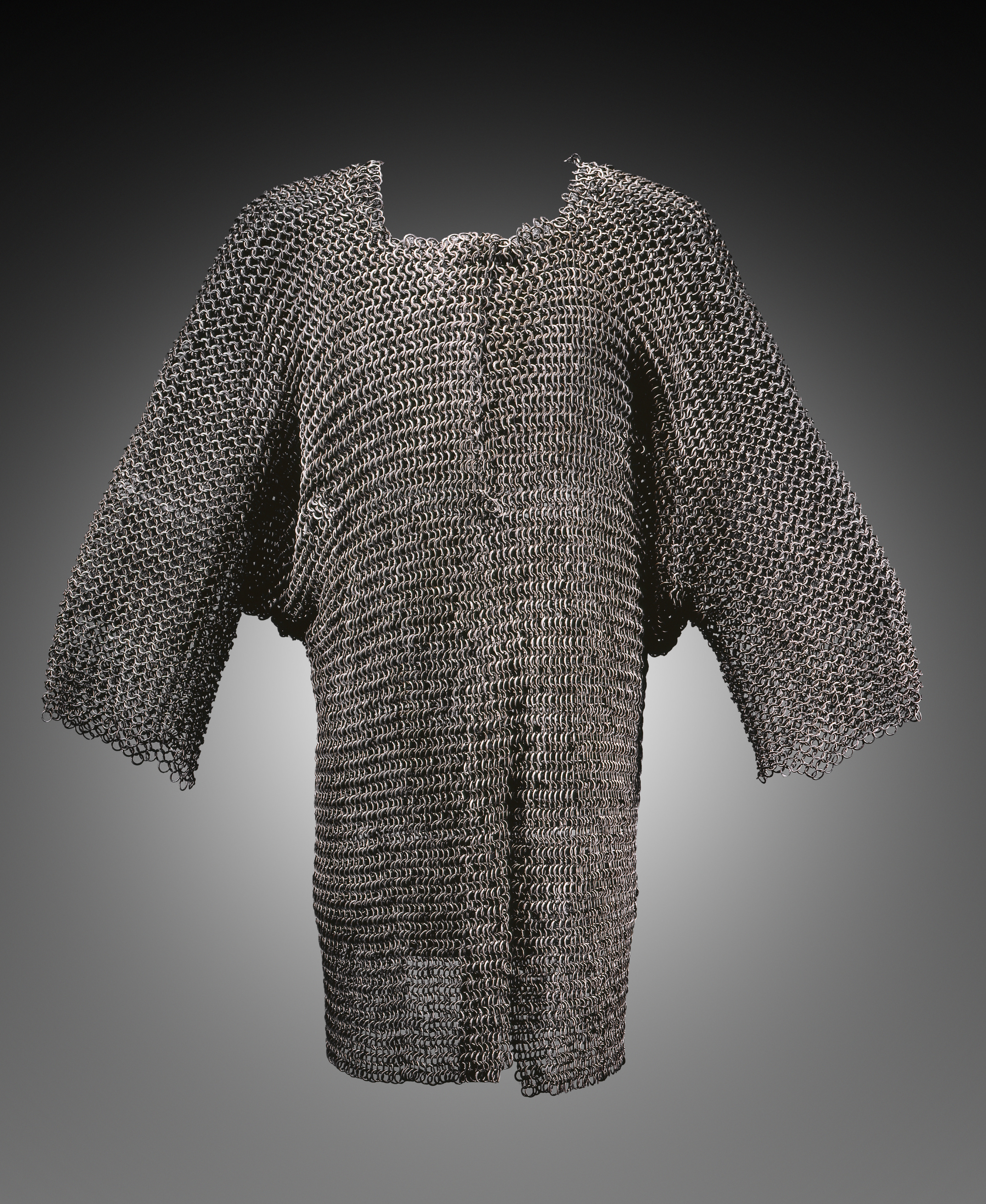
Deconstructing the Hauberk: A 15th Century Steel Strand in the Avant-Garde Lexicon
At Zoey Fashion Lab, our methodology for fabric deconstruction is not merely about dismantling garments; it is about extracting the latent architectural and narrative potential from historical textiles. Today, we turn our analytical eye to the hauberk, a defining artifact of 15th-century European warfare. Far from a relic of the past, this coat of riveted steel rings presents a compelling case study for the avant-garde. We will dissect its technical DNA, explore its structural language, and propose a radical recontextualization that positions it not as armor, but as a new strand of textile DNA for future collections.
Technical Analysis: The Riveted Steel Ring as a Textile Unit
The hauberk’s construction is a masterpiece of pre-industrial engineering. Each component—a single riveted steel ring—functions as both a structural node and a flexible joint. In the 15th century, European armorers perfected the alternating riveted and solid ring pattern (often 4-in-1 or 6-in-1), creating a fabric that was simultaneously impenetrable and fluid. The rivet, a tiny fastener, becomes the critical point of articulation: it allows the ring to pivot without breaking, distributing kinetic energy across the entire matrix.
From a fabric science perspective, the hauberk defies conventional textile categories. It is not woven, knitted, or felted; it is assembled. The ring-to-ring connection is a mechanical bond, not a chemical or fibrous one. This creates a material with zero drape in its static state but with remarkable shear flexibility under dynamic load. The weight distribution is equally unique: a full hauberk could weigh 30–40 pounds, yet its weight is distributed across the shoulders and torso via a leather or fabric liner, allowing for sustained movement. The surface tension is high, but the interstitial spaces between rings create a micro-ventilation system—a paradox of solidity and breathability.
For the avant-garde designer, this offers a radical departure from soft textiles. The riveted ring is a modular, scalable unit. It can be replicated, scaled up or down, and combined with non-ferrous materials (aluminum, titanium, or even polymer-coated rings) to alter weight, color, and reflectivity. The rivet itself becomes a design element: a visible, functional fastener that challenges the seamless, hidden construction of haute couture.
Structural Language: The Armor as a Second Skeleton
The 15th-century hauberk was designed to be worn over a padded gambeson, creating a layered defense system. However, its true genius lies in its anatomical mapping. The rings follow the body’s contours, with denser patterns over vital organs and looser weaves at the elbows, shoulders, and neck to allow for articulation. This is not a static shell; it is a dynamic exoskeleton that moves with the wearer, anticipating impact points.
In the context of Zoey Fashion Lab’s avant-garde philosophy, we interpret this as a new form of body architecture. The hauberk’s structure suggests a garment that is not draped or cut, but grown or assembled around the form. The rings create a negative space—the gaps between them are as important as the metal itself. This interplay of void and solidity is a foundational concept for deconstructivist fashion, where the garment’s skeleton is exposed and celebrated.
Furthermore, the hauberk’s articulation points—the elbows, shoulders, and hips—are natural zones for avant-garde experimentation. These are where the fabric must yield to movement, and in the hauberk, they are engineered with fewer rings or larger rings to reduce friction. For a modern reinterpretation, these zones could be left deliberately open, filled with transparent materials, or replaced with tension cables, creating a garment that is part armor, part harness, part sculpture.
Recontextualization: The Hauberk as a New DNA Strand
To position the hauberk as a new DNA strand for Zoey Fashion Lab is to recognize its potential as a generative, adaptive system. A DNA strand is a code; it can be replicated, mutated, and recombined. The riveted ring is the nucleotide base pair of this textile genome. By isolating the ring and its connection method, we can create a family of materials that share the same structural logic but diverge in expression.
Avant-garde applications:
- Scale Manipulation: Micro-riveted rings (1–2 mm diameter) could be used for sheer, second-skin garments that shimmer like liquid metal. Macro-rings (10–15 cm) could form rigid, architectural panels for outerwear, creating a dramatic silhouette.
- Material Hybridization: Combine steel rings with carbon fiber, laser-cut leather, or 3D-printed polymer rings. The rivet could be replaced with magnetic fasteners or snap closures, allowing the garment to be reconfigured by the wearer—a modular, customizable armor for the digital age.
- Negative Space as Design: The gaps between rings can be filled with translucent silicone, LED fibers, or air-blown panels. The hauberk becomes a lattice that can be backlit, creating a garment that emits light or changes opacity with movement.
- Kinetic Energy Harvesting: The ring-on-ring friction generates heat and sound. In a futuristic context, these vibrations could be converted into electrical energy or used to trigger haptic feedback, turning the garment into a responsive interface.
For a 15th-century hauberk, the wearer was protected from physical harm. In the avant-garde, the wearer is protected from visual and conceptual stasis. The garment becomes a statement of resilience, adaptability, and technological integration. The riveted steel ring is no longer a defense against swords and arrows, but against the mundane, the predictable, and the inert.
Conclusion: From Battlefield to Runway
The hauberk is not a costume; it is a system of thought. Its technical precision—the alternating riveted and solid rings, the anatomical articulation, the weight distribution—offers a blueprint for garments that are not merely worn, but inhabited. For Zoey Fashion Lab, this analysis serves as a foundation for a new collection: one that merges the brutalist engineering of medieval armor with the fluid, adaptive logic of contemporary textile science. The riveted ring is our new stitch; the hauberk is our new canvas. We will deconstruct it further, extract its code, and weave a future where fashion is not just seen, but felt as a protective, kinetic, and ever-evolving second skin.