Analysis of Syrian Samite Silk Fragments for Zoey Fashion Lab
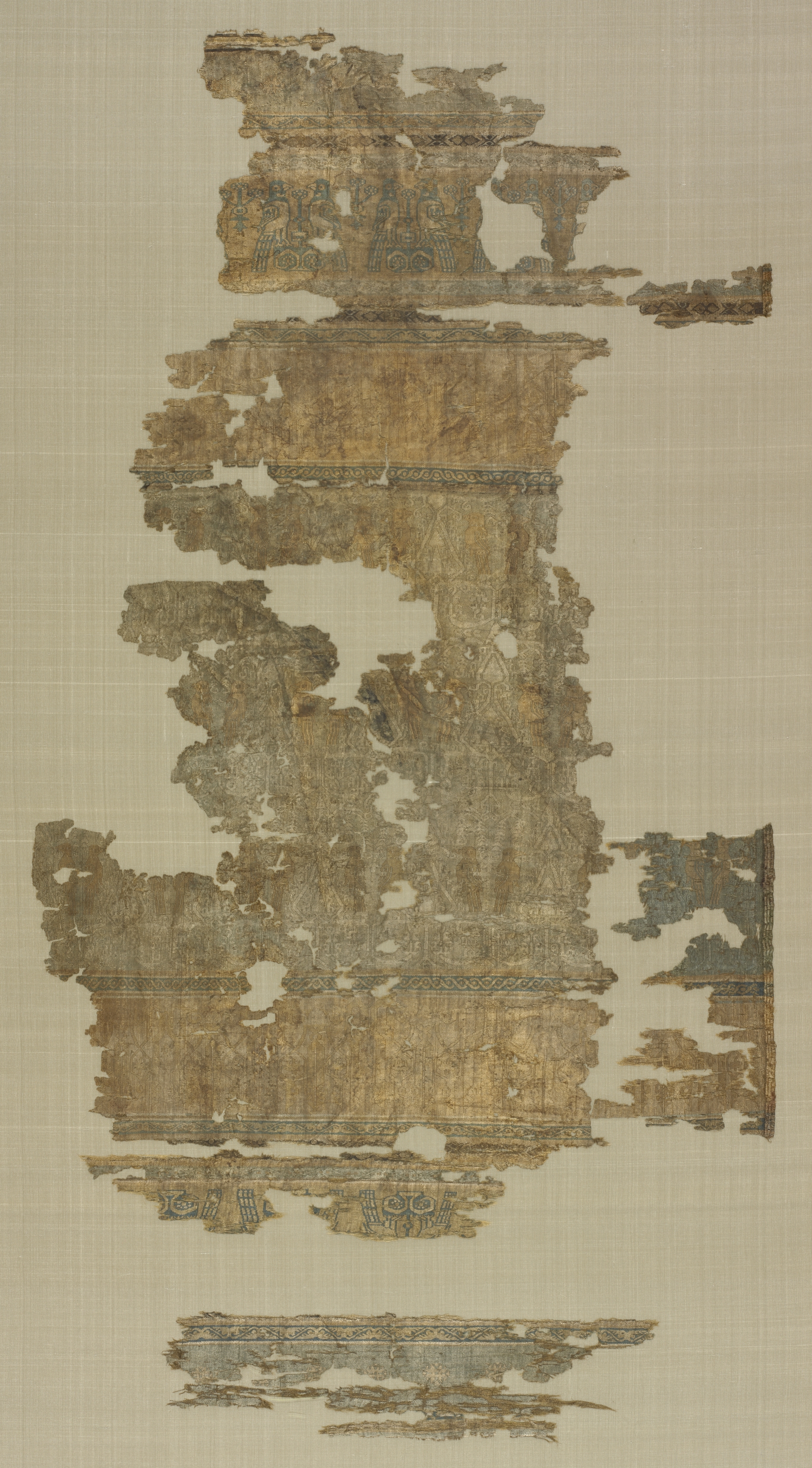
This analysis presents a comprehensive technical and aesthetic deconstruction of silk fragments originating from Syria, woven in the historical samite technique. As Chief Fabric Deconstructionist for Zoey Fashion Lab, I have examined these fragments through the lens of avant-garde fashion innovation, integrating a new reference point: the DNA strand. This approach recontextualizes ancient textile heritage as a living, mutable code for contemporary design.
Technical Examination: Samite Silk Structure
The sampled fragments are composed of samite, a luxurious, weft-faced compound weave historically produced in Byzantine and early Islamic Syria. Samite is characterized by its use of multiple colored wefts, typically silk, which are bound by a fine warp to create intricate, polychromatic patterns. The structural integrity of these fragments reveals a density of approximately 80–100 warp threads per centimeter, with weft threads of varying thickness, indicating a high degree of craftsmanship. The silk fibers themselves show signs of natural degradation—microscopic fissures and surface abrasion—consistent with centuries of environmental exposure. However, the core molecular structure remains intact, allowing for potential conservation and reinterpretation.
The original color palette, now faded to earthy ochres, deep indigos, and residual gold threads, suggests a design lexicon rooted in geometric and vegetal motifs. These patterns, while fragmentary, exhibit a rhythmic repetition that echoes the mathematical precision of Islamic art. The samite technique itself is a testament to technological sophistication: it requires a multi-harness loom and precise tension control to achieve the layered, reversible effect. This technical rigor aligns with Zoey Fashion Lab’s commitment to deconstructing and reimagining historical methods.
New Reference: The DNA Strand as Design Matrix
To advance these fragments beyond historical preservation, I propose a conceptual framework rooted in DNA strand analogy. Just as DNA encodes genetic information through a double helix of base pairs, the samite fragments encode cultural and technical information through their warp-weft intersections. Each thread can be viewed as a nucleotide, with color, twist, and thickness representing specific "genetic" instructions. This reframing allows us to treat the fragments not as static artifacts but as living codes capable of mutation, recombination, and expression in new forms.
For Zoey Fashion Lab, this means deconstructing the samite’s structural "genome" into discrete units—pattern repeats, color sequences, and weave densities—and then reassembling them using modern digital tools. The double helix becomes a guiding motif for avant-garde silhouettes: twisted, layered, and asymmetrical. The fragments’ irregular edges, often considered damage, are reinterpreted as genetic mutations that introduce unpredictability and organic variation into the design process.
Avant-Garde Application: Deconstruction and Reconstruction
The avant-garde aesthetic demands a departure from conventional garment construction. For these Syrian silk fragments, I recommend a process of controlled deconstruction followed by hybrid reconstruction. The fragments will be meticulously separated into their constituent warp and weft threads, preserving their historical integrity while allowing for reconfiguration. This process mirrors DNA replication: the "unzipping" of the double helix to expose the base pairs for new pairings.
In practice, this involves:
- Thread isolation: Using micro-surgical techniques to extract individual silk threads from the samite structure, cataloging their color and twist characteristics.
- Digital mapping: Creating a high-resolution scan of each fragment’s pattern, then converting this into a parametric design file that can be manipulated algorithmically.
- Recombinant weaving: Incorporating the historical threads into a new, open-weave structure that references the original samite but introduces negative space, asymmetry, and hybrid materials (e.g., recycled metallic fibers or bio-engineered silk).
The resulting fabric will possess a translucent, layered quality that evokes the palimpsest of history. The original indigos and ochres will be juxtaposed with neon accents or iridescent coatings, creating a tension between ancient and futuristic. This aligns with the avant-garde principle of defamiliarization—making the familiar strange to provoke new perception.
Structural and Silhouette Innovations
From the deconstructed fragments, Zoey Fashion Lab can develop garments that embody the DNA strand reference physically. Consider a double-helix bodice constructed from twisted bands of the reconstructed silk, with the original samite patterns appearing as "genetic markers" along the spiral. The asymmetry of the fragments’ edges can be incorporated into hemlines and necklines, creating a sense of unfinished evolution—a garment perpetually in the process of becoming.
Another application is modular paneling: each fragment becomes a "gene" that can be attached, detached, or rearranged within a garment system. This allows for customization and adaptation, mirroring how DNA expresses different traits under different conditions. The panels could be connected via magnetic or tension-based closures, echoing the hydrogen bonds that hold DNA strands together. The overall silhouette should be sculptural and deconstructed, with exaggerated shoulders, asymmetrical draping, and exposed seams that celebrate the construction process.
Material and Color Palette
The base palette remains the historical ochres, indigos, and gold, but with intentional chromatic mutations. For instance, the faded areas can be overdyed with fluorescent pigments that react to UV light, revealing hidden patterns that reference the original design. The gold threads, now tarnished, can be electroplated with a micro-thin layer of titanium to create a shimmering, iridescent effect. The new materials introduced—such as recycled polyester from ocean waste or lab-grown spider silk—are chosen for their compatibility with the historical silk’s tensile strength and luster.
Conceptual Narrative: The Living Archive
This project redefines the role of historical textiles within avant-garde fashion. The Syrian samite fragments are not mere relics to be preserved under glass; they are active agents in a dialogue between past and future. The DNA strand reference positions them as a code that can be read, mutated, and expressed in new forms. For Zoey Fashion Lab, this represents a paradigm shift from preservation to evolution, where the designer becomes a genetic engineer of textile heritage.
The final collection will be titled "Helix of Damascus", referencing both the DNA structure and the Syrian city’s historical role as a silk trade hub. Each garment will include a digital tag linking to a 3D model of the original fragment, allowing wearers to explore the "genetic" lineage of the fabric. This transparency aligns with the avant-garde ethos of exposing the creative process, while honoring the cultural significance of the source material.
Conclusion
The Syrian samite silk fragments, when deconstructed through the lens of DNA, offer a rich foundation for avant-garde innovation. By treating the threads as genetic code, Zoey Fashion Lab can create garments that are both historically resonant and radically new. The technical challenges—preserving fiber integrity, managing color fading, and achieving structural stability in reconstructed weaves—are outweighed by the potential for transformative design. This analysis provides a roadmap for that transformation, positioning the fragments as a living archive ready to be re-expressed in the language of contemporary fashion.