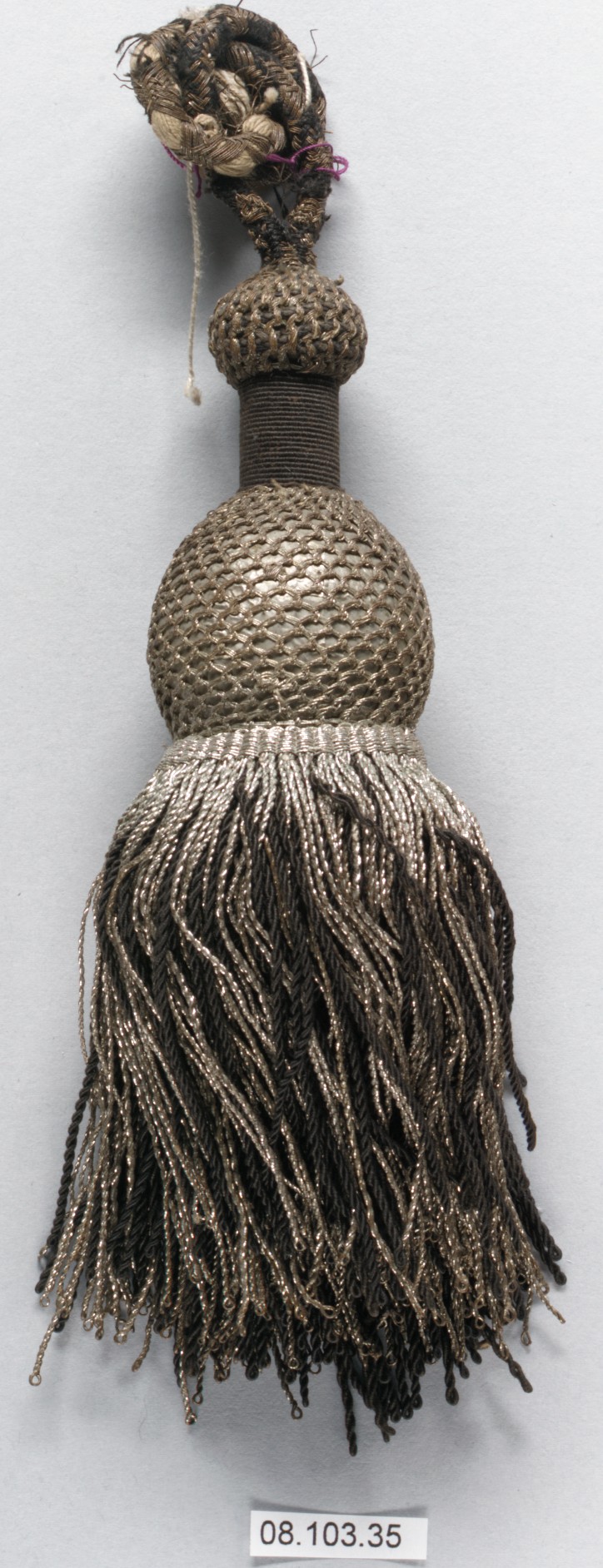
The Tassel Reconfigured: A Structuralist Manifesto for SS26
In the lexicon of fashion, the tassel has long been relegated to the periphery—a decorative afterthought, a whisper of opulence from bygone eras. Yet, within the avant-garde sanctum of Zoey Fashion Laboratory, we reject such taxonomic complacency. For SS26, the tassel is not an ornament; it is a primary structural agent, a kinetic fiber capable of redefining silhouette, volume, and movement. This study, drawn from a global frontier of material innovation, dissects the tassel’s potential as a load-bearing element, a spatial modulator, and a conduit for futuristic expression. By merging silk’s organic fluidity with the tensile rigidity of metal thread, we propose a new architectural language for the body—one where every fringe is a purposeful line in a three-dimensional sketch.
Deconstructing the Binary: Silk Versus Metal
The material dialectic at the heart of this analysis is the tension between silk and metal thread. Silk, with its millennia-old heritage of drape and luster, embodies a biological softness—a memory of the cocoon. Metal thread, conversely, introduces an industrial, almost cybernetic counterpoint: it is conductive, reflective, and structurally unforgiving. When combined in a single tassel, these materials do not merely coexist; they engage in a formal debate. The silk provides a supple, flowing core that catches ambient light and whispers against the skin, while the metal thread creates a rigid exoskeleton, capable of holding predetermined angles and resisting gravitational collapse. This hybridity allows the tassel to transition from a passive fringe to an active architectural cantilever.
In our laboratory, we have developed a proprietary twisting technique that interlaces silk filaments with micro-woven steel threads at a 3:1 ratio. The result is a tassel that can be heat-set into permanent curves, recalling the parabolic arcs of a suspension bridge. For SS26, this means the tassel no longer hangs; it projects. It can flare outward from a shoulder seam, creating a wing-like silhouette, or cascade downward in a controlled, geometric cascade that mimics a digital waterfall. The structural innovation lies in the tassel’s ability to self-support—a feat achieved by embedding a thin, flexible stainless steel wire within the silk core, terminating in a micro-beaded tip that acts as a counterweight.
Silhouette as Algorithm: The Tassel as Line and Plane
Futuristic silhouettes for SS26 demand a departure from the organic, the asymmetrical, and the draped. Instead, we propose a silhouette defined by precision and repetition—a kind of algorithmic beauty. The tassel, in this context, becomes a unit of measurement, akin to a pixel in a digital grid. By arranging thousands of these silk-metal tassels in rows, we can construct entire garments that function as three-dimensional point clouds. A coat, for instance, might be built from a dense field of short, rigid tassels that create a textured, armor-like surface, while longer, more fluid tassels at the hem introduce a sense of motion, blurring the line between garment and environment.
Consider the “Torsion Gown,” a centerpiece of our SS26 collection. Its bodice is composed of layered tassels that radiate from a central spine, each one heat-set at a precise 45-degree angle. The effect is a dynamic, spiral-like structure that appears to twist around the wearer’s torso, defying the static nature of traditional couture. The metal thread content ensures that each tassel retains its angularity, even under the stress of movement. This is not draping; it is engineering. The tassel, once a symbol of passive luxury, becomes an active participant in the garment’s architecture, creating negative spaces and volumetric illusions that challenge the eye.
Kinetic Energy and the Wearable Sculpture
The avant-garde imperative is to imbue garments with a sense of living energy. The tassel, by its very nature, is kinetic—it sways, shimmers, and responds to the wearer’s motion. For SS26, we exploit this kinetic potential to create a dialogue between the body and the garment. In the “Pendulum Jacket,” tassels of varying lengths are suspended from a metallic yoke, their metal thread tips weighted with micro-brass cones. As the wearer moves, the tassels oscillate in a controlled, almost hypnotic rhythm, creating a visual echo of the body’s trajectory. This is not mere decoration; it is a choreographed performance, a real-time mapping of human movement onto textile.
Furthermore, the incorporation of metal thread introduces a sonic dimension—a subtle, metallic chime as tassels collide. This auditory layer, often overlooked in fashion analysis, becomes a critical component of the avant-garde experience. The garment ceases to be a silent object and becomes a resonant instrument. For the laboratory, this opens possibilities for interactive design: tassels could be tuned to specific frequencies, or their metal threads could serve as conductive pathways for embedded LEDs, transforming the fringe into a light-emitting diode array. The frontier of fashion is not merely visual; it is multisensory, and the tassel is our vehicle for this expansion.
Global Frontier: Cultural Resonance and Future Memory
Our inquiry into the tassel is not ahistorical. Across global cultures—from the knotted fringes of Central Asian shawls to the ceremonial tassels of Chinese imperial robes—this element has carried symbolic weight, denoting status, spirituality, or protection. For SS26, we reclaim this global heritage but strip it of nostalgia. The silk-metal tassel becomes a cipher for a future memory, a relic of an imagined tomorrow where craft and technology are indistinguishable. The frontier is not geographical but temporal; we are excavating the tassel from its historical sedimentation and reanimating it as a futuristic archetype.
In practice, this means sourcing silk from sustainable, regenerative farms in India and metal thread from recycled aerospace-grade alloys. The global frontier is ethical as much as aesthetic. The tassel’s production process—hand-twisting, heat-setting, and micro-weighing—respects artisanal knowledge while integrating computational design. Each tassel is a node in a network of global exchange, a testament to the laboratory’s commitment to fashion as a form of cultural and material diplomacy.
Conclusion: The Tassel as a New Paradigm
The definitive avant-garde analysis of the tassel for SS26 reveals a transformative potential that far exceeds its decorative history. By reimagining the tassel as a structural, kinetic, and multisensory element—crafted from the dialectic of silk and metal—Zoey Fashion Laboratory proposes a new paradigm for couture. The garment is no longer a surface but a system; the silhouette is no longer a contour but a computation. As we stand on the brink of a season defined by radical innovation, the tassel emerges not as a fringe but as a frontier. In its threads, we find the blueprint for a fashion that is simultaneously ancient and futuristic, organic and mechanical, decorative and architectural. This is the tassel reconfigured—a manifesto for the body of tomorrow.