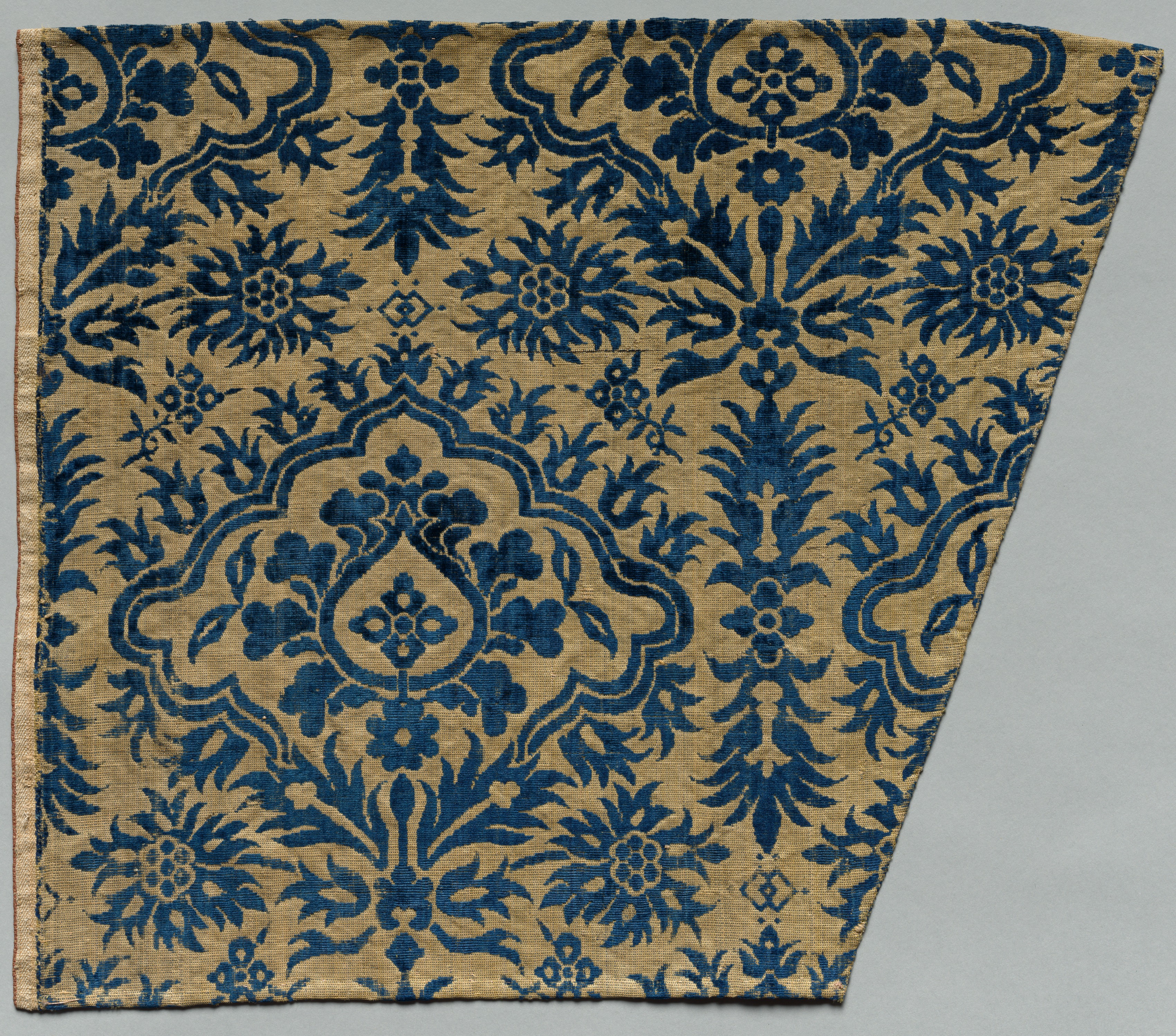
Velvet: A 17th-Century Chinese Textile Reimagined Through the Avant-Garde Lens
As the Chief Fabric Deconstructionist for Zoey Fashion Lab, it is my privilege to present a comprehensive analysis of velvet—a textile that, in its 17th-century Chinese incarnation, represents a pinnacle of artisanal mastery. This analysis will dissect its historical origins, technical construction, and the transformative potential of integrating it with our avant-garde design philosophy, particularly through the conceptual framework of a "New DNA Strand." This approach allows us to deconstruct, reinterpret, and ultimately re-engineer velvet for a future that honors its past while shattering its conventional boundaries.
Historical Context: The 17th-Century Chinese Velvet
Velvet, known as “rong” (绒) in Chinese, reached a zenith of sophistication during the Ming (1368–1644) and early Qing (1644–1912) dynasties. By the 17th century, Chinese velvet production was not merely a craft but a highly specialized industry, often centered in regions like Suzhou and Nanjing. These velvets were characterized by their dense, lustrous pile, achieved through labor-intensive weaving techniques on drawlooms. The fibers were primarily silk, sourced from native silkworms, and the dyes were derived from natural pigments—indigo for blues, madder for reds, and gardenia for yellows—resulting in a depth of color that synthetic processes struggle to replicate.
The aesthetic of 17th-century Chinese velvet was deeply symbolic. Patterns often featured dragons, phoenixes, clouds, and floral motifs, each imbued with meanings of power, immortality, and harmony. These textiles were reserved for imperial robes, ceremonial hangings, and elite furnishings. The warp-pile technique used—where supplementary warp threads were raised to form loops, then cut to create the pile—demanded extraordinary precision. This historical context provides a rich foundation for deconstruction: the velvet’s physical structure is a record of its cultural and technical DNA.
Technical Construction: The Anatomy of Velvet
From a technical standpoint, velvet is defined by its pile structure. In 17th-century Chinese velvet, this is achieved via a plain or twill weave ground, with an additional set of pile warps. These pile warps are woven over metal rods or wires; when the rods are removed, the loops are either left intact (for uncut velvet) or sliced open (for cut velvet). The result is a surface of dense, upright fibers that create a soft, reflective texture.
Key technical parameters include:
- Pile height: Typically 1–3 mm, with variations for patterns.
- Fiber composition: 100% silk, with a twist in the pile warp to enhance luster.
- Weave density: 80–120 ends per inch, ensuring a plush, non-shedding surface.
- Dyeing method: Yarn-dyed before weaving, allowing for intricate color patterns.
This structural integrity is both a strength and a limitation. The velvet’s rigid pile direction and susceptibility to crushing have historically confined it to static, formal applications. For Zoey Fashion Lab, this technical DNA becomes a point of departure.
The "New DNA Strand" Conceptual Framework
The "New DNA Strand" is a metaphorical and practical tool for re-engineering velvet. It represents a recombinant approach to textile design—where historical techniques are spliced with modern materials, digital processes, and avant-garde aesthetics. This strand is not a literal genetic sequence but a design methodology that treats the fabric’s core properties as mutable variables. For velvet, we identify three primary DNA strands:
- Pile Integrity: The traditional silk pile’s luster and density.
- Weave Architecture: The ground weave’s stability and pattern potential.
- Cultural Resonance: The symbolic language of Chinese motifs.
By "mutating" these strands, we can create a velvet that retains its historical soul while achieving a futuristic, deconstructed form. For instance, we might replace silk pile with recycled metallic fibers to introduce conductivity or light-reflective properties, or digitally print the ground weave with bioluminescent patterns that shift in response to movement.
Avant-Garde Application: Deconstructing and Reconstructing Velvet
Our avant-garde philosophy at Zoey Fashion Lab demands that we challenge the velvet’s inherent formality. Traditional velvet is monolithic, uniform, and static. We propose a series of deconstructive interventions:
1. Fragmented Pile: Using laser cutting or selective chemical etching, we can remove portions of the pile to create negative-space patterns. This reveals the ground weave, producing a lattice-like effect that contrasts the soft pile with the rigid warp. This technique echoes the 17th-century practice of “cut velvet” but pushes it into abstraction—geometric voids that reference digital glitches.
2. Hybrid Fiber Splicing: Introduce a second pile warp of thermochromic or photochromic fibers. When exposed to body heat or UV light, the pile changes color, creating a dynamic, interactive surface. This mutates the velvet’s static luxury into a responsive, living material—a direct evolution of the symbolic motifs that once communicated status.
3. Deconstructed Weave Architecture: Instead of a uniform ground weave, we can employ a double-weave or three-dimensional weave that creates pouches, tunnels, or raised structures within the fabric. This allows for integrated pockets, channels for wiring, or sculptural folds that distort the pile’s direction. The result is a velvet that is not flat but architectural, capable of holding its own shape in a garment.
4. Cultural Motif Recontextualization: The dragon and phoenix motifs are reimagined as digital pixelations or abstract data streams. Using jacquard weaving or digital embroidery, we can embed QR codes or micro-text that, when scanned, reveal historical narratives about the original velvet. This creates a dialogue between past and future, making the garment a wearable archive.
Material and Process Innovations
To realize these concepts, we must adopt advanced manufacturing techniques:
- 3D-printed pile: Using flexible polymers to create pile that can be programmed to bend or stiffen in response to environmental stimuli.
- Biodegradable silk alternatives: Lab-grown spider silk or bacterial cellulose to maintain the velvet’s ethical and sustainable credentials.
- Digital weaving with AI: Algorithms that generate pattern variations based on real-time data (e.g., weather, wearer’s biometrics), making each garment unique.
Conclusion: A Velvet for the Future
Velvet from 17th-century China is not a relic but a foundational code—a textile that embodies luxury, precision, and cultural depth. By applying the "New DNA Strand" methodology, Zoey Fashion Lab can deconstruct this code and splice it with avant-garde technologies. The result is a velvet that retains its ancestral luster while becoming interactive, deconstructed, and future-facing. This is not a rejection of tradition but a radical reinterpretation—a fabric that speaks to both the imperial courts of the Ming dynasty and the quantum fields of tomorrow. In our hands, velvet becomes a medium for storytelling, innovation, and wearable art.